creativity

Living Roman

Photo of St. Peter’s through Rome’s Aventine Keyhole by my sister, Maria Avampato Waldrep

Italians have their priorities straight. I had the privilege to be in Rome for a week with my sister. It’s her favorite city and I see why. (Also huge thanks to her for arranging our entire trip and for taking this photo of St. Peter’s through Rome’s Aventine Keyhole with a line of ornery, inpatient teenagers behind her!) It was so fun to see dear friends, Julie and Brian, who were also in Rome. And Julie was one of the people who encouraged me to take this whole trip!

Rome is a thriving, livable city. It feels comfortable and easy. Forgiving. It takes its time because it knows it has time. Weathering thousands of years of history, often brutal and bloody, gives Romans perspective. People don’t rush in a place that’s eternal. They go out late. They linger. They rest.

Art is everywhere. Everything is art – a statue, the way the water runs through a fountain, a twirl of spaghetti, the language, the winding of a road, a sculpted scoop of gelato, a swirl of rich balsamic vinegar in green-tinted, earthy olive oil. A Roman life is a masterpiece that goes on and on.

Only take what you need. Just enough food. Just enough water. Your salad doesn’t need to drown in dressing. Your house doesn’t need to make a statement. Your tiny car is parked sideways to make room for more people traveling via different modes of transport. Take what you need and leave the rest for others. It’s a minimalist life, not a maximalist one, that offers a greater reward – freedom from the weight of physical things and knowing that neighbors have what they need because you didn’t overindulge.

Walk the streets at any time and be entertained, be joyful, be at ease. It’s not about spectacle. It’s just about living every simple, singular moment. That’s all there is. That’s all there needs to be.

There’s fresh spring water from fountains available to everyone all over the city. More hydration, less plastic bottle trash. Laughter and live music provide the soundtrack for the streets. On these days of simple microjoys, I wanted for nothing. Everything I needed was here. In a city of abundance, I found it made me want less because I wasn’t worried about having enough. What a gift.

Now back home in America, I’m going to keep Roman living top of mind and close to my heart. It has much to teach us about living well and sustainably, thriving in hard times, and caring for our neighbors.

creativity

How to make a decision

Photo by Chris Czermak on Unsplash

For months I’ve been trying to decide whether or not I was going to go to my University of Cambridge graduation. The day after my foster dog, Dorothy, was adopted, I woke up and something told me, “Just go. Commit to going and figure it out.”

Once I made the decision, a whole wonderful trip came together around it, including a week in Italy with my sister. (More details on the trip soon – flags for hints 🇮🇹🇬🇧🇫🇮🇸🇪)

It all worked out but it required me to make a decision and commit to seeing it through. Nothing would work unless I did. Nothing would move or change unless I moved and changed.

So often we’re in this state of limbo where we just can’t see our way through. We don’t know what to do. When that happens to me, I try to give away my worry. I breathe it out and let the sky take it. I plant my feet into the ground and let the Earth take it. I look out at the sea and let the water take it.

Then I watch where my mind goes when I ask, “What’s the best thing that could happen?” And where my mind goes is the decision I make.

creativity

Dreaming of Sicily through food

Sicilia: A Love Letter to the Food of Sicily. Photo by Christa Avampato.

Though I’m working on my dissertation for most of this weekend, I took a little time out to dream about my ancestral homeland thanks to Ben Tish’s gorgeous cookbook, Sicilia: A Love letter to the Food of Sicily. More than just recipes, Ben gives us a glimpse into the rich arid land, history, and the bustling society that is so prevalent on this island (and the many islands dotted along its coast). I particularly love his vivid descriptions of the food markets, each with its own unique spin on street food. I can’t wait to see and experience them myself.

Sicily’s history is dotted with many influences from many places and peoples. It’s not a melting pot, but rather an amalgam, a collage, with all the parts clearly visible and working together to create something none of them could do alone. Sicily isn’t one culture but many. Its food is its historical archive. 

Arab and North African influences are some of the strongest we can find in Sicily’s cuisine, including both its ingredients and preparation. The Moors and the Islamic culture they brought are closely tied to Spain. However, they are just as prevalent, perhaps even more so, in Sicily. Pistachios and honey, oranges and lemons, saffron and pomegranates, sorbet and granite, couscous and sardines, almonds and pine nuts, raisins and fennel. If you love anything deep fried (and who doesn’t?), thank the Arabs who ruled Sicily in the 9th and 10th centuries for infusing that cooking preparation into Sicily and then on into the rest of Europe. 

This island’s sprawling variety, so much packed into such a small amount of real estate, reminds me a lot of my home in New York. Here, Sicilian culture, along with hundreds of other cultures, can be seen and experienced all the time everywhere. Maybe my bloodline to Sicily is why I feel at home everywhere and with everyone–because my ancestors were diverse, people who came from all over to this plot of land that connects east and west, north and south, and celebrates its many influences.

creativity

How climate change is impacting theater in Italy and around the globe

Here is a fascinating, and incredibly sad, fallout from climate change that I had not previously considered. I manage the streaming movie channel for a world-class arts organization based in New York. We curate the finest concerts, dance, opera, and music-based documentaries from around the globe, and provide them to subscribers in 63 countries. 

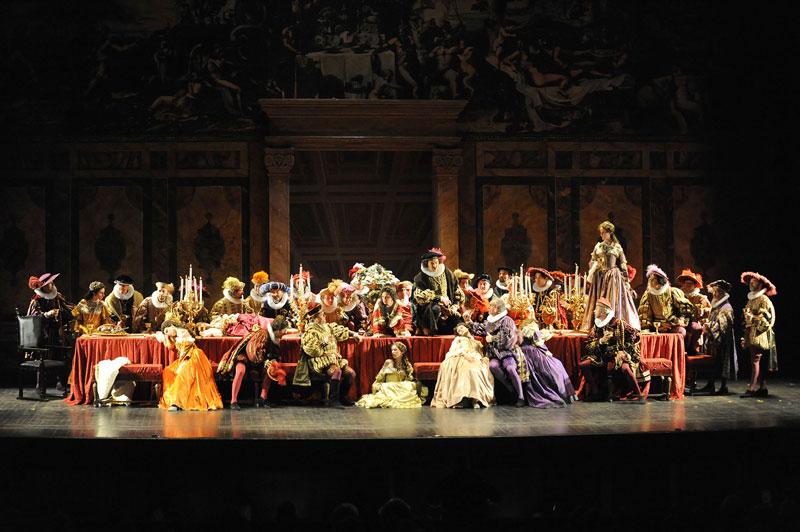
Recently, we had to pull a performance of Rigoletto from our future lineup because the performance we were planning to record this summer cannot be staged in Italy. Climate change has made it too hot, and it would be unsafe health-wise for the performers, technicians, and audience. Further proof that climate change is having broad reaching impacts on every industry, everywhere. 

Over time, this will only grow unless we halt emissions. Even the art we love and look forward to experiencing, and the economic and cultural benefit the arts bring to so many communities around the world, is at risk of disappearing.