
creativity

From Black Gold to Golden Opportunity: A Kentucky Coal Mine’s Bright New Future

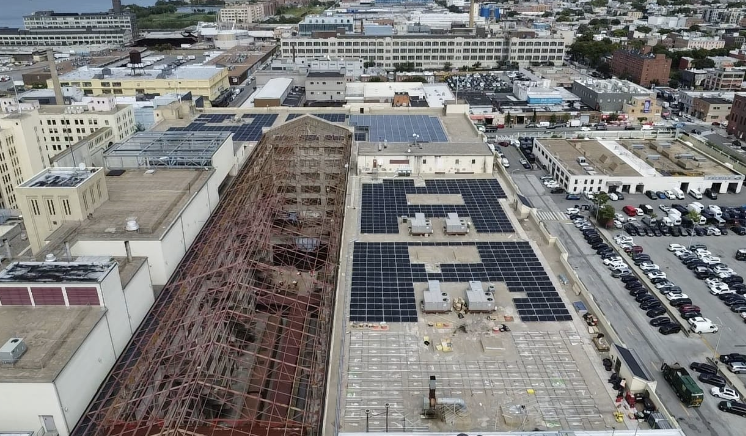
Martin County Solar Project, Kentucky. https://www.martincountysolarproject.com/

One of my great joys is to uncover stories about abandoned places sustainably retrofitted to get a new lease on life. This transformation made my heart sing: a former coal mine in Kentucky, once a symbol of industrial might and negative environmental impacts, is now gleaming with thousands of solar panels, powering a cleaner tomorrow. It offers a powerful beacon of hope for a sustainable future.

For generations, communities in places like Martin County, Kentucky, built their lives around coal. It was the “black gold” that fueled homes and industries across the nation while also degrading the land and human health. As the energy landscape shifted, so did these communities, often leaving behind economic hardship and vast, altered landscapes stripped bare of the nature they once harbored. The Martiki coal mine, closed in the 1990s, stood as a stark reminder of this past complicated, painful past.

A Phoenix Rising: The Martin County Solar Project

Today, that same landscape is being reborn. The Martin County Solar Project (MCSP) is transforming 900 acres of reclaimed mine land into a massive 111-megawatt solar farm. Picture this: over 214,000 bifacial solar panels, designed to capture sunlight from both sides, now stretch across the terrain where heavy machinery once toiled.

The Martin County Solar Project’s website shares that it began commercial operation in December 2024. It will generate enough quiet, clean renewable energy each year to power approximately 18,529 Kentucky homes.

This isn’t just about replacing one energy source with another; it’s about intelligent, hopeful repurposing. The beauty of this project lies not only in its clean energy output but also in its clever use of existing infrastructure. The former mine site, already flattened and with clear access to sunlight, still retained its transmission lines and substations. This meant less new construction, lower costs, and a faster path to bringing clean energy onto the grid—a truly smart way to leverage the past for the future.

Beyond Energy: A Boost for the Community

The benefits extend far beyond power generation. This project is a successful example of how the transition to a green economy can revitalize communities. The MCSP created hundreds of good-paying construction jobs, bringing much-needed employment to a region that had experienced significant job losses as coal production declined. Looking ahead, the solar farm will provide ongoing maintenance jobs and generate stable tax revenue for Martin County, helping to diversify its economy and build a more resilient future.

Major corporations are taking notice, too. Toyota Motor North America, for instance, has committed to purchasing 100 MW of the solar energy generated through a long-term agreement. This partnership highlights how businesses are increasingly seeking out sustainable energy solutions, not just for environmental reasons, but for economic stability and to meet their own ambitious climate goals.

The Martin County Solar Project is more than just a power plant; it’s a testament to human ingenuity and our ability to adapt and innovate while reconciling with a difficult past. It’s a story of turning a painful environmental legacy into a vibrant, job-creating clean energy future. It shows us that even the most challenging landscapes can be repurposed for the good of both people and the planet. It’s an inspiring vision of what’s possible when we embrace sustainable solutions, proving that a green future is also a prosperous future.

creativity

How Fungi Are Illuminating a Sustainable Future

Photo by Igor Omilaev on Unsplash

Imagine a future where the gentle, natural glow of wood guides you along a park path or illuminates your home, all without a single watt of electricity. This isn’t a scene from a fantasy movie; it’s a groundbreaking reality being forged by scientists who are harnessing the power of nature itself to create a sustainable alternative to traditional lighting. At the forefront of this innovation is Francis Schwarze, a fungal researcher at the Swiss Federal Laboratories for Materials Science and Technology (Empa), and his team, whose work on bioluminescent wood is nothing short of revolutionary..

In their research, Schwarze’s team demonstrated a remarkable example of biomimicry, the practice of drawing inspiration from nature to solve human design challenges. They looked to the forest floor and the eerie phenomenon of “foxfire,” the natural glow emitted by certain fungi in decaying wood. By isolating and studying the ringless honey fungus (Desarmillaria tabescens), they were able to understand and then replicate this process in a controlled laboratory setting. The team discovered that this particular fungus could be introduced into wood in a way that maintains the wood’s structural integrity while it is imbued with the fungus’s natural ability to glow.

The magic of the glow comes from a natural chemical reaction involving an enzyme called luciferase, the very same enzyme that makes fireflies light up the night. When the fungus-treated wood is exposed to air, the enzyme triggers a reaction that produces a soft, green light. The result is a completely self-sustaining, non-toxic, and non-electric light source that could one day transform our approach to lighting.

While the current glow is comparable to the light of a candle and lasts for about 10 days, the research represents a crucial proof of concept. The team, including researcher Giorgia Giovannini, is actively working on optimizing the process to increase the brightness and longevity of the luminescence.

The practical applications of this innovative material are as numerous as they are inspiring. Imagine urban spaces where bus shelters and street signs are naturally illuminated, reducing light pollution and energy consumption. Think of a park where benches and pathways glow gently, eliminating the need for harsh electric lamps. In homes, this biohybrid material could be used for designer furniture, artistic wall panels, or even subtle safety markers, all glowing without a power source. This innovation could also inspire a new class of biomimicry products, moving beyond wood and into other materials that could be made to self-illuminate or possess other natural properties.

Ultimately, this research highlights the immense potential of looking to nature for solutions. By collaborating with living organisms, scientists are not just creating a new product; they are pioneering a new field of sustainable materials science. The work of Schwarze and his team is a shining example of how understanding and working in harmony with the natural world can lead to a brighter, more sustainable future for us all. It reminds us that some of the most profound innovations aren’t about building something entirely new, but about learning from and enhancing what already exists.

creativity

Unraveling Ocean Mysteries: The Deep-Sea Spiders Powered by Methane

Sericosura sea spiders in this study and maps where they’re found.
From https://www.pnas.org/doi/full/10.1073/pnas.2501422122

The ocean’s depths have always held secrets, a vast, unexplored frontier teeming with life that defies our conventional understanding. Just when we think we’ve seen it all, nature delivers another astonishing revelation. Recently, a groundbreaking discovery has captivated the scientific community and nature enthusiasts alike: the first-ever methane-powered sea spiders, thriving in the extreme conditions of the ocean floor.

Imagine a world where sunlight never penetrates, where pressures are crushing, and life seems impossible. Yet, in these seemingly inhospitable environments, vibrant ecosystems flourish, often fueled by chemosynthesis—a process where organisms derive energy from chemical reactions rather than sunlight. While hydrothermal vents and cold seeps are known hubs for such life, the discovery of methane-powered sea spiders introduces a new, fascinating chapter to this narrative.

These remarkable creatures, belonging to the ancient order of Pycnogonida, or “sea spiders,” have long been a source of wonder with their spindly legs and delicate forms. But what makes this new find truly extraordinary is their unique metabolic pathway. Scientists have observed these deep-sea arachnids congregating around methane seeps, areas where hydrocarbon gases leak from the seafloor. Through meticulous research, it was determined that these spiders don’t just live near the methane; they actively utilize it.

The research suggests a symbiotic relationship, perhaps involving specialized bacteria within the spiders’ gut or on their external surfaces, that can metabolize methane. This process converts the potent greenhouse gas into a usable energy source for the spiders, allowing them to thrive in an environment previously thought devoid of complex life forms that could directly tap into methane as fuel. It’s a biological marvel, showcasing evolution’s incredible adaptability.

This discovery has profound implications. It expands our understanding of life’s resilience and the diverse ways organisms can harness energy. It prompts us to reconsider the potential for life in other extreme environments, both on Earth and perhaps beyond. Furthermore, studying these methane-powered spiders could offer insights into novel biochemical processes, potentially leading to advancements in areas like bioremediation or sustainable energy.

The deep sea continues to be an endless source of inspiration and scientific inquiry. The methane-powered sea spider is not just a new species; it’s a testament to the ocean’s boundless capacity for wonder, reminding us that even in the most extreme corners of our planet, life finds a way, often in the most unexpected and awe-inspiring forms. As we continue to explore, who knows what other incredible adaptations await discovery in the mysterious depths below?

creativity

Lavender — soothing for the mind and saving the clean energy revolution

Lavender field in Provence, France. Photo by Antony BEC on Unsplash.

Soon, lavender’s scent won’t be the only reason it causes you to take a deep inhale. In addition to soothing your mind, it’s about to revolutionize the way we store clean energy.

Lithium-ion batteries are often used to store clean energy and power electric vehicles because they are cost-efficient and have a large storage capacity. However, they require lithium and cobalt, two elements that lead to mining operations that can pollute land and water, and often utilize child labor. Additionally, they’re difficult to recycle, often leading to landfill waste, and they require significant amounts of energy to produce.

Sodium-sulfur batteries are an alternative to lithium-ion batteries. Unlike lithium and cobalt, sodium and sulfur are abundant, easily obtained, and relatively easy to recycle. However, these batteries can’t store nearly as much energy as lithium-ion batteries, and their storage capacity is degraded even further after a few charging cycles. The challenge for scientists has been how to create a battery that has the benefits of lithium-ion batteries and sodium-sulfur batteries without the downsides of either. Lavender, or more specifically linalool, to the rescue!

Linalool is the compound responsible for lavender’s calming scent. (Linalool is also found in other plants such as basil, bay laurel, some cannabis strains, mint, cinnamon, citrus fruits, rosewood, guava, peach, plum, pineapple, and passionfruit.) A research team at the Max Planck Institute of Colloids and Interfaces led by Paolo Giusto found linalool interacts with sulfur to help sodium-sulfur batteries deliver more power and hold a better charge over hundreds of charging cycles.

“By taking a creative look at nature, we are finding solutions to many of the challenges posed by the energy transition, “ said Paolo Giusto.

Nature to the rescue, again. As a society, we need to recognize that nature is not something to by dominated by our egos, but rather a wider guide, teacher, and partner to help us improve the lives all beings while caring for the one planet we all share.

creativity

The energy U.S. wind needs to make headway

While offshore wind scales around the world, U.S. wind can’t seem to find its sea legs. China has 129 operating offshore wind farms, followed by 39 in the UK, 30 in Germany, and 26 in Vietnam. The U.S. has just 2. Why is U.S. wind lagging behind other countries?

In the past few years, the U.S. has sought to push forward on wind. However, that’s coincided with cost surges, supply chain challenges, high interest rates, permit delays, and opposition from wildlife organizations, local residents, and fishing groups who feel there hasn’t been enough project vetting to ensure safety. Wind’s worries intensified this summer when a 300-foot-long wind turbine blade made by GE Verona collapsed on a wind farm off the coast of Massachusetts. Given the state of our planet and the extensive need for energy transition to clean, affordable electricity, our planet can’t afford to wait.

To get U.S. wind on track, we need to employ what I call the 4 considerations of problem-solving in today’s warming world: creativity, collaboration, connection, and climate

Creativity
With surging costs, scare resources in the supply chain, and safety issues of today’s wind turbines, we need to redesign them with materials that are abundant, affordable, and durable. Sounds like a job for recycled plastics to me. Vestas, a manufacturer of wind turbines, agrees. There are many factors to consider in turbine design and what they’re working on right now might not be the right solution. However, it’s this kind of redesign thinking that’s needed given the numerous challenges. 

Collaboration
Launching a large-scale offshore wind farm is an all-hands-on-deck project. Government (local, state, and federal), finance, design, engineering, marine science, wildlife advocates, and local communities have to rally around it and pool their talents and efforts. Right now, many of these parties are fighting one another and it’s sinking the projects. If we lose the momentum of this moment to the tired us-versus-them paradigm, we may lose the opportunity to make this energy transition before the worst outcomes of climate change find their way to us. 

Connection
While China has many operating wind farms, ~16% of its wind power has historically gone unused, costing ~$1.2 billion. This is mostly due to a lack of connections to the grid. The energy doesn’t do anyone any good if it can’t reach them when and where they need it. Like the design of the turbines, we may also need to rethink how we connect new wind projects to the grid.

Climate
This is the bit that I find most disturbing about offshore wind because it’s the one we cannot directly control. Wind is generated by the difference between land and sea temperatures. Research is beginning to show that difference decreasing due to rapidly rising ocean temperatures from climate change, generating less wind. While we’re making this transition toward clean energy, we also need to enhance the efficiency of turbines to do as much as we can with the wind we have in an ever-hotter world.  

With all these challenges for offshore wind, I wondered if it was worth it. Should we abandon the wind effort and focus solely on other forms of clean energy such as solar? As I listened to energy experts at Climate Week NYC, it became clear that the U.S. needs offshore wind as part of the energy supply mix. Wind is one of the least expensive and most efficient sources of power. Without offshore wind, the winds themselves may disappear altogether. That’s a scenario none of us can afford. 

creativity

Can clean electricity for everyone everywhere end poverty?

Photo by Kendall Ruth on Unsplash

700 million people have no electricity. 3.1 billion people don’t have enough. Could changing that change everything?

Rajiv J. Shah, President of the Rockefeller Foundation and author of “Big Bets: How Large-Scale Change Really Happens”, published a New York Times opinion essay this week that makes the case for clean electrification as THE driver to end poverty, reduce violence, and drastically improve well-being including health, nutrition, jobs, and education, not to mention how it would provide us with cleaner water, air, soil, and crops.

I appreciate the holistic nature of the 17 Strategic Development Goals (SDGs). I also agree with Shah that we have to rethink how we’re approaching them by solving the few (or perhaps the one, as Shah suggests) underlying challenge(s) common across all the SDGs. The bureaucracy and complexity of 17 sets of solutions to meet 17 goals is enough to make anyone’s head spin, and it could very well be slowing our progress toward achieving any of them by 2030. These 17 goals may define symptoms, with the underlying disease being lack of clean electricity. 

If Shah is right, and clean electrification is the root challenge of all these goals, how might that change financial investment and policy? How might our climate actions and climate storytelling shift if our one united goal was to provide every person with clean electricity by 2030? What would it take to get there?

creativity

Governor Tim Walz made Minnesota a climate action powerhouse

Minnesota Governor Tim Walz has spent the better part of the last decade instituting climate policies that make economic sense and help all Minnesota residents live healthier, happier lives. Let’s dive into what he’s done in Minnesota and how this could help the entire country. 

1.) Minnesota is a clean energy leader

Like many states, Minnesota was long powered by coal. Today, 50% of the state’s power comes from wind, solar, and nuclear power, thanks to Walz. It’s one of the fastest transitioning states in the country. In 2023, he signed the Minnesota Clean Energy Bill into law, ensuring Minnesota is fossil fuel-free by 2040. (If you want to see how all U.S. states stack up with their energy sources, check out this cool interactive created by Nadja Popovich.) 

2.) Minnesota is a climate policy leader

On Walz’s watch in 2022, Minnesota launched the Climate Action Framework. This plan is preparing the state for climate change impacts, taking immediate and near-term actions to make the state “carbon-neutral, resilient, and equitable.” To-date, this plan has prompted the Minnesota Legislature to approve over 40 climate initiatives across industries including energy, health, agriculture, construction, and transportation. 

3.) Minnesota policies connect everyday local concerns with climate solutions 

Minnesotans have acutely felt the impacts of climate change over the past 5 years — drought caused economic losses for farmers and ranchers, wildfire smoke inundated cities and towns leading to health challenges, and a lack of snow and ice caused economic losses in the fishing and winter tourism industries. The state’s climate policies focus on climate solutions that create jobs, protect land and water vital for farmers and ranchers, reduce energy costs for consumers, and improve air quality to improve the health of residents, particularly children, the elderly, and those with existing health conditions. 

Walz’s simple, straightforward, optimistic, and solution-oriented communication style unites people, makes them feel hopeful, and connects the challenges they face with policy solutions that will directly solve those challenges. This makes him wildly popular with constituents across the political spectrum. People trust him because he’s helping them. This has helped turn Minnesota into a climate action powerhouse. Using his playbook, we could do this for the entire country. 

creativity

Greenhouse Gas Reduction Fund creates economic opportunity and protects the planet

The Greenhouse Gas Reduction Fund is a powerful climate finance policy in the U.S. that hasn’t gotten enough attention. It effectively leverages blended finance, creating an effective model for future policies. Here’s the deal:

With the U.S. Environmental Protection Agency (EPA), Vice President Kamala Harris announced a $20 billion investment in climate and clean energy projects: three under the $14 billion National Clean Investment Fund and five under the $6 billion Clean Communities Investment Accelerator. They will create a national clean financing network for clean energy and climate solutions across sectors, ensuring communities have access to the capital they need to participate in and benefit from a cleaner, more sustainable economy.

Together, the eight selected projects will deliver on the three objectives of the Greenhouse Gas Reduction Fund: reducing climate and air pollution; delivering benefits to communities, especially low-income and disadvantaged communities; and mobilizing financing and private capital. As part of this collective effort, selected applicants have committed to the following:

Fund projects across sectors that will reduce or avoid greenhouse gas emissions

  • These projects fund net-zero buildings, zero-emissions transportation, distributed energy generation and storage, and the decarbonization of agriculture and heavy industry.

Reach communities in all 50 states, the 6 U.S. territories, and Tribal Landswith a particular focus on low-income and disadvantaged communities

  • $14 billion funds low-income and disadvantaged communities that need it most, ensuring that program benefits flow to the communities most in need and advance the President’s Justice40 Initiative
  • Over $4 billion to rural and energy communities
  • Nearly $1.5 billion to Tribal communities

Mobilize private capital at an almost 7:1 ratio over the next seven years, with every dollar in grant funds leveraged for almost seven dollars in private funds

  • This is a significant point because a sustainable world requires private investment. This means $20 billion in U.S. government funding activates an additional $130 billion in private capital from banks, asset managers, and individual investors for a total of $150 billion. (This is known as “blended finance” — investments from different sources are combined to achieve a common goal.)

Fund community lenders and partners who are already working in communities across the country to deliver investments quickly

  • 1,000 community lenders are lending in low-income and disadvantaged communities, including Community Development Financial Institutions (including Community Development Loan Funds, Community Development Banks, Community Development Credit Unions, and Community Development Venture Capital Funds); low-income credit unions, and green banks.

Hundreds of thousands of good-paying, high-quality jobs, especially in low-income and disadvantaged communities

  • Create hundreds of thousands of good-paying, high-quality jobs, supported by a number of local, regional, and national labor union jobs

Vice President Harris has spent her career standing up for people and the planet. She’s not resting on her laurels. She’s moving us forward toward a healthy, sustainable world for all. The Greenhouse Gas Reduction Fund is a cornerstone of a set of policies that create economic opportunities while protecting the planet we share.

creativity

Mine for metal with plants

Metalplant co-founders Laura Wasserson, Eric Matzner and Sahit Muja with the Albanian farming team.
Image: Metalplant

Plants like sunflowers are viable nature-based solutions that remove heavy metal from polluted soil through the scientific process of phytoremediation. The term is a combination of the Greek phyto (plant) and Latin remedium (restoring balance). Simply, brilliantly, and quickly, the plants take up the heavy metal in large quantities and store them in their fatty tissues. This causes no harm to the sunflowers, nor to the land. They also thrive in hot, dry climates. What a wonder for a world wracked by pollution and climate change impacts. 

Now imagine taking this incredible adaptation even further. What if we extracted the metals from the plants and use these metals in our technology so we didn’t need to mine for them? 

This is exactly the mission of Metalplant, a startup in Albania transforming some of the most degraded land in the world into a lucrative venture. This idea of phytoremediation isn’t new. Many have tried. Metalplant added another step to their process. While mining with plants (a process they call phytomining), they also remove CO2 from the atmosphere by spreading large volumes of rock dust on their farms. That rock pulls carbon out of the air. This process is known as enhanced rock weathering.

I worried about the impact of the rock dust on the soil and the life within that soil. Thankfully, enhanced rock weathering is a regenerative practice, using mycorrhiza and other fungi fostered by the roots of the plants absorbing the metal from the soil. 

Curious and want to learn more? Metalplant would love to hear from you. Get in touch with them at https://metalplant.com/contact/.

creativity

A divestment case study: How the University of Cambridge divested from fossil fuels

University of Cambridge. Photo by Tim Alex on Unsplash

Driven by the university student protests across the country, divestment is a top topic in U.S. media today. I’m currently getting my Masters in Sustainability Leadership at the University of Cambridge. At our December 2023 workshop, I learned about the complexities of the university’s divestment from fossil fuel companies. 

I was fortunate to have a small seminar class with the lead researcher on this effort, Dr. Ellen Quigley, who is a brilliant, passionate, and seasoned researcher. We dove deep into the research, which is hundreds of pages long and took years of concentrated, concerted effort to conduct and use to drive change. There were years of negotiation throughout the university that ultimately led to a university vote in accordance with governance parameters.

I was particularly interested in this topic at my December workshop at Cambridge because in late 2022 at the start of my group project for my program, I tried to completely divest my personal retirement funds from fossil fuels. I had a clear goal of divestment from fossil fuels, and only a few funds at two financial institutions (one from my current job and another for my roll-over accounts from retirement funding I earned at previous jobs). I planned to talk to someone at the financial institutions, make a few changes to my investments, and have my portfolio free from fossil fuels. 

Divesting my own small retirement fund from fossil fuels was anything but simple. 18 months, many phone calls, emails, and hours of research later, and I still have some investments in fossil fuel companies despite all my efforts and time. It’s fewer than I had when I started this process, which is progress, but it’s not the perfect change I hoped for. My personal work to divest from fossil fuels in ongoing.

While the divestment process is complex, I wanted to use this post to provide a few insights from the efforts at Cambridge along with links to those who want to dive deeper into this topic and case study. This case study helped me learn more about the divestment process and informs me about how it could be utilized by university administrators, faculty, students, and alumni who want to be actively engaged in the management of a university’s endowment, overall financials, and operations. Of course, this is just one case study at one university and other divestment processes at other universities may differ in their journey and the results.  

A clear goal
A clear goal focuses efforts and time. In the case of my retirement funds, I wanted to divest from fossil fuels. For the University of Cambridge, their goal was more nuanced than mine because of the size, complexity, signaling, varied stakeholder community, and potential consequences (intentional and unintentional) of their divestment. To make a decision, Cambridge needed to consider whether it could divest from fossil fuels without incurring significant costs and/or if it must do so in order to retain supporters and beneficiaries.

Activism takes many forms
A single goal can have many different tactics, and different players can share the same goal and adopt different tactics. Cambridge’s constituencies were united around the science that proves fossil fuels are driving climate change. The decision process for the university as a whole was about which specific actions to take — divesting, government action, and many other stakeholder engagement options

The form(s) of activism best suited for any individual or organization has many considerations. Examples include organized protests, public letters and other media outreach, contact with elected and appointed officials and policy makers, local actions in a specific community (caring for a natural area through rewilding, replanting, regenerating, clean-ups, etc.), buying goods and services from companies that align with our values, running for elected or appointed office, having conversations with people in our community about our personal experiences, and starting, working, and volunteering for companies, organizations, and partners that align with our values. This is only a small list of possible actions. 

One thing I’ve learned in this process is one form of activism is not better, nor more valid, than another. How, when, and why people engage in activism is impacted by many circumstances — our resources of time and money, where we feel we can best contribute and make an impact, personal and professional commitments, and our mental and physical health to name just a few. 

Trade-offs, negotiations, and incremental progress
Another consideration in all divestment conversations is the topic of trade-offs and negotiations because it is rare (though perhaps not impossible) to find a perfect solution or action to a challenge we want to solve. As an individual, I only have to consider my own trade-offs. A university like Cambridge has many stakeholders to consider so their trade-offs and negotiations are much more complicated than mine as an individual.

A transition process is part of Cambridge’s plan to divest from fossil fuels. The University has committed to divestment from fossil fuels by 2030 and to achieving net zero by 2038. That net zero commitment is nearly 19 years after the discussions about fossil fuel divestment began in 2019. 

Divestment with a clear goal, an agreement on specific tactics and actions, an understanding of trade-offs, negotiations, and incremental progress is a journey. It takes continuous efforts by many people over a long period of time. Lasting change is a collective, collaborative process of coalitions. 

Here are the links I refer to in this post for easy access. I hope they’re helpful for anyone interested in learning more about divestment:

1.) Grace on Fossil Fuel Industry Ties: A report into the impacts of implementing the Grace on fossil fuel industry ties on Cambridge University’s mission (July 2023)
https://www.cam.ac.uk/notices/grace-on-fossil-fuel-industry-ties

2.) To Divest or to Engage? A Case Study of Investor Responses to Climate Activism (2020) 
https://www.pm-research.com/content/iijinvest/29/2/10

3.) Divestment: Advantages and Disadvantages for the University of Cambridge (2020)
https://www.cam.ac.uk/sites/www.cam.ac.uk/files/sm6_divestment_report.pdf

4.) Cambridge to Divest from Fossil Fuels with net zero plan(2020)
https://www.cam.ac.uk/news/cambridge-to-divest-from-fossil-fuels-with-net-zero-plan