
I’m hoping that this year I will be able to adopt a dog. My foster dogs have helped me heal from the loss of my soul dog, Phineas. I will never get over losing him, and I’m also ready to welcome another dog into my life for their whole life. One thing I’d love to do with my future dog is to train to be a therapy team in chemo units and for kids reading to dogs programs at the New York and Brooklyn Public Libraries. Today, I learned about another opportunity that I’d love to look into, merging my love of dogs with my love for nature.
When we talk about climate adaptation and wildlife restoration, our minds usually jump to solutions that range from high-tech solutions like satellite tracking or automated drone monitoring to letting nature take her course and reclaim the land and seas. But across the world, some of the most effective conservation tools ever deployed run on four legs—or a quick game of fetch.
Conservation dogs are quietly transforming how we protect fragile ecosystems and wildlife. By training dogs to use their olfactory superpowers—which are tens of thousands of times more sensitive than ours—scientists and local communities are locating endangered species, tracking invasive pests, and stopping illegal wildlife trafficking in fractions of the time it takes human teams. (A mind-blowing fact about the sensitivity of a dog’s nose: Bloodhounds have an olfactory capability that can even reach up to 10 million times as sensitive as ours!)
My love for dogs runs as deep as my love for nature so learning how dogs can promote conservation has me wondering if this is a future career path for me, and a type of work I can do with my future dog. The talent of these pups is a powerful reminder that our smartest path forward often isn’t trying to out-engineer nature or just leaving nature to clean up our mess, but learning how to partner with her for the good of all species, including humans.
Precision Tracking in the Field
The real-world impacts of conservation canines span across oceans, prairies, and geographic borders:
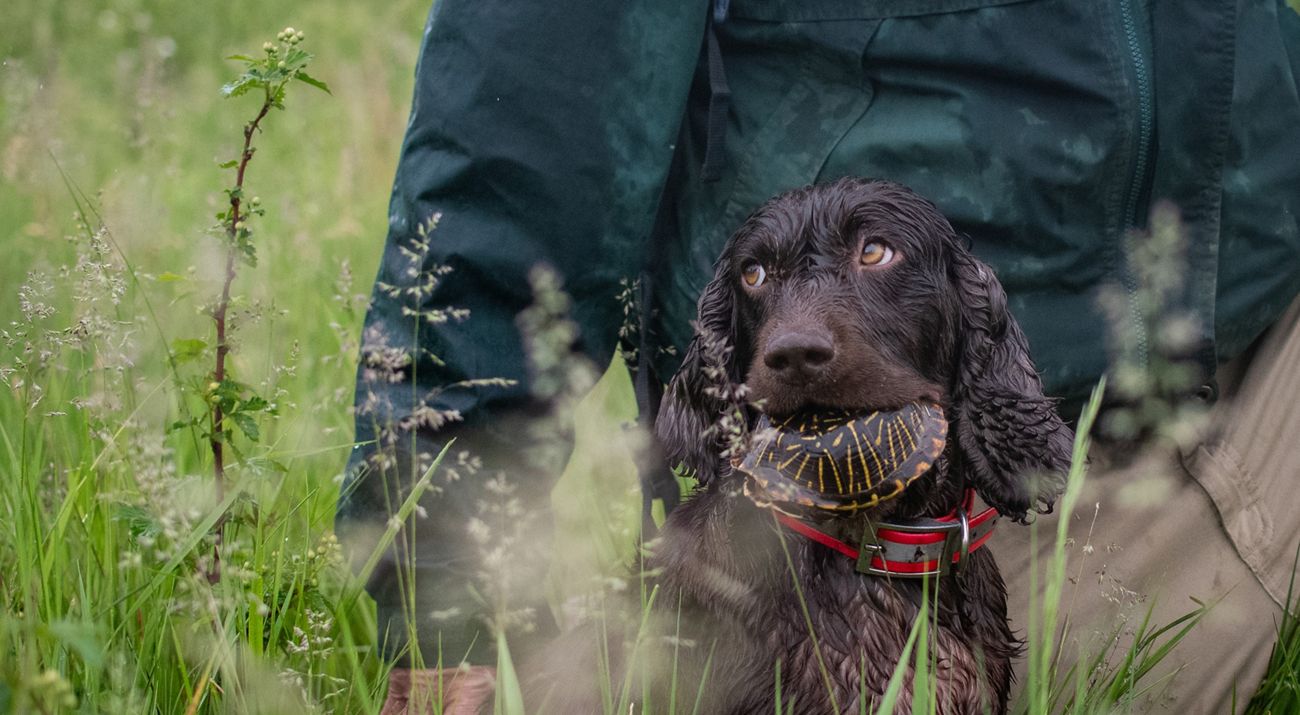
- Prairie Turtle Monitors: At The Nature Conservancy’s Nachusa Grasslands in Illinois, a famous squad of retired Boykin spaniels (trained by handler John Rucker, a retired high school English teacher from North Carolina) helped scientists track threatened ornate box turtles hidden deep in tallgrass prairie. Thanks to their soft mouths, the dogs gently picked up and retrieved the turtles without causing a single injury, locating more turtles in two hours than human researchers could find in a full week. Talk about efficiency!
- Pangolin and Ivory Detection: Organizations like Working Dogs for Conservation (WD4C) deploy sniffer dogs to transit hubs and border checkpoints across Africa and Asia. These dogs detect hidden ivory, rhino horn, and pangolin scales with breathtaking accuracy, disrupting illegal poaching networks before products leave the region.
- Saving the Right Whale: Off the coast of New England and Canada, specialized detection dogs ride on the bows of research boats to sniff out North Atlantic Right Whale scat from over a mile away. Finding these samples allows marine biologists to assess whale stress levels, pregnancy rates, and diet without ever disturbing these critically endangered and majestic ocean giants.
- Invasive Species Eradication: In New Zealand and Hawaii, local conservation teams rely on dogs to hunt down invasive pests like rats, stoats, and Argentine ants that threaten native bird populations. What would take human teams weeks of destructive searching, a trained dog can pinpoint in a single afternoon. Give these dogs a raise!
- Locating Invisible Plants: In the American West, dogs sniff out invasive weeds before they bloom above ground, allowing land managers to eradicate problem plants before they overtake native grasslands and fuel wildfire risks. How devastating can invasive plants be if left to run amok? Kudzu, a fast-growing climbing vine known is know as “the vine that ate the South” because it’s now so pervasive and seemingly unstoppable. It was brought to the U.S. from Japan in 1876. 150 years on, we’re still dealing with its destruction.
A Model for Local Agency
What makes working conservation dogs so compelling for community resilience is their low barrier to technology and high degree of local agency. You don’t need a multi-million-dollar lab or proprietary software to run a successful conservation dog program. You need dedicated handlers, strong local knowledge, a deep respect for animal behavior, and imagination.
It re-centers conservation work on human-animal partnerships, bringing local communities directly into the field as active custodians of their own ecosystems.
The Togetherhood Takeaway
True resilience means expanding our toolkit beyond human tech and recognizing the ecological allies already around us.
- Reframe How We View Nature’s Capabilities: Technology is vital, but biological solutions are often faster, cheaper, and less invasive. Look for opportunities in your own community where natural processes (a community members of all species!) can solve structural problems.
- Support Local Working Dog Programs: Look into organizations like Working Dogs for Conservation or Rogue Detection Teams. Supporting non-profits that train shelter dogs or rescue breeds for wildlife research gives animals a second life while protecting vital habitats.
- Become an Active Observer: Dogs succeed because they pay hyper-detailed attention to their environment. Take a cue from our four-legged partners this week: practice active observation in your local parks or urban green spaces to better understand the biodiversity right outside your doorstep.
We can’t tackle the ecological crisis alone. One of our best partners in building a sustainable future is sitting right at our feet, tail wagging and ready to help.

