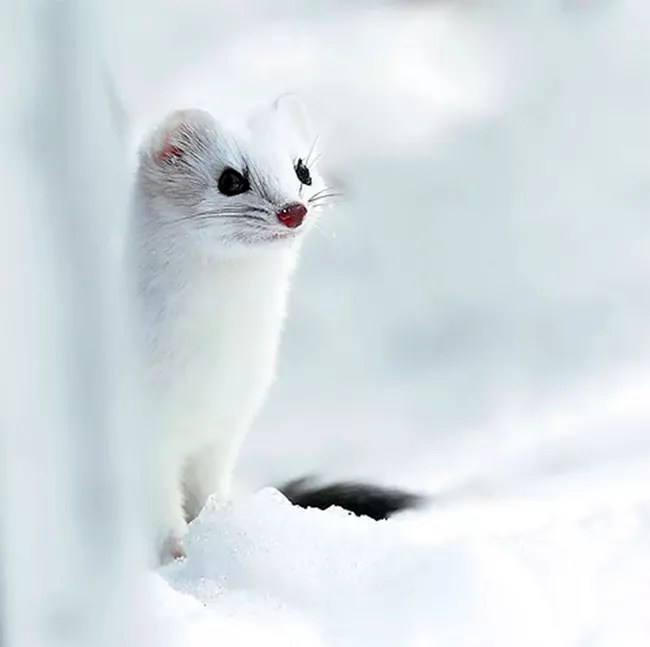
If you’ve been watching the Winter Olympics in Milan-Cortina this week, you’ve likely seen the mascots: two adorable, ferret-like creatures named Tina and Milo.
They are stoats (also known as ermines when they have their winter white coats!), and they were chosen to represent the games because of their liveliness and resilience. But biologically speaking, the stoat isn’t just cute. They are engineering marvels that have been refining their technology for over 5 million years.
While athletes are pushing the limits of human performance on the slopes, the stoat offers a masterclass in biomimicry—inspiring everything from search-and-rescue robots to “smart” clothing.
Here are three ways this little creature is shaping the future of technology:
1. The Soft Robotics Revolution
The stoat’s superpower is their shape. They’re elongated, highly flexible body allow them to navigate complex, burrow-like environments that other predators can’t touch.
Engineers are now studying this slender agility to design soft, maneuverable robots. Unlike rigid machines, these stoat-inspired bots can twist and flex to navigate narrow, restricted spaces—making them perfect for search-and-rescue operations in collapsed buildings or inspecting intricate pipeline infrastructure.
2. Adaptive Camouflage (Smart Materials)
We know the stoat changes their coat from rusty brown to snowy white in the winter. But biomimicry looks deeper than just the color change.
Researchers are studying the ermine transformation to develop adaptive materials that can change their properties based on environmental cues. Imagine stealth technologies or outdoor gear that doesn’t just insulate, but actively responds to temperature shifts and visual surroundings, mimicking the stoat’s ability to blend seamlessly into a snowy landscape.
3. Algorithms of Efficiency
Stoats are specialized hunters. Their movement is fast, fluid, and incredibly efficient.
Computer scientists are now analyzing their hunting dynamics and even their playful behavior to write better code. The way a stoat moves—making split-second decisions to navigate obstacles while maintaining speed—is informing movement algorithms for autonomous vehicles and drones.
The Togetherhood Takeaway
It is easy to look at nature as sweet and poetic. Nature’s that, and so much more. When we look at a stoat, we are looking at 5–7 million years of R&D and adaptation through experimentation.
As we cheer on the athletes this week, let’s give a little applause to Tina and Milo, too. They aren’t just mascots; they are blueprints for the next generation of adaptive, resilient technology.
Nature doesn’t just survive the winter. She engineers her way through it.
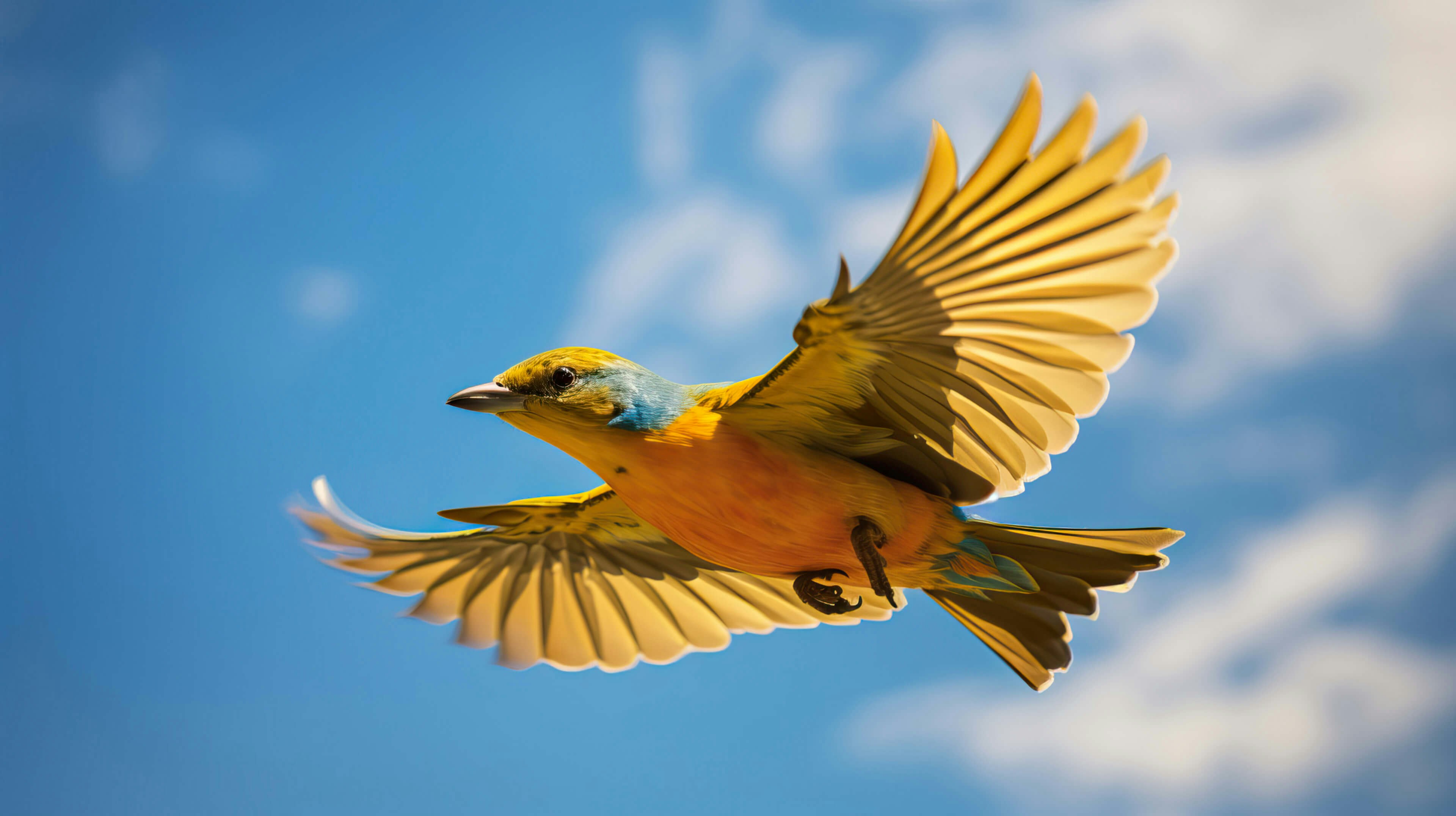
The Golden Tanager, a high-flying bird native to the Andes Mountains in South America. Photo by Bird Bird on Unsplash.
Last week we looked at why our dogs are sensitive to toxins. This week, we look up. Why birds are the most efficient breathers on Earth—and what they can teach us about stress, stamina, and clearing the air.
Last week, I wrote about how our dogs act as “biological sentinels” in our homes. Because they live on the floor and groom their fur, they are often the first to show the effects of the invisible toxins in our home environment.
But there is another biological sentinel we have relied on for centuries: The canary in the coal mine.
We often use that phrase to describe a warning sign. But have you ever stopped to ask why the canary dies first?
It isn’t just because they are small. It’s because they are superior breathers.
As I was digging into the research on environmental health last week, I learned that birds extract significantly more oxygen from the air than mammals do. While that makes them more vulnerable to pollution, it also makes them athletes of the sky.
The bar-headed goose (Anser indicus) is renowned for its ability to fly directly over the Himalayas during its biannual migration between Central Asia and India, with sightings recorded at altitudes exceeding 28,000 feet, nearly reaching the peak of Mount Everest. The air is so thin at that altitude that it would kill a human. Birds can not only survive but can exert themselves that high in the air because of the unique way they process breath.
Since February is often a month where we feel stifled by the cold of winter (especially this year!), I wondered: Can we learn to breathe like a bird?
The Science: The Circle vs. The Tide
The difference comes down to flow.
Humans breathe like the tide. We have a tidal breath system. We breathe air into an enclosed sac (our lungs), and then we have to push it back out the same way it came in. The problem? We are terrible at emptying the tank. We often leave “stale” air trapped in the bottom of our lungs, mixing fresh oxygen with old carbon dioxide. It’s inefficient.
Birds breathe in a circle. Birds have a system of air sacs that act like bellows. They push air through their lungs in one continuous direction.
When a bird inhales, it gets fresh oxygen.
The Mind-Blowing Part: When a bird exhales, it moves stored air from a rear sac into the lungs, meaning it gets fresh oxygen again.
They get oxygen on the inhale and the exhale. They never stop fueling the engine.
(If you want to see this in action, watch this 2-minute animation. It completely changed how I visualize breath: https://youtu.be/_NnBgM41jp0)
How Can We Adapt the Breath of a Bird: Focus on the Exhale
We cannot physically grow air sacs (unfortunately). But we can mimic the bird’s efficiency by changing one simple habit.
Most of us are shallow breathers. When we are stressed, we take tiny sips of air, leaving that stale air stagnant in our lungs.
To breathe like a bird, we don’t only need to inhale more; we need to exhale more.
Try this Biomimicry-inspired Bird Breath:
Empty the Tank: Instead of just letting your breath go, actively push the air out until your lungs feel completely empty. Squeeze the abs. Get rid of the “tidal” leftovers.
The Recoil: Once you are truly empty, your body will naturally reflexively gasp for a deep, full breath of fresh air.
Repeat: By focusing on the out, the in takes care of itself.
Nature designed birds to never waste a breath. We might not be able to fly over the Himalayas, but by clearing out the stale air, we can definitely navigate our day with a little more altitude.
Yesterday, I volunteered at the Muddy Paws Rescue adoption event because they needed some last-minute help. Afterward, I was supposed to pick up two 4-pound puppies who needed a temporary foster overnight. I had my apartment all set up for them; I was so excited. I haven’t had puppies since Dorothy and Sophia, my bloodhound babies, and I’ve never had puppies quite that small. I even caught myself wondering if one of them might be “the one.”
But at the event, plans shifted. A foster arrived and explained they wouldn’t be able to pick up their foster dog if he didn’t get adopted. As excited as I was for those puppies, I knew it would be much harder to find an emergency placement for this 50-pound adult dog who suddenly had nowhere to go.
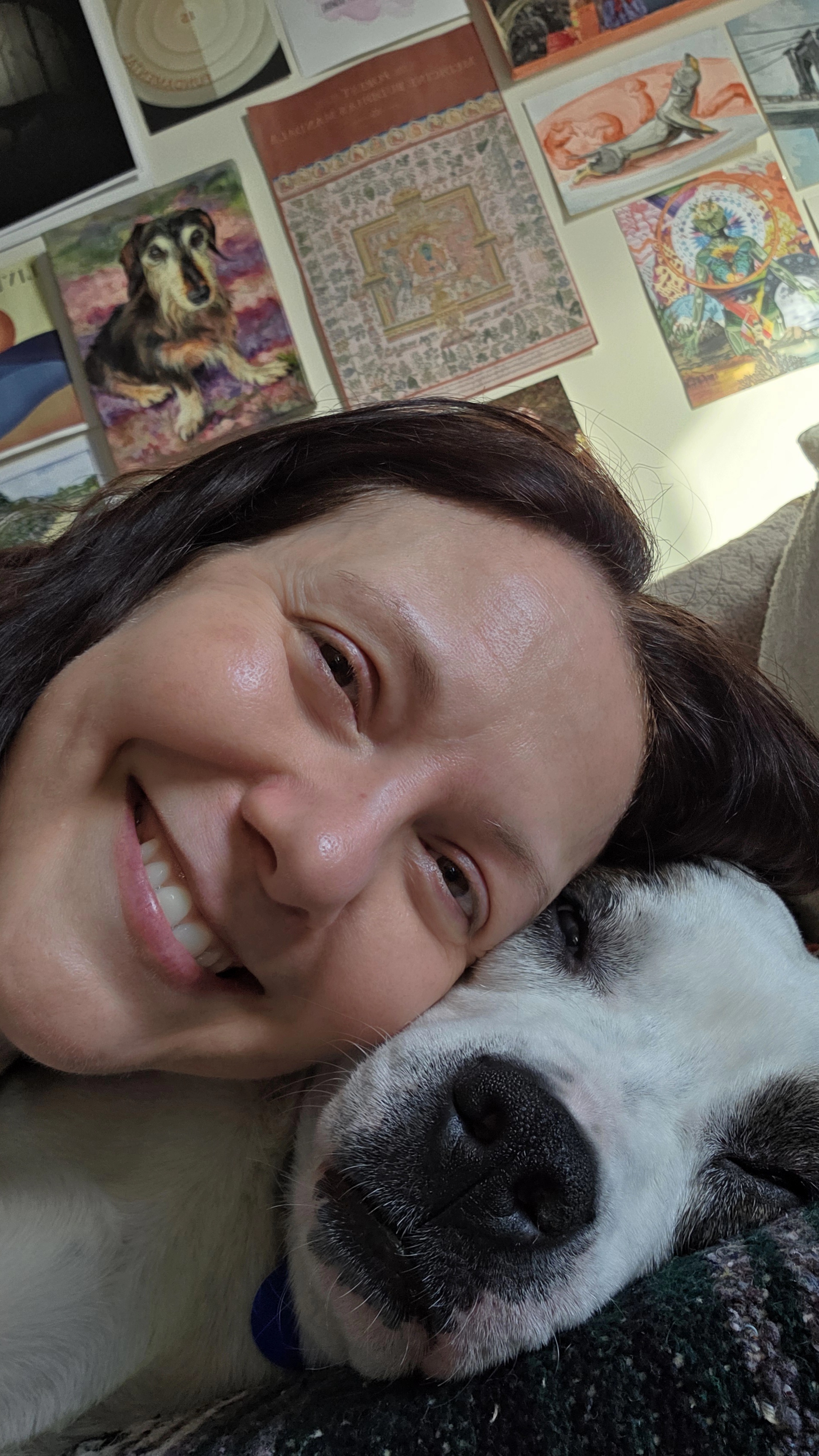
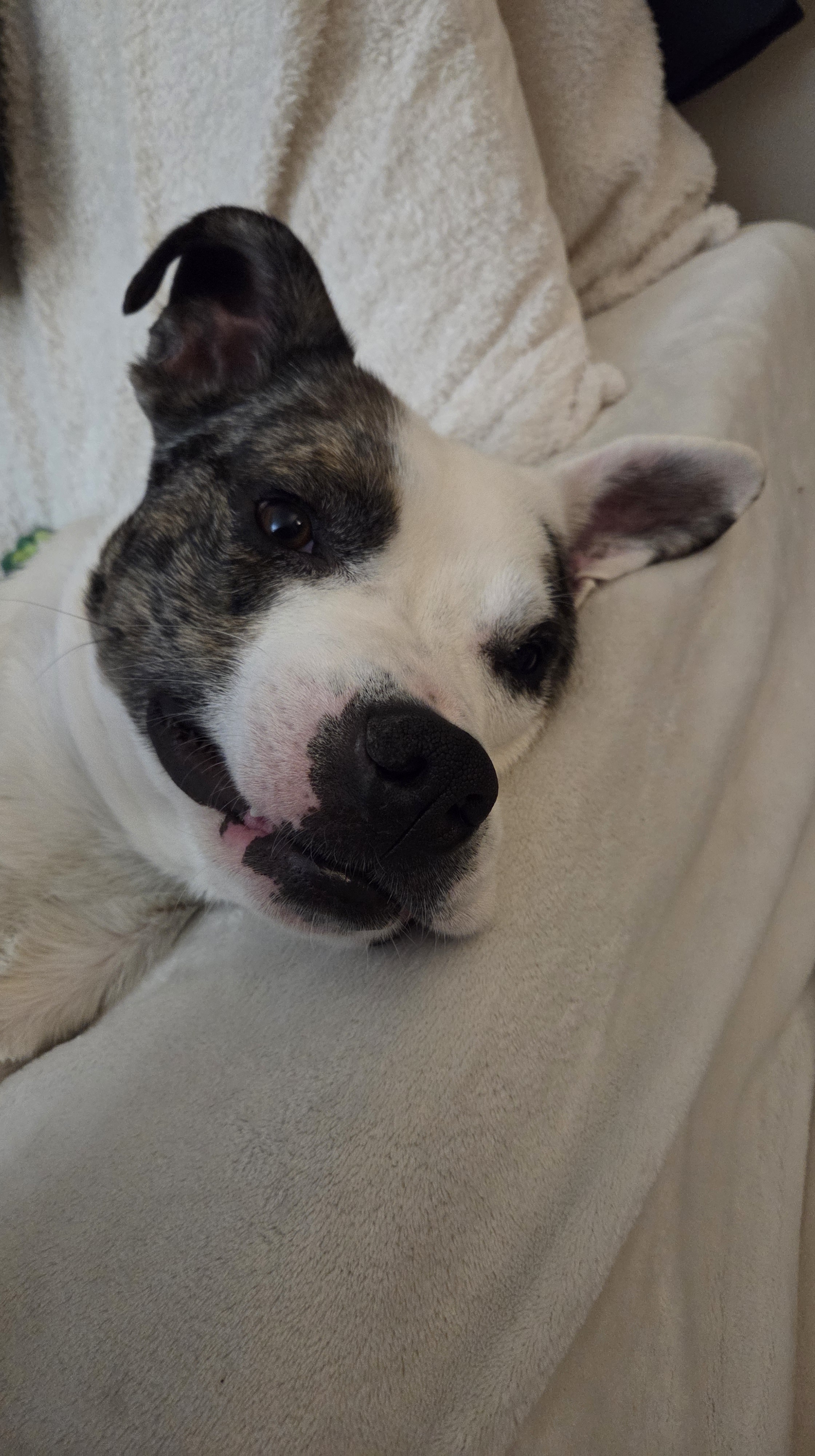
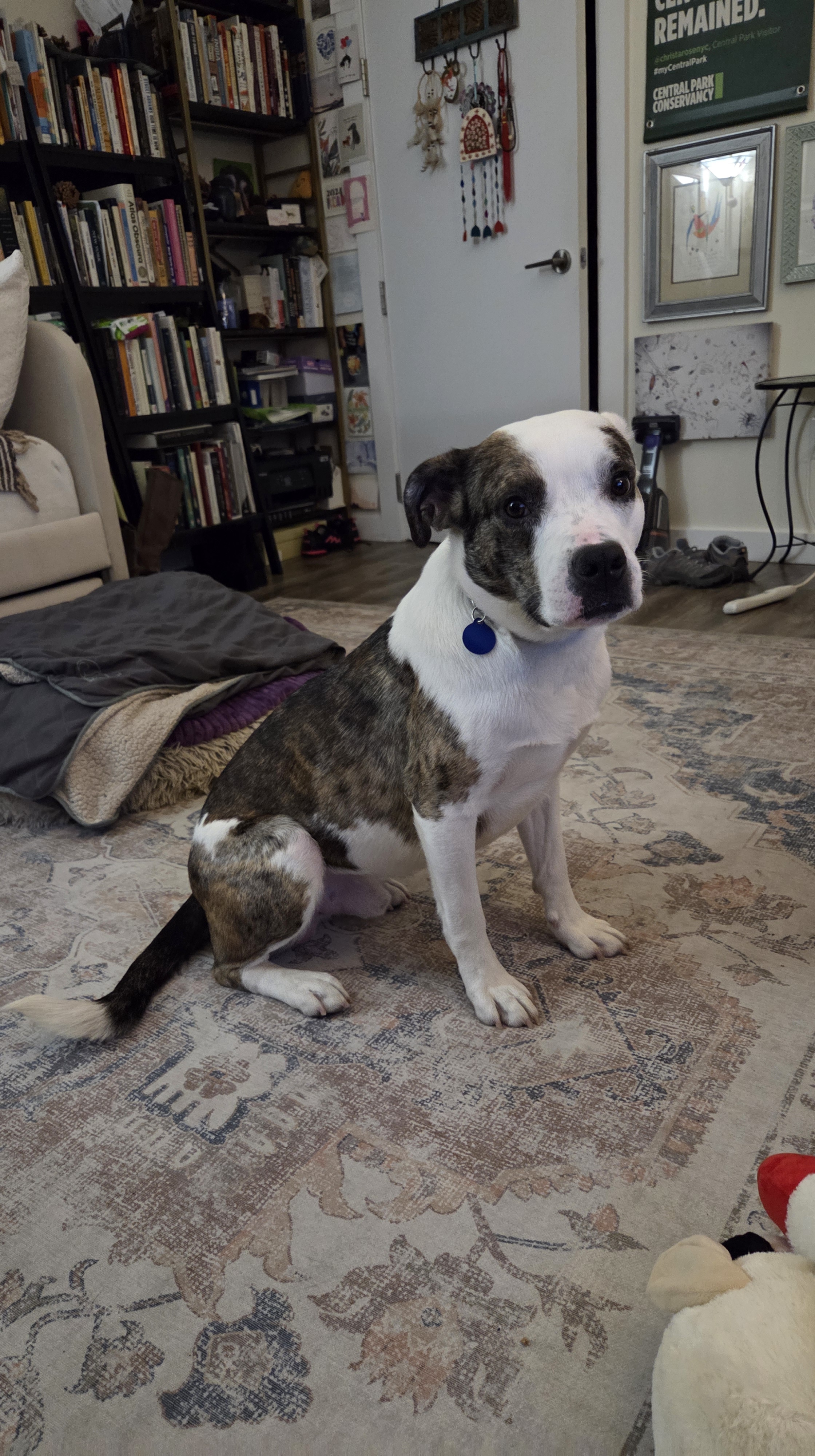
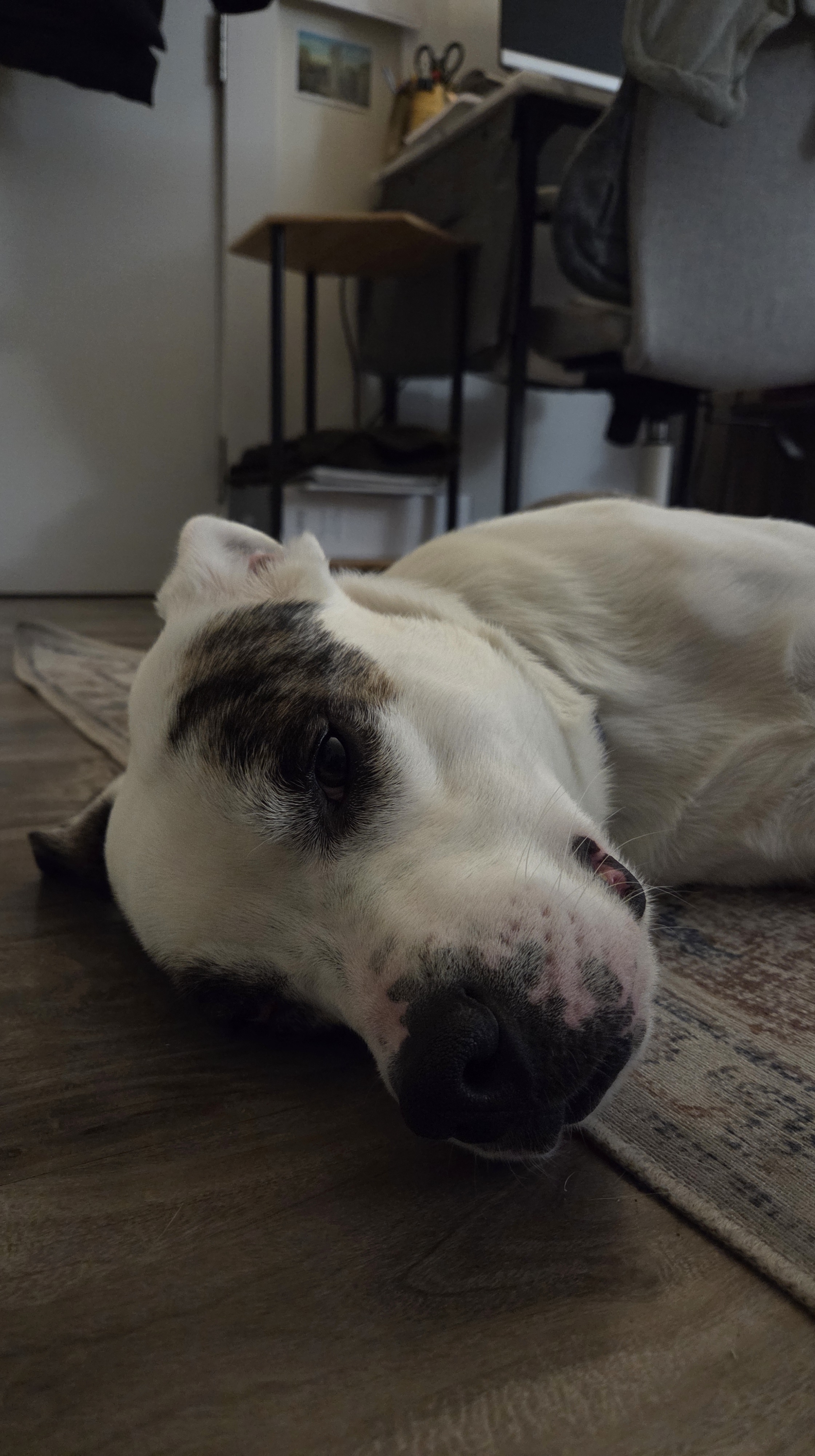
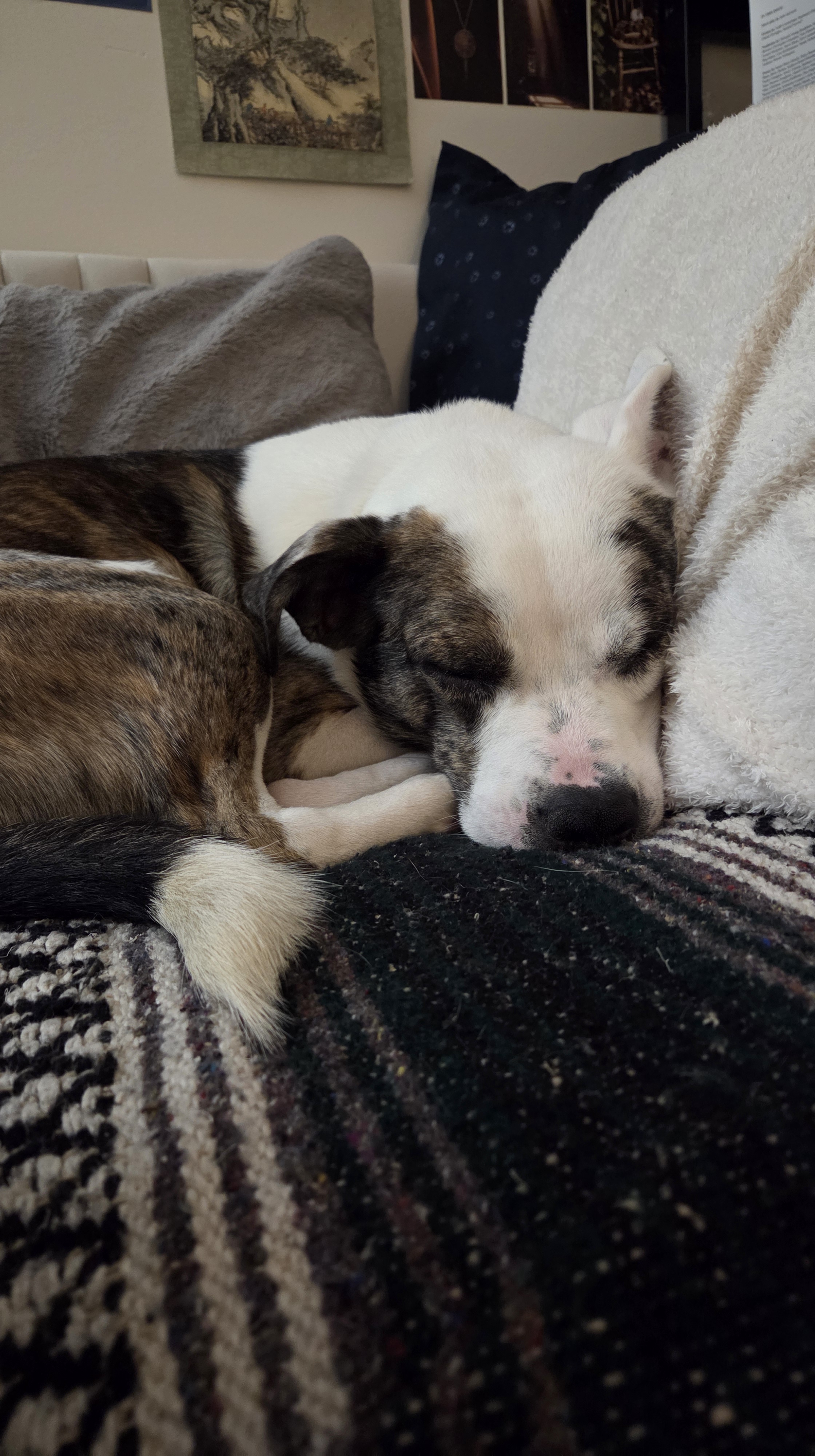
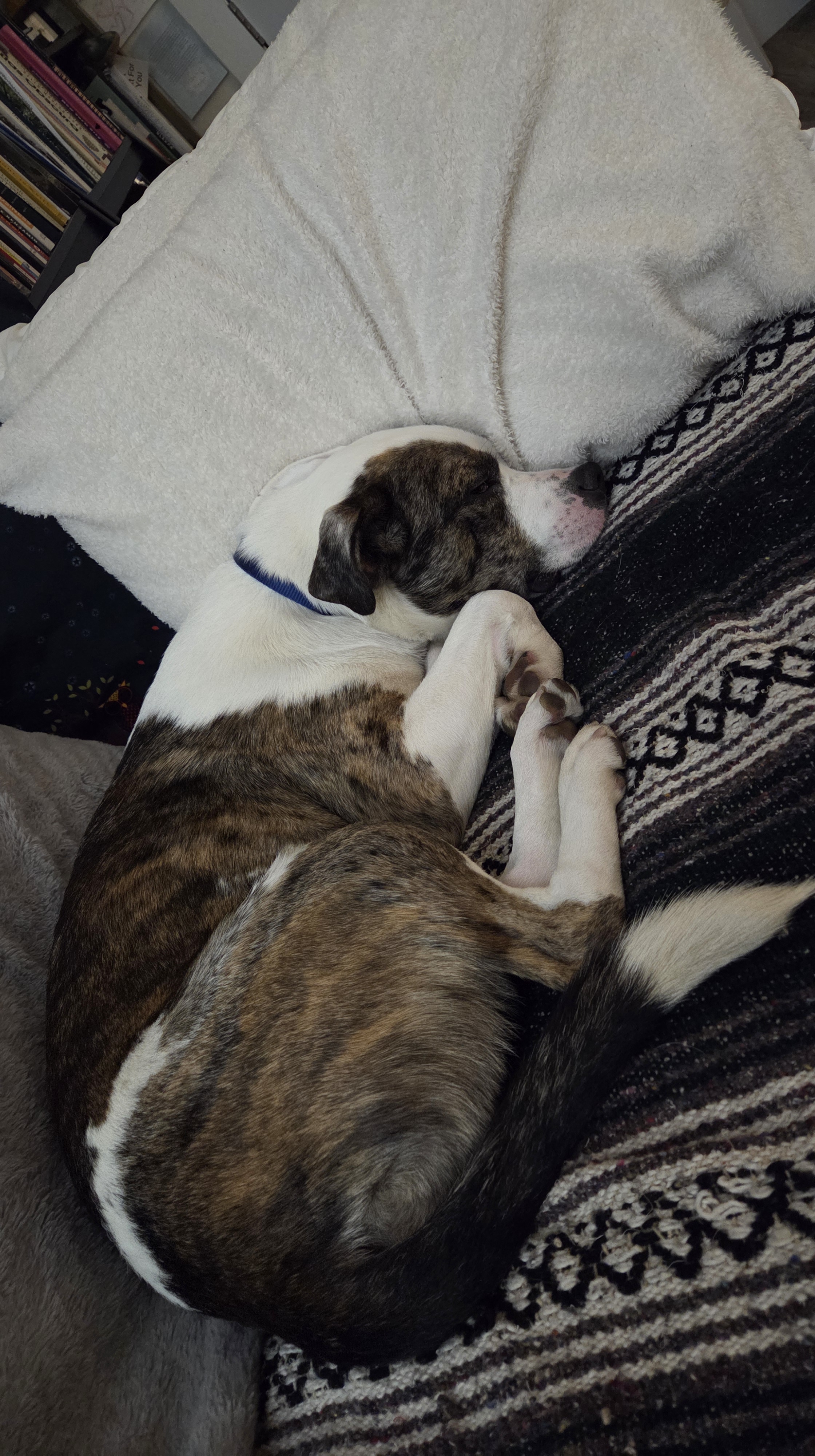
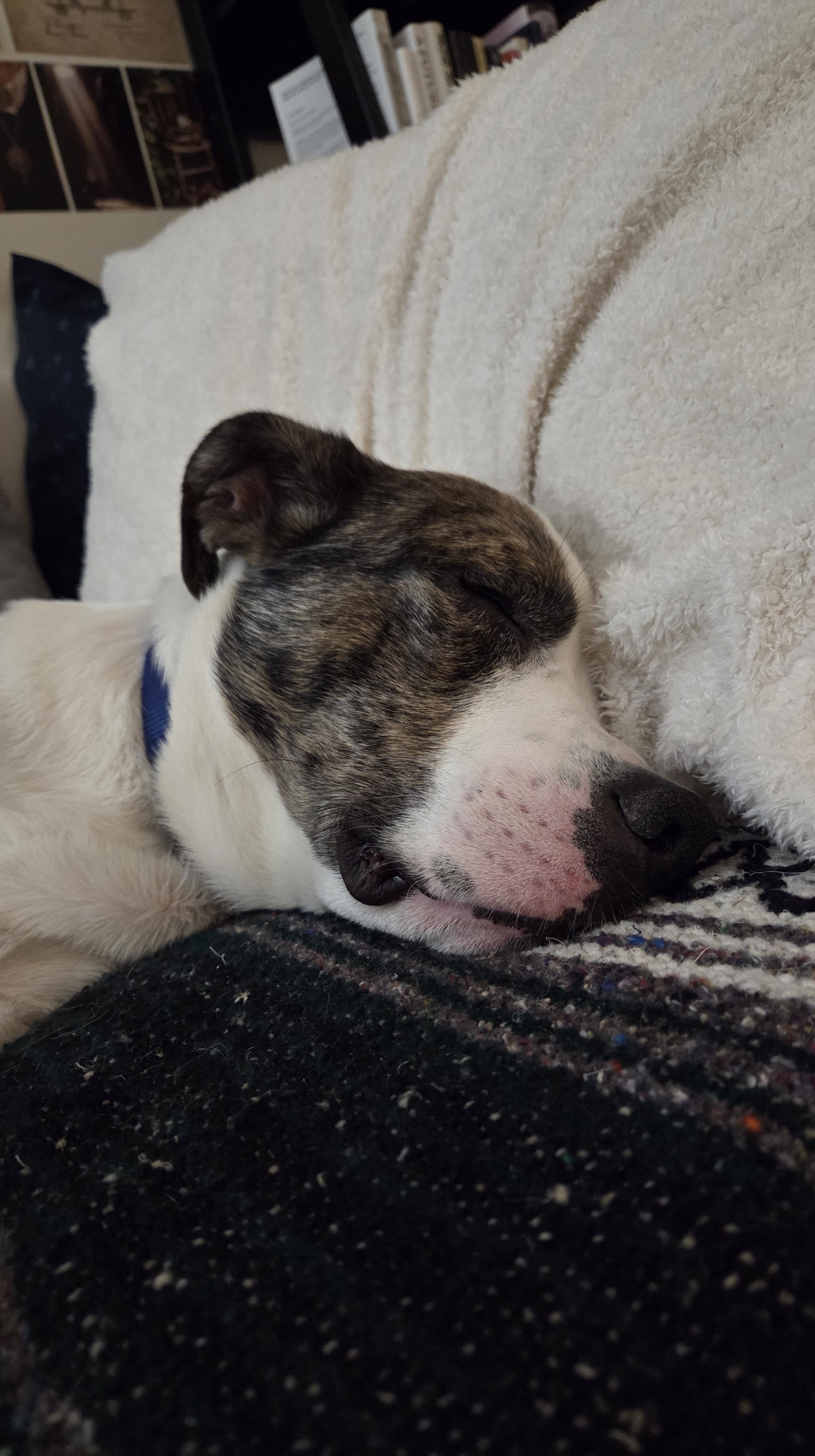
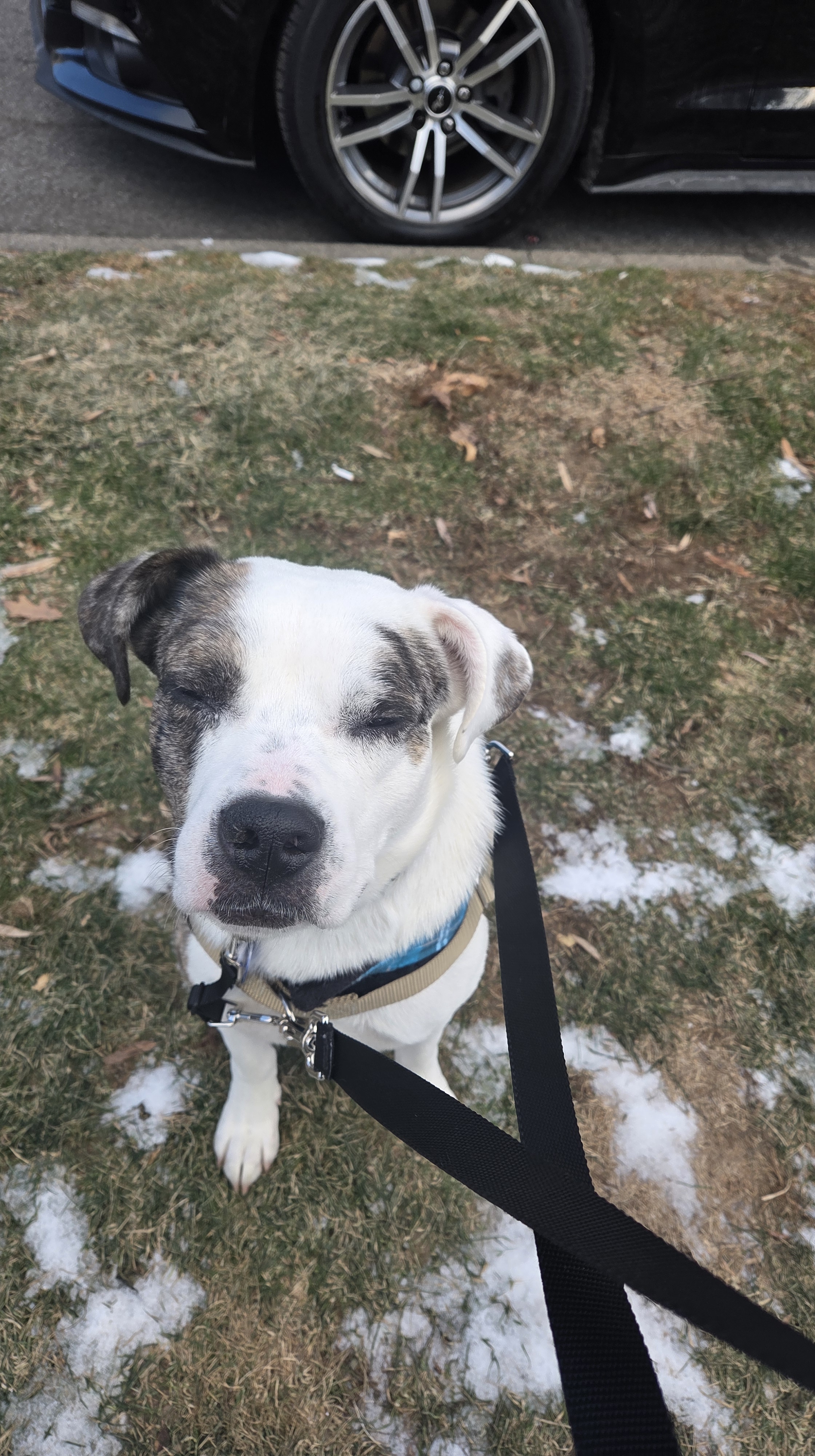
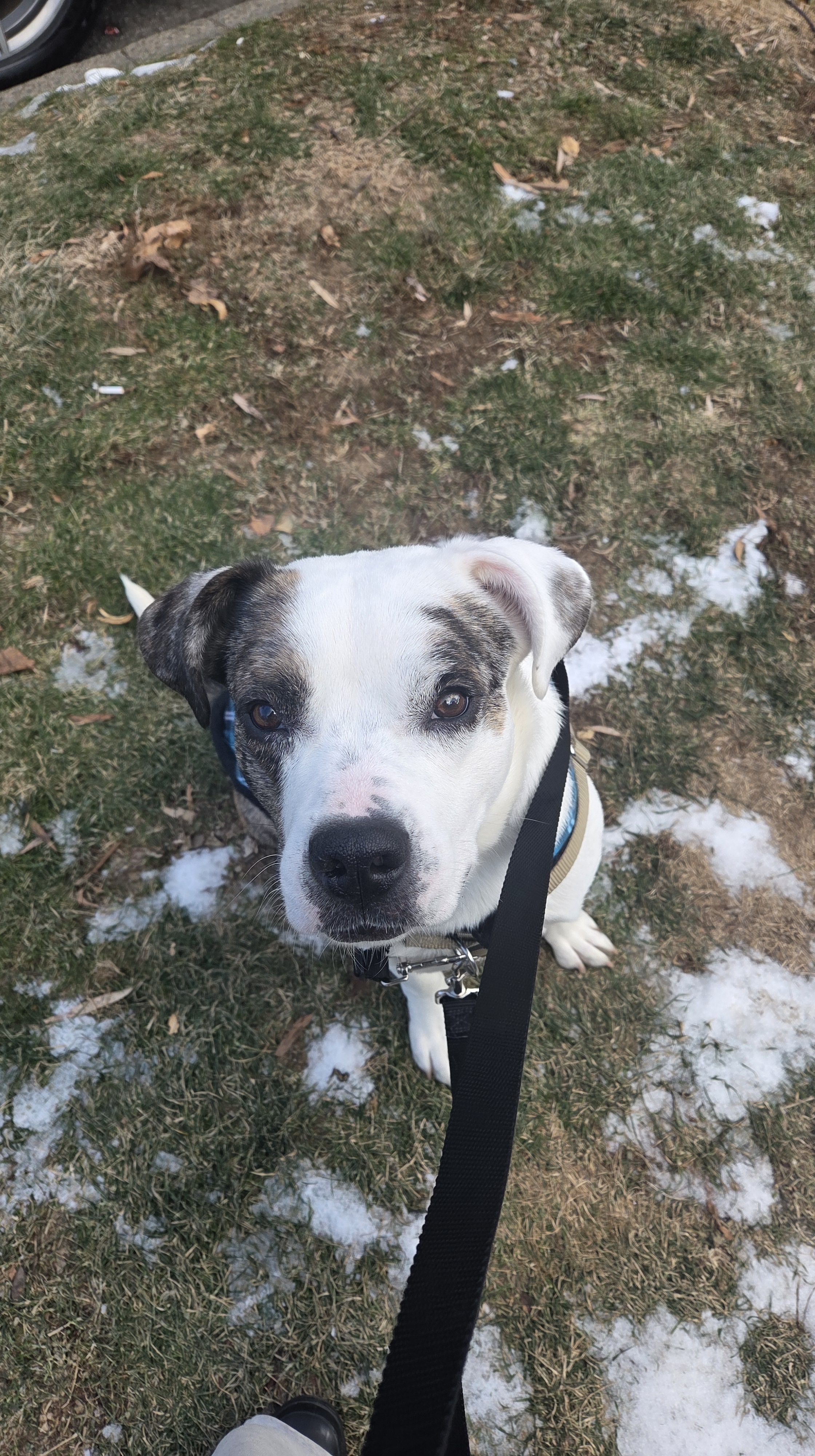
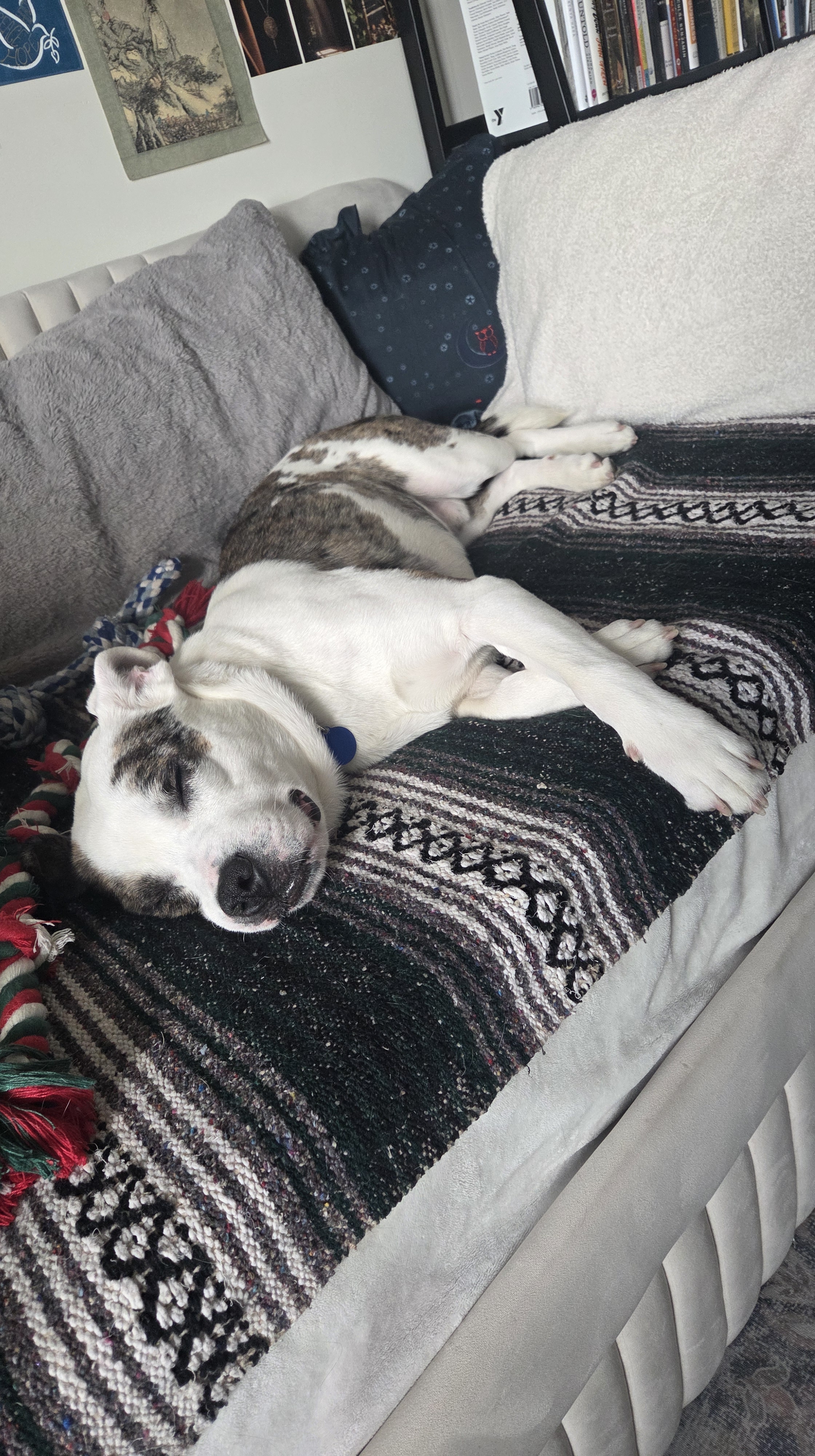
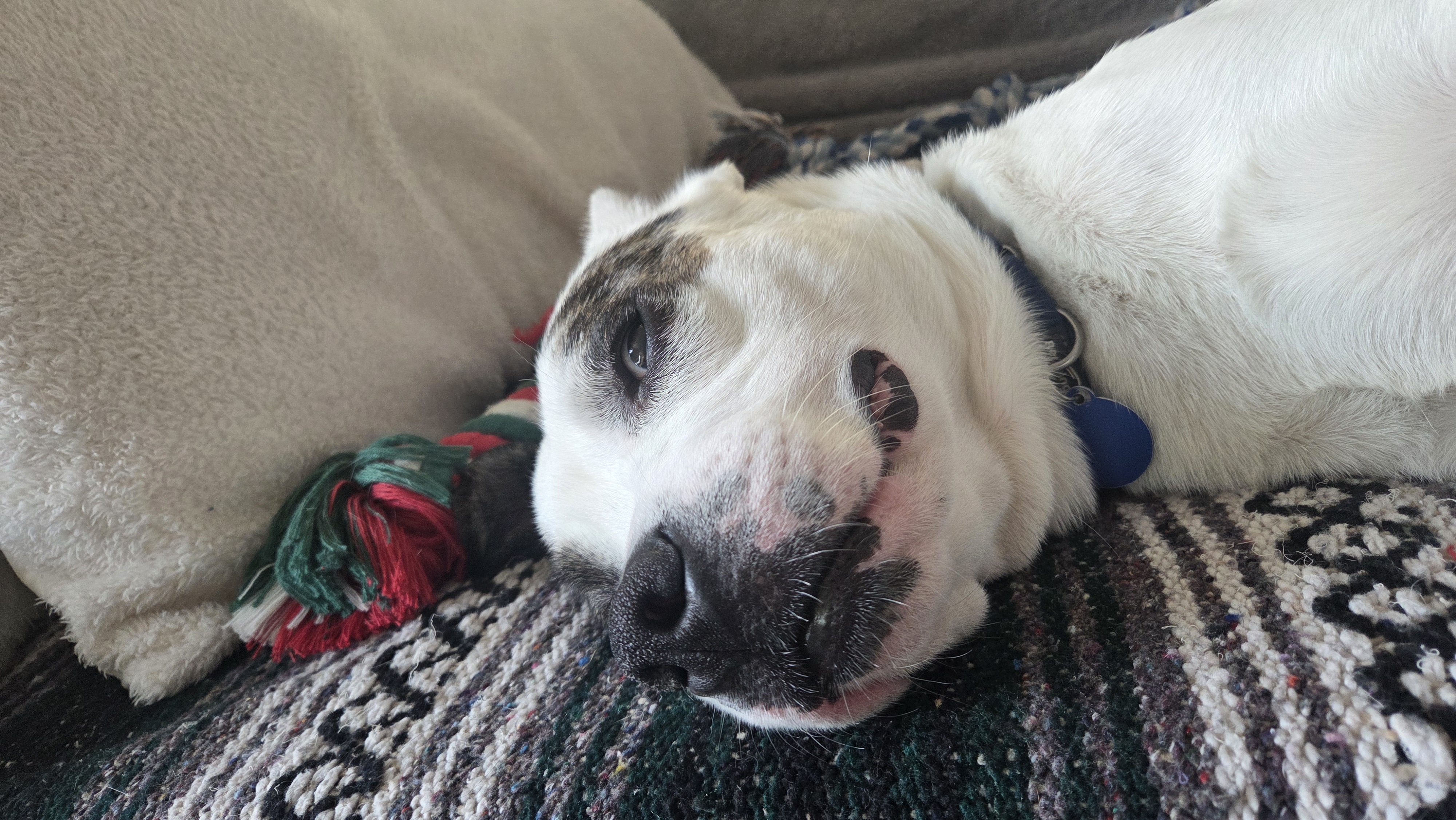
So, meet Tony: my first foster of 2026.
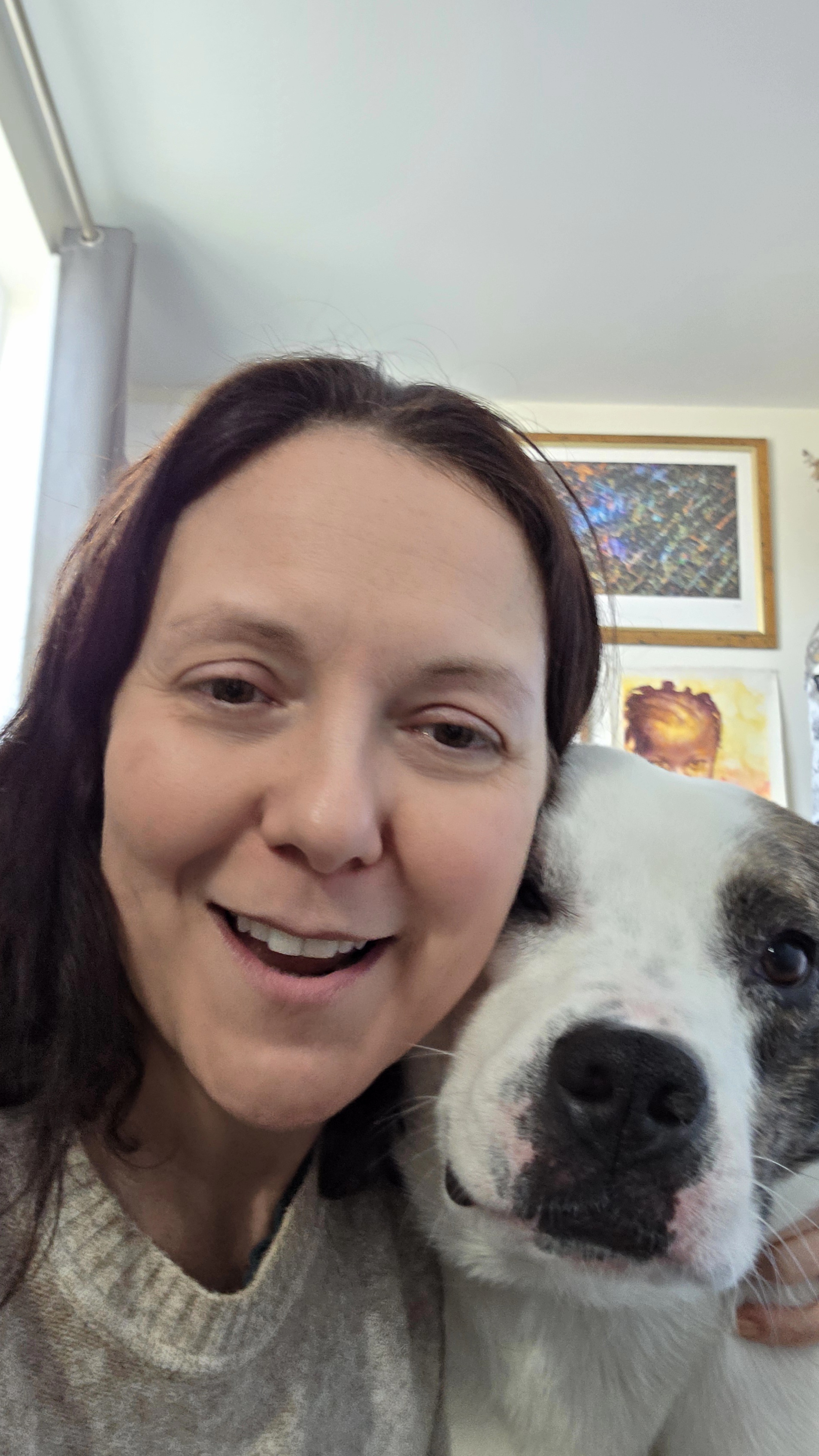
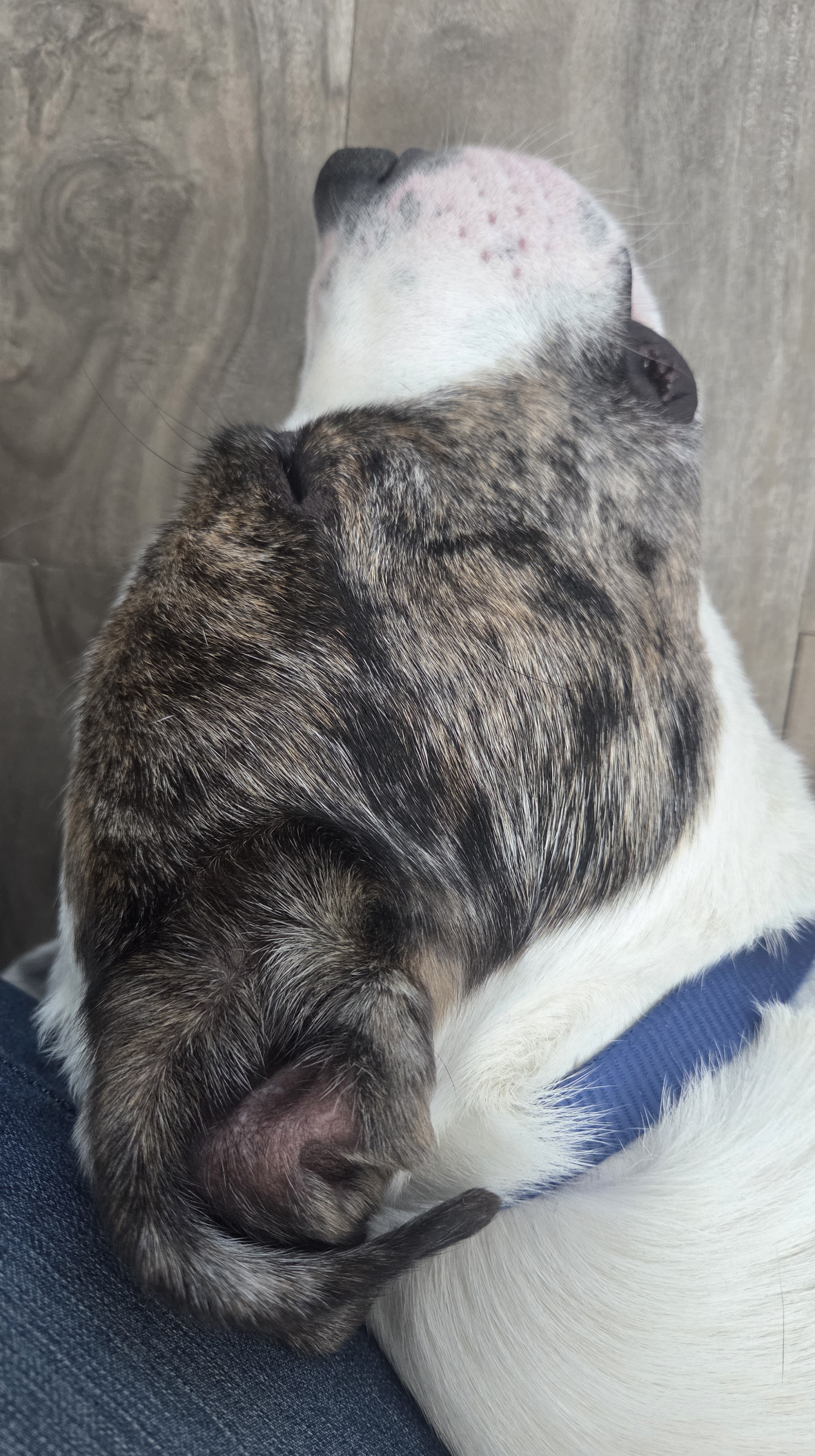
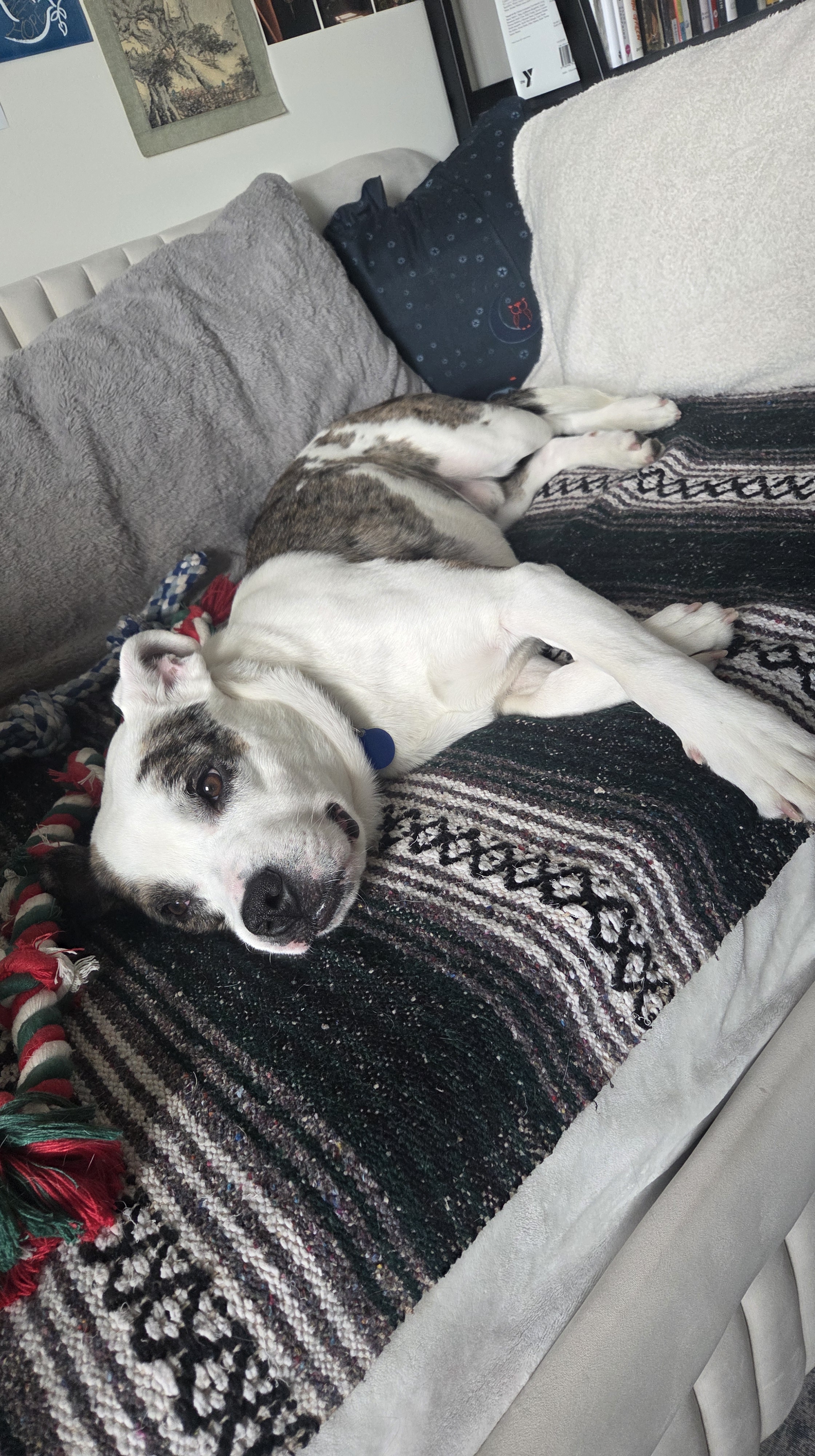
Tony is a total “hidden gem.” He is an expert snuggler, a master of the “lean,” and a dog who clearly just wants to make his person happy. In the short time he’s been with me, I’ve discovered he is housebroken, a fantastic napper, and surprisingly unphased by other dogs or city noises. While he’s a big boy, he has no prey drive—he’s just a curious guy who is very eager to please, especially if you have a pocket full of treats!
Truthfully, I wasn’t ready to take a foster. I am personally looking to adopt, and I have a massive week ahead with work. I definitely wasn’t looking for a foster this big and strong—I actually had to get a mini-lesson on the best ways to walk a dog of his size while protecting my back, since I’m quite petite and still mindful of my back injury recovery and physical limitations.
Because of my own physical recovery, Tony is looking for a “takeover” foster or—even better—his forever home! He would thrive with someone who has experience with bully breeds and the physical stature to handle his curiosity on walks. He’s already making great progress on the leash and loves working on his brain games, Kongs, and lick mats.
Sometimes, when a being really needs us, we do things before we’re ready. If we all step up just a bit when we see a way to help, the whole system gets better. Every foster dog I’ve had has taught me something. None of those lessons were ones I anticipated; they were lessons I didn’t even know I needed. I’m sure Tony is here to teach me something that will make me a better person, and I’m so happy to be the bridge to his forever home.
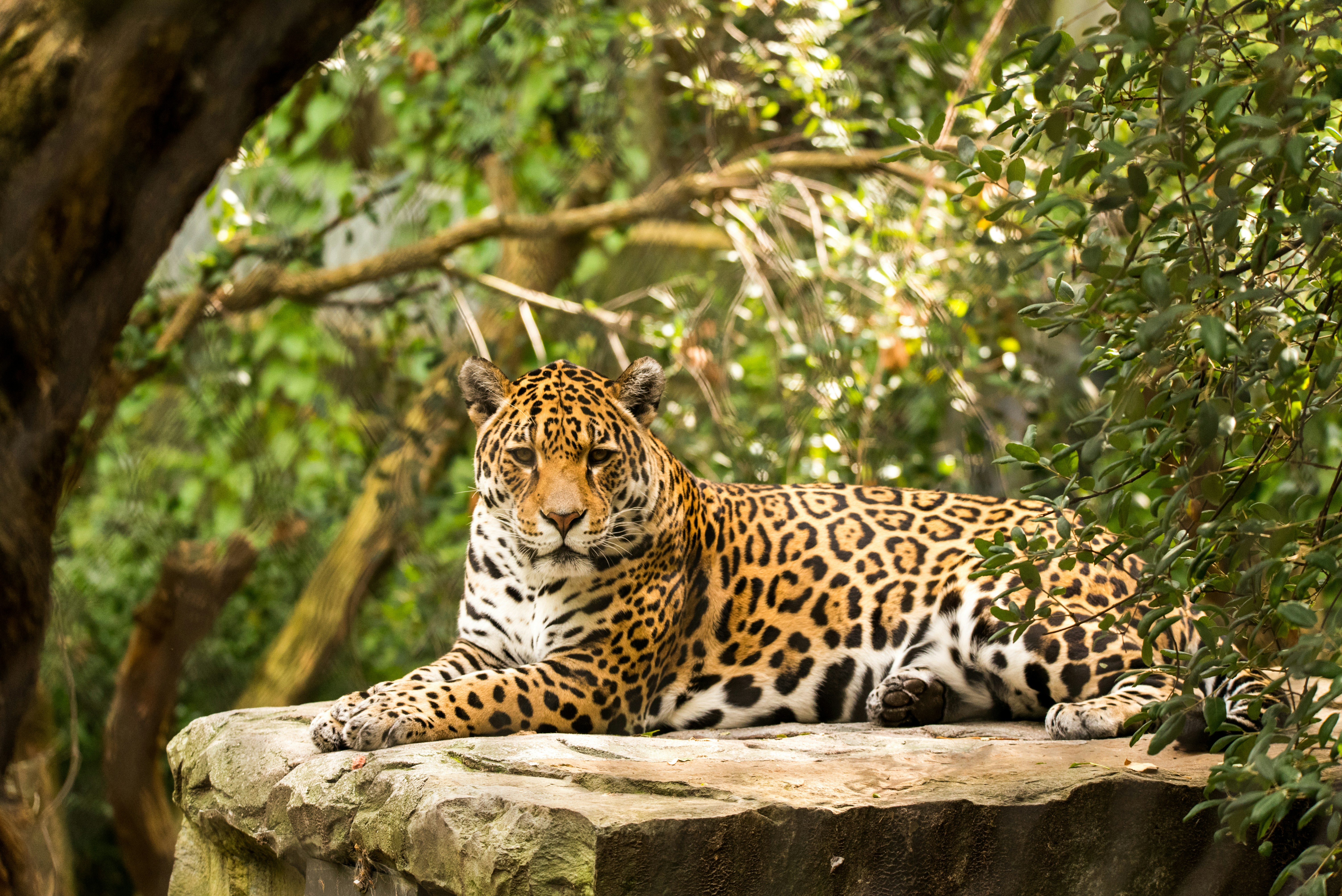
A jaguar in the wild—a symbol of the resilience we are seeing return to the American Southwest. Photo by Ramon Vloon on Unsplash
I started Togetherhood, my weekly nature newsletter, exactly one year ago, and I am so grateful to every one of you who has subscribed, read, shared, and commented on my nature stories along the way.
To mark this one-year anniversary—and the arrival of 2026—I wanted today’s post to focus on the wins nature secured in 2025. Yes, there were heartbreaking losses that felt like a gut punch. But there were also moments of joy and triumph that received far too little coverage. While we must be clear-eyed about the darkness, we must also give the light her due.
Yesterday, CBS Sunday Morning aired a segment with David Pogue on the good news of 2025. It was a perfect reminder that innovation and compassion are still alive and well. Here are two of the standout nature stories from that segment, plus a few other big wins from around the globe that we should celebrate.
The End of “Forever” Plastic? David Pogue highlighted a game-changer happening right now in Massachusetts. A company called Black Earth Compost is proving that single-use doesn’t have to mean forever. They are utilizing a new kind of “plastic” made entirely from sugar cane. Unlike the “biodegradable” labels of the past that didn’t really work, this stuff actually breaks down alongside household food scraps, turning into nutrient-rich compost rather than microplastics in our soil. It’s a closed-loop win we desperately need.
Farmers & Birds: A Surprise Alliance In California, a program is flipping the script on the usual farmer-vs-environmentalist narrative. Pogue spoke with Katie Riley from The Nature Conservancy about the “BirdReturns” program. In this initiative, farmers (like the Zuckerman family in Lodi, CA) are paid to flood their fields during specific times of the year. These pop-up wetlands create crucial rest stops and feeding grounds for migratory birds like Sandhill Cranes. The result? Farmers get a new revenue stream, and bird populations that were struggling are getting a massive lifeline.
Renewables Finally Beat Coal: This isn’t just a projection anymore; it’s a fact. In October, energy think tank Ember confirmed that for the first time in history, renewables generated more electricity globally than coal (34.3% vs 33.1%) in the first half of the year. Solar alone is doing the heavy lifting, meeting 83% of the increase in global power demand.
The High Seas Are Officially Protected: On September 19, we hit a massive milestone: The High Seas Treatysecured its 60th ratification (thanks to Morocco!), which is the magic number needed to make it international law. This triggers the treaty’s entry into force in January 2026, finally allowing us to create marine sanctuaries in the “Wild West” of the open ocean.
Species Bouncing Back:
Jaguars in Arizona: Just this month, officials confirmed a new male jaguar—dubbed “Jaguar #5”—was spotted on trail cams in Southern Arizona in late November. He is the fifth wild jaguar documented in the state since 2011, proving that despite border walls, these cats are finding a way to return home.
It’s going to be a tough year ahead, but these stories prove that when we give nature half a chance—or when we get smart about solutions—it has an incredible ability to heal.
See you in 2026! We’ve got work to do, and we’ll work together with nature to make this a better world for all beings.
The ocean’s depths have always held secrets, a vast, unexplored frontier teeming with life that defies our conventional understanding. Just when we think we’ve seen it all, nature delivers another astonishing revelation. Recently, a groundbreaking discovery has captivated the scientific community and nature enthusiasts alike: the first-ever methane-powered sea spiders, thriving in the extreme conditions of the ocean floor.
Imagine a world where sunlight never penetrates, where pressures are crushing, and life seems impossible. Yet, in these seemingly inhospitable environments, vibrant ecosystems flourish, often fueled by chemosynthesis—a process where organisms derive energy from chemical reactions rather than sunlight. While hydrothermal vents and cold seeps are known hubs for such life, the discovery of methane-powered sea spiders introduces a new, fascinating chapter to this narrative.
These remarkable creatures, belonging to the ancient order of Pycnogonida, or “sea spiders,” have long been a source of wonder with their spindly legs and delicate forms. But what makes this new find truly extraordinary is their unique metabolic pathway. Scientists have observed these deep-sea arachnids congregating around methane seeps, areas where hydrocarbon gases leak from the seafloor. Through meticulous research, it was determined that these spiders don’t just live near the methane; they actively utilize it.
The research suggests a symbiotic relationship, perhaps involving specialized bacteria within the spiders’ gut or on their external surfaces, that can metabolize methane. This process converts the potent greenhouse gas into a usable energy source for the spiders, allowing them to thrive in an environment previously thought devoid of complex life forms that could directly tap into methane as fuel. It’s a biological marvel, showcasing evolution’s incredible adaptability.
This discovery has profound implications. It expands our understanding of life’s resilience and the diverse ways organisms can harness energy. It prompts us to reconsider the potential for life in other extreme environments, both on Earth and perhaps beyond. Furthermore, studying these methane-powered spiders could offer insights into novel biochemical processes, potentially leading to advancements in areas like bioremediation or sustainable energy.
The deep sea continues to be an endless source of inspiration and scientific inquiry. The methane-powered sea spider is not just a new species; it’s a testament to the ocean’s boundless capacity for wonder, reminding us that even in the most extreme corners of our planet, life finds a way, often in the most unexpected and awe-inspiring forms. As we continue to explore, who knows what other incredible adaptations await discovery in the mysterious depths below?
In the urban symphony of honking taxis and bustling sidewalks, it’s easy to forget that New York City is also home to a surprising array of wildlife. From the familiar pigeons and squirrels to more elusive species like coyotes, egrets, and even occasional seals in the harbor, nature finds a way to persist amidst the concrete jungle. However, these urban dwellers face significant challenges, primarily the fragmentation of their habitats. Parks, green spaces, and natural areas exist as isolated islands in a sea of development, making it difficult for animals to move, find food and mates, and maintain healthy populations.
This is where wildlife corridors, also known as green corridors or ecological corridors, become vital. More than just 2 patches of green, these linear stretches of habitat act as nature’s highways, providing safe passage for animals to travel across urban landscapes and limit interactions with humans (which keeps wildlife and humans safe.)
Why are wildlife corridors so important?
The benefits of establishing and maintaining wildlife corridors extend far beyond simply allowing animals to move:
Combating Habitat Fragmentation: Urban sprawl carves up natural landscapes, isolating animal populations. Corridors reconnect these fragmented habitats, allowing for greater movement and reducing the risks of inbreeding and localized extinctions.
Promoting Biodiversity: By facilitating the flow of individuals between different areas, corridors help maintain genetic diversity within species and support a wider variety of plant and animal life.
Supporting Migration and Dispersal: Many species need to move seasonally or disperse to new areas to find resources or establish new territories. Corridors make these crucial movements possible.
Enhancing Ecosystem Health: The movement of wildlife aids in essential ecological processes like pollination and seed dispersal, contributing to the overall health and resilience of urban ecosystems.
Increasing Climate Resilience: Green corridors can provide areas that may offer refuge as the climate changes, allowing species to shift their ranges. They also contribute to urban cooling and stormwater management by providing more green space – a win for all species, including humans.
Providing Educational and Recreational Opportunities: Urban green spaces, including corridors, offer residents opportunities to connect with nature, observe wildlife, and engage in outdoor activities. (However, please don’t touch wildlife or attempt to corner them to get a photo – give them space and let them be.)
Building Nature into the Urban Fabric of New York City
Integrating wildlife corridors into a dense, established metropolis like New York City presents unique challenges, but it is possible. It requires creative thinking, strategic planning, and a commitment to green infrastructure. Here are some ways we can build nature’s highways into our city:
Leveraging Existing Green Spaces: Connecting existing parks, community gardens, cemeteries, and natural areas through planted streetscapes, greenways along industrial areas or waterways, and even strategically placed planter boxes can create a network of connected habitats.
Creating Green Roofs and Walls: These vertical and horizontal green spaces on buildings can act as steppingstones or even continuous pathways for birds, insects, and small mammals, particularly in areas with limited ground-level space.
Utilizing Waterfronts: New York City’s extensive coastline and rivers offer significant opportunities to establish riparian corridors with native vegetation, providing crucial habitat and movement pathways for a variety of species. The Manhattan Waterfront Greenway, while primarily for human use, also offers ecological benefits and could be further enhanced for wildlife.
Designing Wildlife Crossings: While more challenging in a dense urban environment, innovative solutions like vegetated overpasses or underpasses could be explored in areas where major roads or highways sever existing or potential green spaces.
Prioritizing Native Plants: Filling these corridors with native trees, shrubs, and flowering plants is crucial as they provide the specific food and shelter that local wildlife need. This also reduces the need for intensive maintenance and pesticides.
Rethinking Urban Planning and Development: Integrating ecological connectivity into the very fabric of urban planning is key. This includes implementing regulations that encourage green infrastructure in new developments and protecting existing natural areas.
Engaging the Community: Educating residents about the importance of urban wildlife and corridors, and involving them in planting and stewardship efforts, can foster a sense of ownership and ensure the long-term success of these initiatives. Programs reducing pesticide use in private gardens and encouraging bird-friendly glass windows to prevent collisions (we lose an astonishing 90,000 to 230,000 birds to window collisions in New York City every year) also contribute to a healthier urban ecosystem.
New York City has already taken steps in this direction with its extensive park system and efforts to restore natural areas. By intentionally building and enhancing wildlife corridors, the city can become a more resilient, biodiverse, and ultimately, more livable place for both its human and animal inhabitants. It’s an investment in the ecological health of the city and a recognition that even in the heart of the urban jungle, nature deserves a connected path forward.
Black-backed woodpecker. National Park Gallery. Public domain photograph by National Park Service.
For most animals, including humans, wildfires represent a dire threat. The smoke-filled skies and relentless heat leave little room for survival. But against all odds, in the natural world, fires don’t always signal death. For a select few creatures, they actually signal an opportunity—a gateway to survival and even proliferation. These creatures, adapted to the flames, have evolved extraordinary traits to navigate and thrive in fire-scorched environments. From fire-seeking beetles to flame-spreading birds, their stories reveal the unexpected resilience and ingenuity of life in the face of destruction.
1. Pyrophilous Beetles
Pyrophilous (or “fire-loving”) beetles are nature’s fire chasers. Beetles like those of the Melanophila genus (commonly known as fire beetles) can locate forest fires from astonishing distances—up to 80 miles away. Their infrared sensors detect heat, while finely tuned smoke receptors in their antennae guide them toward the source of the flames.
But why seek out fire?
For these beetles, a scorched forest is the perfect nursery. The intense heat weakens a tree’s defenses, making it easier for the beetles to lay their eggs under the bark. The larvae, free from the competition of other insects and predators, feast on the decaying wood. This burned environment provides a sanctuary for growth and ensures the continuation of their lifecycle.
Interestingly, Melanophila beetles are not alone in their fire-seeking pursuits. Other insects, like the Australian fire beetle (Merimna atara) also make the most of fire-damaged forests. They are drawn to the scent of burning eucalyptus trees, where they lay their eggs in the tree’s charred remains. However, these beetles don’t just swoop in to capitalize on scorched earth; they also play a pivotal ecological role. By breaking down charred wood, these insects accelerate the recycling of nutrients back into the ecosystem, enriching the soil and paving the way for new plant growth.
2. Woodpeckers
For certain woodpeckers, fire-scorched forests are not just habitats but lifelines. Species such as the black-backed, red-cockaded, and white-headed woodpeckers depend on post-fire landscapes to survive. When wildfires clear the dense understory of forests, they leave behind standing dead trees, or snags, which are prime real estate for these birds.
The black-backed woodpecker (Picoides arcticus) is particularly adept at thriving in these conditions. Its diet consists largely of the larvae of wood-boring beetles, which proliferate in recently burned forests. By foraging in these areas, the woodpeckers control insect populations and contribute to the balance of the ecosystem.
The red-cockaded woodpecker (Leuconotopicus borealis), a threatened species, and the white-headed woodpecker (Picoides albolarvatus) offer two other compelling examples. These birds rely on mature pine forests that experience periodic low-intensity fires. Fire prevents the growth of competing vegetation and maintains the open, savanna-like conditions these woodpeckers need to nest and forage for food.
In fact, it was even observed that when natural fires were suppressed, red-cockaded woodpecker populations plummeted. Conservationists have since employed controlled burns to mimic natural fire cycles, helping these birds reclaim their niche in the ecosystem.
Fire lessons for us
Fires radically and permanently transform everything they touch. Once something is touched by fire, it is never the same again. The chemical reactions are irreversible.
Since my apartment building fire that happened in 2009, I’ve thought a lot about this idea of the change and rebirth that follows destruction. I was never the same after my fire. It was a long road to heal after that terrible incident.
I used to think of my fire as the worst day of my life. Now, I think of it as one of the best. That experience made me a writer. That experience destroyed my fragile mental health and was the impetus to get the therapy I had needed since I was a child. I was forged in that fire in a way that I would need when I later encountered other challenges such as the pandemic, cancer, losing my beloved Phineas, and difficult career changes.
Yes, it made me resilient, but at a terribly steep price. On the other side of it now, with distance and time, I can see the value. However, I can’t say I’m eager to go through something like that again. And yet, when I look around at our world today, I think we may not have a choice. The proverbial fires are being set. Like the animals that have to adapt to their habitat changed my fire, I think we may find ourselves in a similar position in the not-to-distant future. We may be there already.
I don’t know how we’ll adapt to a new world order as these animals have done. I have a lot of questions, and I’m trying to live my way into the answers. What is my role in the midst of the fire? What will remain? How will we pick up the pieces and build something new from them? How will what we build from what remains help those who come after us? How can we use nature as a guide and collaborator in our rebuilding?
Me and Serena in Brooklyn. Our first photo together!
My sixth Muddy Paws Rescue foster dog, Serena, arrived in New York City on Saturday morning. She traveled all night from a shelter in Kentucky. I was giddy to pick her up.
As soon as I saw her, I knew she was terrified of everything and everyone. Her tail was tucked under her and her body was incredibly tense. It took us an hour to walk three blocks in midtown – she would walk a few steps and then completely freeze. I ended up carrying her (and she’s 30 pounds!)
I wasn’t sure how the subway would go but we gave it a shot and she did fantastic. She crawled under the seats and fell asleep. Everyone on the train loved her. A couple and their little boy sitting next to us wanted to know all about her. I said her life was about to get so much better and she doesn’t even know it yet. When they said goodbye before getting off the train, the boy turned to me and said, “She’s going to have a much better life now!” I smiled and nodded. “Yes, she is,” I said.
Once we got back to my neighborhood, she was more comfortable walking. It’s clear she likes other dogs and people as she was friendly to everyone we saw. There were some landscapers and workmen in my neighborhood who stopped us on our walks to ask if they could say hi to her. She was happy to sit down next to them and get some pets. Lots of my neighbors were out enjoying the warm weather. They were excited to hear about my new foster. One nicknamed her Serene Serena, and that name suits her well.
Whenever Serena catches a glimpse of herself in a window, mirror, of the reflection on a car, she thinks it’s another dog and she gets very excited. As far as I can tell, she doesn’t have any prey drive but loves to sniff around. She has a real penchant for crawling underneath things (like parked cars, my tables, my desk, my bed, and my electric keyboard), likely to feel safe and protected. She put herself in her crate without any prompting, and fell asleep there all on her own. She also took a nap in my dog, Phineas’s, orthopedic bed. I’m quite sure his scent is still there, as is his spirit.
I don’t know anything about her history except that she ended up in a shelter in Kentucky. She very skinny and it doesn’t seem that she knows what a collar or a leash are. She was very skittish in my apartment at first, unsure if she is allowed to do or have anything unless it’s expressly given to her multiple times with lots of praise. She drank a lot of water and nibbled at some food, but only when I hand fed her. She has no interest in treats though she was happy to carry around toys in her mouth when I gave them to her. When she wags her tail, she wags her whole body. Her ears feel like velvet.
Throughout the afternoon, we took a few more walks outside. I couldn’t get her to do her business on any of the walks. (I wonder if that’s a safety issue as well.) She did eventually have an accident in my apartment (on the laminate flooring in the kitchen and not on the carpet, which I very much appreciate!) It was evident that she was terrified she was in a lot of trouble, tensing her body and sinking low to the floor with her head down. Of course, I just cleaned it up with no reaction, and she seemed both surprised and confused.
I’m watching her snooze now, finally letting herself relax. Though I have both a large crate and a medium crate, she’s squeezed herself into the medium one. She’s snoring and moving her feet. I hope whatever dream she’s having, she’s secure in the fact that she’s never going to spend a night in a shelter ever again. It’s only the good life from here on out. It’s incredible to me how brave she’s being, despite being so scared. She lets me give her pets, hugs, and snuggles. She’s clearly been through so much in her short life. I’m honored I can help her start this new chapter – safe and loved.
On my way to get Serena and after I picked her up, I saw so many dachshunds. My little guy, Phin, saying hi and telling me that he’s with us. Serena still has floppy dewclaws on her back legs with a nail growing from them. Phinny had dewclaws like this on his back legs, too. I would call them his special toes. I’ve never seen them on any other dog before. I guess Serena really was meant to be my foster.
Have you ever thought about bees as your life or career coaches? As an aspiring beekeeper, I’m fascinated by how these incredible creatures live and work. Their hives are a model combination of structure and flexibility.
Experts versus generalists
Some bees are genetically predisposed to have certain talents making them suitable for specific jobs. Others prefer to learn new skills and have new experiences, so they may hold a whole host of different jobs. Some have multiple jobs at the same time. Most bees are generalists; they cycle through different jobs at different stages of their lives and depending upon what the hive needs at any one time.
By nature, I’m curious and have an interest in a lot of different areas. None of us is just one thing. We contain multitudes. We can live our lives spherically, in many different directions, and be better for it.
Unified by a common purpose
While each bee has their talents and preferences, all of them work in service of their hive. They have one guiding mission – to perpetuate the health and longevity of their hive long after any one individual has passed away. For example, middle aged bees usually begin foraging. However, if the population of the hive needs to increase to maintain its health, a middle-aged bee will delay the foraging portion of their lives in favor of tending to the brood of baby bees (known as larvae.) Similarly, if the population of the hive is booming and more foragers are needed to collect nectar, pollen, and water to keep the hive healthy, she will begin to forage sooner than middle age.
This reminds of looking at our career choices through three lenses: what are we good at, what does the world need, and what do we enjoy doing? What is our higher purpose, and how do our lives and careers serve that purpose?
Managing career transitions
Though a worker honeybee only lives for a month or two, she often holds many jobs in that time and sometimes has more than one job at once. As soon as she emerges from her cell, a young bee gets to work around the hive, cleaning brood cells (including the one from which she just emerged) so that the queen bee can lay new eggs. Younger bees work inside the hive (like a child learning to do chores around the house) and older, more experienced bees work outside the hive, foraging for nectar, pollen, and water. Bees are never afraid to try something new, to be beginners. They are secure in their abilities, and they believe in one another’s abilities.
Whenever I’m trying something new, I think of bees and try to have the courage and confidence they have. Being part of a team means we’re never alone in our work. We’re all in it together.
Caring for the next generation
Taking care of their community is the north star for bees. Caring for future generations is the whole reason they do what they do. A nurse bee feeds and cares for thousands of developing bees, as well as the adult bees in the hive. Nurse bees also build new comb while caring for their bee family and build it with surprising speed. It’s a collaborative effort, with each bee playing their part in service to all the other bees and their collective future.
No one is an island. Taking care of each other in our community is also a way to take care of ourselves.
Minding their home
In addition to building comb, some bees are especially skilled at helping to maintain the temperature and humidity of the hive as weather conditions change. A hive is a dynamic place. When the temperature rises or plummets, or when drought sets in, environmentally inclined bees get to work using their bodies to heat and cool the hive so that their home and the bees who live there remain in tip top shape.
It’s easy for us to be heads-down on our work and consumed with our own lives. It’s worth taking a look around and seeing how we might be able to help the whole system in which we operate. We’ll be better off, and so will our neighbors, if the whole system works better for everyone.
Adventure awaits
As stated before, middle-aged bees begin the foraging chapter of their lives. They start by taking some test flights close to the hive to get their bearings. Within a matter of hours, they get the lay of the land and begin foraging for nectar, pollen, and water. What they collect, how much they collect, how many foraging trips they take per day, how far they travel, and if they attempt to multi-task by collecting more than one kind of material in a single trip depends upon the needs of the hive and the depth of the bee’s experience. Once she arrives back at her hive with the goods, she passes them off to receivers at the entrance of the hive before she either takes a rest or heads back out to forage again.
We spend a lot of time in our comfort zone. Getting out into the world gives us new perspective and benefits our community when we return with new knowledge and new experience.
Communication
The exchange of goods between foragers and receivers is thought to be a time for the bees to communicate. It’s possible that the receiver is letting the forager know what’s happening around the hive so that the forager is able to head out into the world to collect what the hive needs. The forager is letting the collector know what’s happening outside the hive.
If a forager is waiting a long time for a collector to take what she’s brought back, she will also begin to recruit more bees inside the hive to act as collectors, maximizing the efficiency of all of the foragers. She has agency to create a change. Foragers only travel from sunrise to sunset, and sleep through the night, so time is of the essence during daylight hours. Communication keeps the hive humming, literally and figuratively.
Our communities are healthier and happier when communication flows freely between members. Tell your stories and listen to the stories of others. We’re all better off when we share.
Rest
While we’ve given the proverbial title of worker bee to someone who’s always busy, bees prioritize rest for a very good reason – a tired bee doesn’t communicate nor navigate as well as a rested bee. The world is a treacherous place. To survive and thrive, and help her hive do the same, a bee must be well-rested and well-fed.
How many times do we tell ourselves, “Just push through,” when what we really need is to rest and recharge? Make like a bee and take a break. Nourish yourself. You’ll feel and work better when you take better care of yourself.
Looking to the future
No one home will suit a hive forever. While many bees spend their lives tending to the present needs of the hive, someone has to be on the lookout for what’s next. Scouts, who know the neighborhood well from their foraging, are consistently searching for the next home, and the next food and water sources. They will sometimes overnight in a new place to check it out as a potential future home for her hive. Once a home is chosen by the hive, a scout leads the entire swarm to that home, as she is one of the only bees in the hive to have ever been there.
While it’s important to be present, there’s also value to looking ahead every so often, too. Where might we want to go? What might be a future area of learning and experience for us? How might we refill the well?
So often the way we live and work is out of sync with how nature operates. How might our lives and careers be transformed if we took a page out of the bees’ book, establishing a flexible structure in our lives, careers, and communities that takes care of every member and allows every member to contribute?
For most species, including humans, wildfires represent a dire threat. But against all odds, fire’s fast-moving flames, smoke-filled skies, and relentless heat don’t always signal death in nature. Some species have evolved extraordinary adaptations to turn destruction into an opportunity — a gateway to survival and even proliferation. Their stories reveal how nature’s resilience and ingenuity can flourish in the face of destruction, and how following their lead can help us do the same.
1. Pyrophilous (“fire-loving”) beetles
Commonly known as fire beetles, these species have infrared sensors that detect heat, and antennae receptors that detect smoke. Together, these sensors and receptors guide them to the fires from up to 80 miles away. But why would a beetle want to fly into the fire?
Scorched forests provide them with everything they need to help create the next generation — the intense heat lifts the bark from the tree trunks where the beetles lay their eggs; without competition from other insects and free from the threat of predators, the larvae have the decaying wood as an abundant food source.
These beetles also jump start the rewilding process after a fire to help rebuild the ecosystem. As they break down the decaying wood, they speed up the recycling of nutrients into the soil and accelerate the growth of new plants and trees.
How can we put the beetle’s adaptations to work for us? Studying the structure of their sensors and receptors could help engineers and designers develop tools to help us identify fires from long-range distances, allowing us to deploy fire fighters and resources earlier and more quickly to extinguish them sooner and more effectively. These beetles also teach us that within the ashes of destruction lie opportunities for something new to grow and begin the process of rebuilding.
2. Woodpeckers
Black-backed, red-cockaded, and white-headed woodpeckers see post-fire landscapes as tasty buffets. They feast on the beetle larvae abundant in these areas. The woodpeckers keep the beetle populations under control to balance the newly forming ecosystems recovering from wildfires. The open, grassland conditions that are present in the early stages of forest recovery are perfect places for woodpeckers to nest and forage for food.
Woodpeckers show us that places that don’t look perfect can often be perfect for our needs.
3. Redwood trees
After a fire, redwood trees sprout new seedlings. This process is known as epicormic sprouting. They store energy in dormant buds under their bark. Even after centuries, these buds can sprout. They also sprout new growth from the roots of burned trees. This ability to resprout from dormant buds and from their roots, even after the tree dies, gives redwoods an advantage over tree species that reproduce through seeds alone.
Redwoods developed this adaptation to prepare for difficult times, giving them the best chance of propagating the next generation, even if the trees themselves wouldn’t live to see that future themselves.
These three species are exemplars of how to survive and thrive through difficulties and disturbances. Right now, we’re facing multiple, painful challenges in our world. Feelings of hopelessness and helplessness are understandable. Life on Earth has existed for nearly 4 billion years, and nature has faced a constant barrage of challenges throughout and adapted. Beetles, woodpeckers, and redwoods are three examples of how to rise to and overcome challenges: always seek opportunity everywhere, even and especially in the places that don’t sparkle and shine; contribute and be part of the rebuilding community; in times of plenty, prepare for times of scarcity.
When the student is ready, the teacher will appear. Nature has the lessons we need to learn. We can benefit from nature’s nearly 4 billion years of accumulated wisdom if we are willing to put aside our own egos. Are we ready and willing to be nature’s students?






 Christa Avampato