Phineas & I spent the day up in Sleepy Hollow and Tarrytown. Just a short #1 subway line / metro-north combo train ride away from our neighborhood, we got to take in some of the history, lore, and outdoor art, and also enjoyed some beautiful views along the Hudson River.
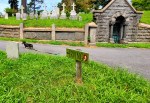
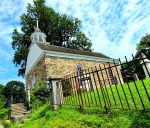
After getting out of the train at Philipse Manor, we started at The Old Dutch Burying Ground of Sleepy Hollow where Washington Irving is buried. From there we walked along Broadway over the recreation of the Headless Horseman Bridge, past Philipsburg Manor, and through the town. Not much was open at the moment (due to COVID) but it was a good long walk which is what we needed! I’d love to go back in the Fall when it’s dressed up for Halloween and people are back from vacation. I also hope the historic sites will be open by then for tours (though I’d have to leave Phineas at home for those!)
Then we made our way to the Riverwalk in Tarrytown. This had gorgeous views of the Hudson, the newly dedicated Mario Cuomo Bridge, little places to eat on the water, and lots of gardens. Eventually, this will be part of a continuous 51-mile walking path along the river from Tarrytown north. In hindsight, I wish we had gotten out of the train there and done the Riverwalk first before working our way to the cemetery, mostly because that would have made the journey downhill instead of up! We’ll know for next time.
Washington Irving’s family plotPhin looking out the train windowSleepy Hollow cemetery Sleepy Hollow cemeteryPhilipsburg ManorTarrytown River WalkView from the trainOld Dutch Reform ChurchMario Cuomo BridgeRiverwalk garden
This week, I have the great pleasure and honor to teach biomimicry to 300 high school and college students through a program run by the Wildlife Conservation Society. (WCS is famously known in the U.S. for all of New York’s zoos including the Bronx Zoo, central Park Zoo, and New York Aquarium!) The feedback was terrific with some of them saying this was the best presentation they’ve had in their entire summer program and a few of them reaching out to me personally asking if I’d mentor them.
They’ve filled me with joy and I’m grateful to all of them and to WCS for the opportunity to share my passion for nature as our greatest design teacher. I’m one tiny step closer to my goal of finding a way to get biomimicry into every high school and college in the country. If you’d like me to present to your group or class (young children, teens, or adults), please let me know!
Nature shows us how to effectively support life, drive our economies, and improve our collective health for all kin on Earth.
I have stayed in New York City to bear witness to one of the most transformational times this city has ever seen — and to tell those stories. To keep my spirits up as I do that work, I lean on my biomimicry practice and nature’s examples of regeneration after trauma. In ki’s* 3.8 billions years, Earth has experienced ki’s fair share of destruction. Ki has lessons to teach us, and so I often find myself pulling up a proverbial chair to listen and learn (curious what ki and kin are all about? Keep reading).
Biomimicry, utilizing nature’s teachings in our own designs, provides us with a place to start and a compass to follow as we chart a course toward a better, brighter, and more sustainable future for all beings. As we now rebuild our cities in these uncertain times, biomimicry can help us clean the air, water, and soil the way that nature must do when ecosystems have been disrupted. Nature shows us how to effectively support life, drive our economies, and improve our collective health for all kin on Earth.
Nature has much to teach us about how to recover and thrive after traumatic events.
The field of biomimicry is truly beginning to take root in our society. Inspiration from nature’s systems and process is found throughout many academic and practical fields. The sustainable development principles of urban metabolism, the circular economy, and closed-loop manufacturing all have elements of biomimicry embedded in them. When aggregated together as nature does, they have the power to transform human-designed environments into living, breathing ecosystems like those we find in the natural world. Nature has much to teach us about how to recover and thrive after traumatic events.
Urban metabolism
As a discipline, urban metabolism documents and analyzes the flow of materials and energy in urban environments. One of its main goals is to study how nature’s systems and human-made systems interact and influence one another. In 2008, industrial ecologist Christopher Kennedy and his research team published a paper titled The Changing Metabolism of Cities. In it, they detail a framework that attempts to capture and account for, “the sum total of the technical and socio-economic process that occur in cities, resulting in growth, production of energy, and elimination of waste.” It’s this accounting that makes urban metabolism, and its relationship to biomimicry, an increasingly important tool in our effort to measure the impacts of climate change and use those measures to make decisions about sustainable urban development, particularly in a world so altered by the COVID-19 pandemic.
Metabolism of Cities is a community-run platform that offers tools, news, research, and data about the work being done in the urban metabolism community across the globe.
Circular economy and closed-loop manufacturing
Biomimicry teaches us that nothing goes to waste. Waste products from one part of an ecosystem are reused, recycled, and even upcycled by other organisms to create new life. We can readily see this when fungi emerge to break down a fallen tree or when we use our food scraps for fertilizer in our gardens. This is not how most of our economy and manufacturing processes work today. According to The Circular Gap Report, presented at the 2019 World Economic Forum Annual Meeting in Davos, less than 9% of today’s global economy is circular. By contrast, nature’s economy is 100% circular. If we made it our mission to embrace biomimicry and operate our economy as nature does, our planet and all kin who call ki home would be exceedingly healthier and more sustainable. This trifecta of pandemics is giving us a chance to reset, to collectively pause and ask, “How do we best move forward now?” The future isn’t linear — cradle to grave; it’s circular — cradle to cradle. That idea has never been more clear or urgent than it is now.
We have this monumental moment to choose life, to choose health, and to choose a better tomorrow. Nature wouldn’t waste it, and neither should we.
COVID-19, the fight for social justice, and our decimated economy have given us a window of opportunity to accelerate our work toward a sustainable future. It is a window for which we paid a very steep and agonizing price. To honor those we lost in our recent, brutal battles, and to make meaning of all the pain it’s brought to so many people, we have to come together and work toward building a world that’s better than it’s ever been before. We have this monumental moment to choose life, to choose health, and to choose a better tomorrow. Nature wouldn’t waste it, and neither should we.
*In the English language, we often use the pronouns she, he, them, and their derivatives to refer to people or personhood. But what about the other living beings with whom we share this planet? Why do we refer to them as “it”, a pronoun that lacks life?
In an effort to show respect and honor for all life, celebrated botanist and author Dr. Robin Wall Kimmerer turned to her ancestral Potawatomi language. The Potawatomi are a Native American people of the Great Plains, upper Mississippi River, and western Great Lakes region. They traditionally speak the Potawatomi language, a member of the Algonquian family.
Potawatomi has a word Aakibmaadiziiwin meaning ‘a being of the earth’. Dr. Kimmerer has suggested that the word’s syllable “ki” could serve as a singular pronoun to represent all life, and “kin” would be the plural. This idea resonates deeply with the principles of biomimicry as we look to all beings with whom we share this planet as our elders, teachers, and mentors.
In her beautiful piece about this grammar construct in Orion Magazine, Dr. Kimmerer acknowledges that changing language is a difficult process, but one that is well worth the effort. It is our intention to be a part of that process, to lift up all life as having value and worth, and so we have adopted “ki” and “kin” in this piece as our preferred pronouns.
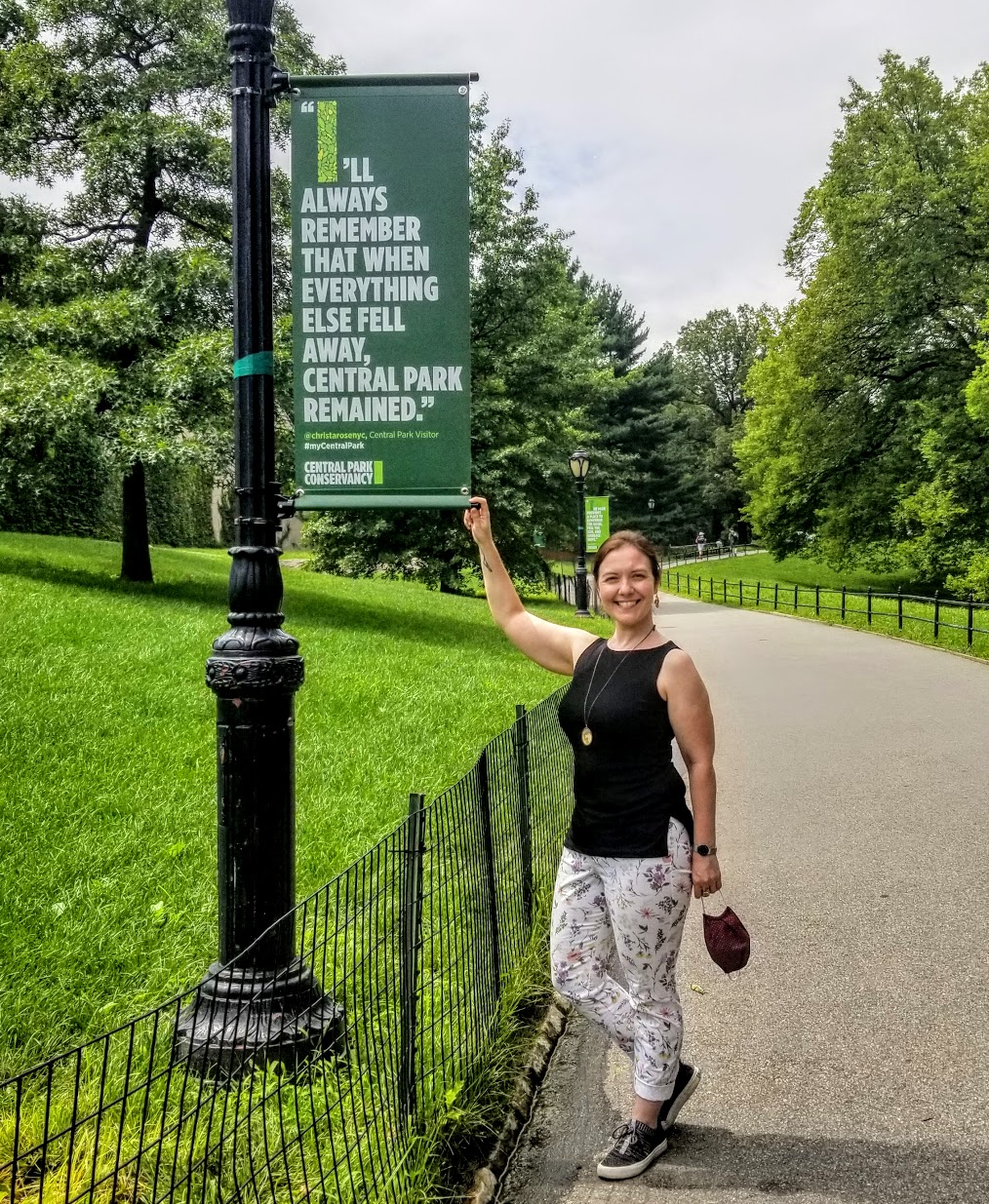
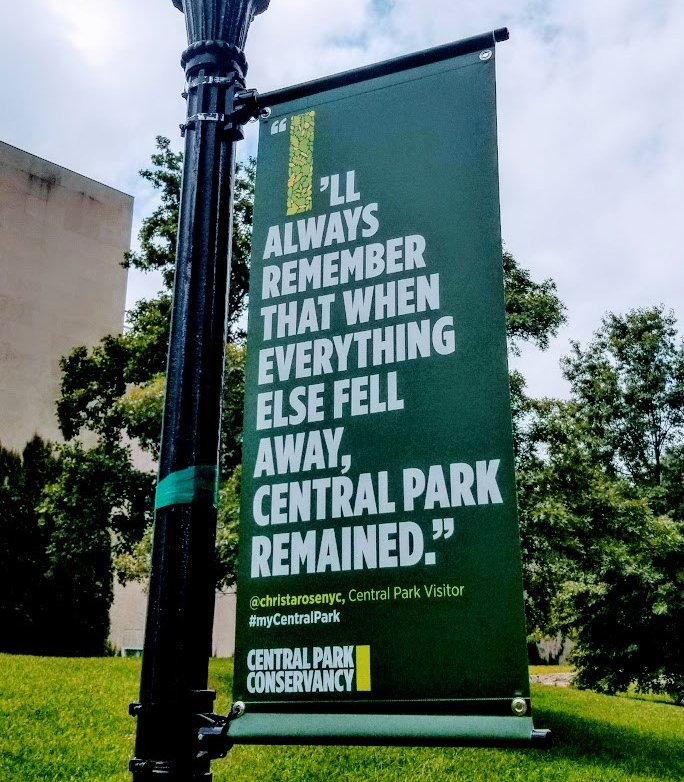
In April, at the height of the pandemic in New York City, Central Park asked me to write an essay about what the park means to me as part of their #MyCentralPark Instagram campaign. This week, they selected a quote from my essay and printed it on a banner that now hangs in Central Park on the path that runs along the north side of the Metropolitan Museum of Art at 84th Street just off Fifth Avenue. My heart is overflowing with gratitude to have my words displayed in my favorite place in the world. Here’s the full essay that includes this quote:
I live half a block from Central Park. I go there every day with my tiny dog. I go when I’m depleted and emerge restored. I go when I’m happy and emerge with even more joy.
The park holds our smiles and tears, our hopes and fears. It breathes with us and for us. Over these past weeks it’s my breath that I’m most grateful for. It’s my breath and the park that I return to as I look for some bits of peace in this quiet war.
The park is my classroom and my confidant. Now it’s also my theater and my concert hall. My laboratory and my living, thriving museum. It’s where science and art and society intertwine so fully that it’s impossible to separate them.
The park makes room. It makes room for everyone, for all forms of life — people, plants, animals, fungi, and microbes. All playing their part, all contributing to something greater than themselves.
There is work happening in the park, the most profound work that can be done. Life turns over there. It’s constantly and steadily renewed, and so are we in its presence. It’s a reminder of the cycle of nature mirrored in the cycle of our own lives. None of it lasts forever, but all of it serves its purpose in its time.
The park is always there, in every season, at every time of day. Steady and at ease — two things we need so desperately now in these unsteady times of tremendous difficulty.
When I think back on this time, I’ll always remember that when everything else fell away, Central Park remained. It waited for us, ready to welcome us as its beloved guests to tread lightly on its hallowed ground, whenever we arrived, providing whatever we needed in a time when we needed so much. That is something I’ll never forget, something I’ll never take for granted — the generosity of that park and everyone who works so hard to keep it open for all of us.
In the product development process using design thinking and human-centered design methodologies, the very first stage is empathize. To create empathy for the people we’re creating for, a product developer like me talks with and listens to all stakeholders, and particularly to experts in the field for which we’re designing.
Teachers need to be part of the school reopening design process
I was shocked to learn from friends of mine who are teachers that this is not what’s happening in New York City schools, the country’s largest school system. None of them have been asked to participate in the design process to reimagine our schools in the era of COVID-19. The decision to reopen schools and the potential design of that reopening is being done by administrators, government officials, and, in some instances, parents. Teachers are not in the conversation (and neither are students), and yet they will be tasked with putting these plans into action. This not only lacks empathy; it’s also dangerous, inconsiderate, and setting the stage for damaging conflict.
Teachers are education experts Subjects Matter Experts (known in product development by the acronym SME) are worth their weight in gold. They have insights that no one else in the process has. They are the center of making our strategy and plan a reality. Without their buy-in and advocacy, a product dies. Teachers (and students) need to be an integral part of the education redesign process, not just in New York City, but in every school district in the country.
How New York teachers are personally preparing for schools reopening
Perhaps the most heartbreaking part of this process to witness is that my teacher friends are preparing wills, power of attorney, and life insurance policies, and getting their documents like the location of passwords in order. They know that the chance of them getting sick is high if physical schools reopen. They have family members and friends to consider in this process, just like all other people. They are preparing for battle with an invisible enemy, all while trying as best they can to love, care for, and teach their students. This sad and desperate situation is their reality while they wait for the government’s decision.
Unity is still possible
Imagine where we would be now if New York City schools had spent all this time since March 2020 getting broadband to kids who don’t have it and figuring out how best to serve differently-abled kids. Instead, we have convoluted plans that are nearly impossible to decipher with little to no buy-in that are unlikely to work and even less likely to protect teachers, staff, students, and families from getting sick. After all we’ve been through in New York, don’t we deserve a chance to be unified in our efforts to protect one another as the school year begins? It’s not too late. Unity and collaboration with all stakeholders, teachers and students very much included, is still possible.
An open plea for collaboration with teachers
Governor Cuomo, Mayor de Blasio, Chancellor Carranza, and members of the New York City Council, I hope you will take ownership of this process and that in that ownership you will embrace the expertise of teachers to create a school system that is safe and productive for all. Here is my commitment as a concerned community member: I would happily facilitate the product development process to redesign schools in the wake of COVID-19 and I would do it for free. How to open our schools (in whatever capacity we do that) for the 2020 school year is one of the most important decisions this city will make. Let’s pull together as New Yorkers always do in times of difficulty. Let’s listen to one another. Let’s support one another. Let’s be unified in our efforts to keep everyone safe, healthy, and inspired. It’s possible, and necessary, for the sake of all our residents. I’m here if you need me.
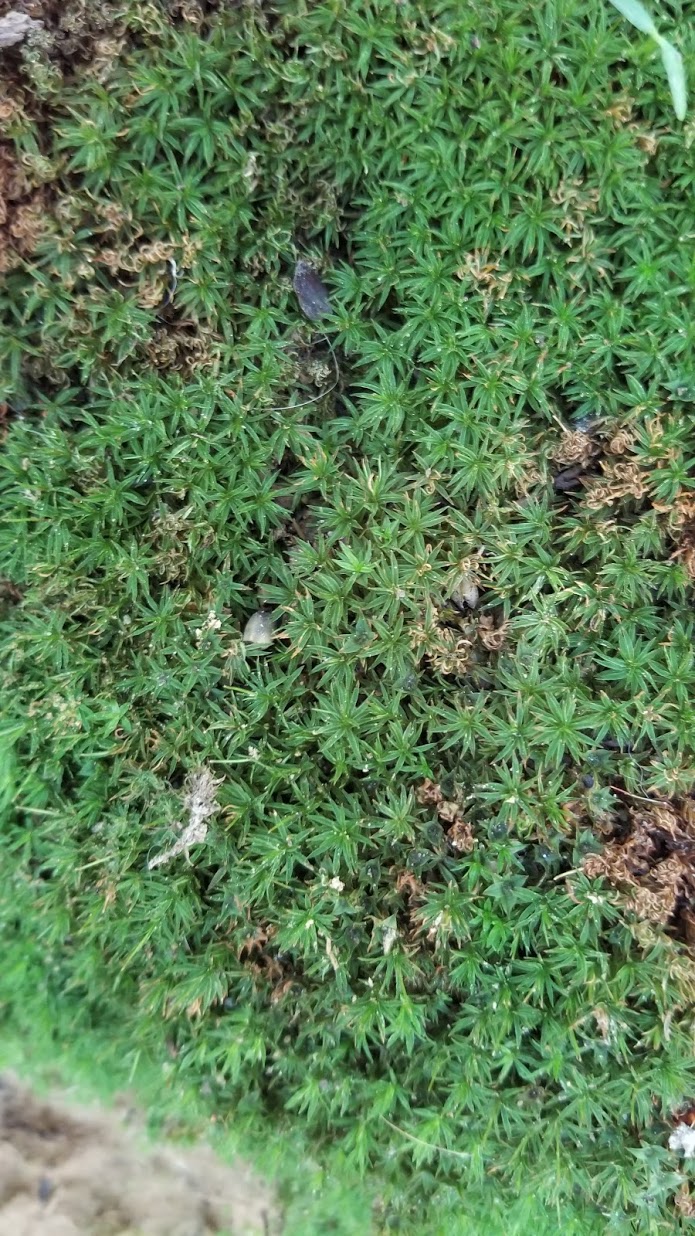
Moss in Riverdale Park, Bronx, New York City, August 1, 2020
Though moss is a simple plant, we shouldn’t underestimate its wisdom. It’s one of the oldest, wisest, and most experienced forms of life. Moss is an opportunist making the most of what’s available. It lies in wait, sometimes for years, for the right conditions to grow and reproduce.
Moss exhibits the skill of anabiosis When water is scarce, moss will completely dry out and play dead for as long as needed. But they aren’t dead at all. In their drying, they lay the groundwork for their renewal. Sprinkle them with a little water and the moss will spring back to life as if nothing had happened. They can also regenerate themselves from just a miniscule fragment.
Moss is the first life form to reinhabit an area that’s experienced devastation and loss. It’s the plant of second chances. Moss is hopeful. Despite destruction and stress, moss finds a way in and sets the stage for more life to return. Through their actions of collecting and holding water and contributing to the nutrient cycle of land, the will of moss changes the world, turning barren rock to gardens with enough time.
As I walk through my city of New York now, devoid of so much life and so much of what I love about it, I wonder what our proverbial moss will be. What will come back first to literally create the conditions that will seed the path for restoration and revitalization? What will create a haven for life and growth on the cultural bedrock of our city? What and who will set down roots here to build an enduring legacy for others, and how?
If only humans and our dreams could be as resilient as moss. If only we could find a way to see this time of COVID-19 only as a holding pattern. Not something that destroys us but something that makes us stronger, more resilient, more determined to thrive in the days ahead. Unfortunately we don’t have that seemingly-magical power of anabiosis. We can’t curl up in a ball, dry out, and wait for better times. We have to keep living, breathing, moving, working, eating, and growing. We’ll have to make a way out of no way, and the only way we can do that is together.
I love to think about what New York looked like before it was New York and before the U.S. was colonized. Yesterday, my dog, Phineas, and I got to walk through a living breathing example of it. Riverdale Park in the Bronx is what’s known as a protected 50-acre Forever Wild area. The southern part of the park where we went is covered by the same type of forest that existed in pre-colonial times with tulip, 5 species of oak, black birch, and hickory trees as tall as 110-feet. The woods are on their way to becoming a mature or “climax” forest – a forest whose shade-tolerant seedlings will survive beneath their parents. Twenty-seven species of birds are also found here, including the screech owl.
The Raoul Wallenberg Forest is located across the street from Riverdale Park, and is named in honor of a Swedish diplomat who is credited with saving tens of thousands of Hungarian Jews from the Nazis during World War II. His death and disappearance after being imprisoned are a mystery, and for his courage and acts of heroism he was named an honorary U.S. citizen. This forest contains many trees with trunks more than 30 inches in diameter. Dozens of species of birds, including downy woodpeckers, red-tailed hawks, and white-throated sparrows, can be found there.
The bedrock of Riverdale is 1-billion-year-old Fordham gneiss, the oldest rock formation in New York City. On top of the gneiss, lies Inwood marble, which was once quarried in Riverdale for the production of lime. The Palisades cliffs that you can see across the river were carved by glaciers during the last ice age that started 2.6 million years ago.
Phin and I are looking forward to exploring the northern part of the park and the historic section of Riverdale very soon!








 Christa Avampato