creativity

A Year of Yes: Nature is our greatest teacher

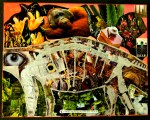
Dinosaurs are great teachers. Kingfishers & their quick, quiet, and precise diving abilities inspired the Shinkansen Bullet Train’s design. This is the power of biomimicry. Most of the manufactured world is a mess; copying nature helps.

More info on this incredible innovation from Biomimicry Institute here: https://asknature.org/idea/shinkansen-train/#.W3Q8EPlKiUl


creativity

A Year of Yes: Application to grad school sent!

20180805_140530Last week, I wrote about my interest in going back to grad school to pursue a Master of Science in Biomimicry. I intended to do a *little* work on my personal statement this weekend and then just couldn’t stop myself. I wrote the whole dang thing in one sitting. And I cried because A) it means that much to me and B) I am a big ol’ sap. I had a good night’s sleep, got up early, edited it, and sent it off. So now, we wait. I feel insanely happy that I’ve taken this step. I can’t wait to spend my days learning from nature so that I can literally build a better world for all beings. I still feel like I’m dreaming a bit that this is actually going to happen (provided the application process goes well), and that’s okay with me. I’m fine with having a life that is the stuff of my dreams. Thank you all for sharing in this process!

creativity

A Year of Yes: Marrying writing, storytelling, business, product development, and science through biomimicry

Some news. Shark mucus sounds like an odd inspiration. Stay with me. After the podcast Ologies released its shark episode, I re-examined biomimicry as a way to marry my product development, business, and storytelling experience with my love for science. I owe host Alie Ward and Chris Lowe, who was the shark expert on the episode a million thanks. Here’s why:

I always loved science and actually started college in the engineering school. After a professor told me I didn’t “have a mind of physics”, I believed him and left all my dreams of working in science behind. I changed majors entirely and have always wondered what might have been if I hadn’t let this professor get into my head.

Fast forward a number of years. I’ve continued to learn about science and its applications. Over the years, I’ve thought about different ways that I could have a career that combined science with all my other experience & interests. Enter Ologies and sharks…

Shark mucus acts as a built-in antibiotic bandaid that allows sharks to rapidly heal. This may contribute to their long life spans of – wait for it – up to 470 yrs! We should apply this to our own medical research, right? We do! In the field of biomimicry.

Biomimicry is an applied science field in which the wisdom of the natural world plants and animals is studied and applied to the human-built world of products & environments in a sustainable way that benefits all beings.

After some research, I learned there’s a Masters of Science in Biomimicry through   that’s a dream program. Multidisciplinary, online, created for working professionals, and with a travel research cohort component. Best of all, it leverages ALL my prior experience.

I’ve been a fan of Janine Benyus‘s work since reading about her 10 yrs ago. She founded this program. It’s exciting how much the field has grown & how vital it will be to use design + business + science to build a better world for all beings as we grapple w/our changing planet.

I’m now in application and scholarship hunting mode, hoping to begin the program in 2019. Finding the work we’re meant to do is a long and winding road. I hope my story inspires you to stay curious and to keep reaching for a life fueled by passion and goodness. The world needs us.



creativity

A Year of Yes: Roll the dice

Screen Shot 2018-06-27 at 10.46.43 PMThe answer to every question you never ask is “no”. You have to roll the dice. You have to put yourself in the game. Last night I finished a cross-disciplinary residency application in science, art, & technology here in New York City because it was time to fulfill a dream, to ask the question, “what more could I do?”


creativity

A year of yes: My day at the Edelman Fossil Park with paleontologist Ken Lacovara

It filled my heart with joy to see kids actively engaged in science and hunting for fossils at Rowan University’s Edelman Fossil Park yesterday. It is such a special place, unique in the world for the scientific history it holds. Walking through a 65 million year old time machine and physically seeing that time in layers around me is something I’m still wrapping my mind around.

An enormous thank you and congratulations to Ken Lacovara, the town of Mantua, staff, students, and volunteers who are working so hard to preserve this natural treasure. What a gift it was to spend the day there with them. I can’t wait to go back. Childhood dream of fossil hunting and being a paleontologist for a day fulfilled!


creativity

A Year of Yes: How my childhood in the dirt formed my view of the world

I once read that if we really want to find our purpose, we should think about what we loved to do when we were 8 years old. I’ve been thinking a lot about 8-year-old me lately, and sifting through the writing I’ve done about my childhood. I came across this piece that I wrote 5 years ago. And it floors me that it still rings so true that I might as well have written it yesterday.

“I grew up in the dirt, literally. There was (and still is) a tractor crossing sign across the street from the house where I grew up. My rural hometown fostered a childhood that involved climbing trees and making mud pies. When I was little, I was convinced that there was a dinosaur skeleton hiding under the ground in my backyard. I enlisted my sister, Weez, to help me dig and dig and dig. All we found was a small mouse skeleton, but I thought it was clearly a prehistoric mouse! Other kids wanted to be doctors, firefighters, or teachers. I wanted to be a paleontologist. I still do.

My childhood was far from idyllic, but there were some very positive things about growing up in the sticks. I got my hands dirty in the process of making things. I ate organic food because that’s really all there was, not because it was trendy. Animals were my friends and companions, as much as people. Maybe even more than people. I learned to appreciate the Earth, her majesty and her power. Weather was a way of life, and I still watch it with fascination and wonder.

An article in the New York Times last weekend talked about a movement in this fine and fair city I now call home to bring more nature into the lives of city kids not by taking them out of the city, but by bringing nature to them. Brooklyn Forest, a husband and wife startup, “takes toddlers into Prospect Park to promote learning through creative play like building teepees out of branches.” 7 students were in their first class. Now there are over 200. More people are eager to get into mud these days; I was a pioneer.

There’s something to be said for the slow life, the life we build rather than the life we buy shrink-wrapped and delivered right to our doorstep. Creation builds confidence and bolsters the imagination. It makes us self-sufficient. I’m all for it, for our children and for us. There’s a lot of beauty down there in the mud.”

creativity

A Year of Yes: A near-death experience this week changed my life

I’m posting these embarrassing selfies for your benefit:

I got off a plane from vacation in Vancouver. It was a fantastic trip—more on that later. This post is about you. Well, it’s about you via a story about me. I’ll be brief. My eye started to hurt on the plane. Nothing big; just noticeable. I got home, picked up my dog from boarding, and decided to take a nap. I woke up with my eye crusted shut. My doctor, via video call, thought it was a case of pink eye and prescribed antibiotics. 24 hours later, the swelling, redness, and oozing got much worse, and then spread to my second eye. I got on a video call with my doctor again, and she was alarmed to see how much my condition had deteriorated. She sent me to the emergency room.

I didn’t have pink eye. I had a condition known as periorbital cellulitis. It’s an extremely dangerous infection if left untreated, and can be lethal by causing sepsis or meningitis. It’s usually caused by an insect bite or another similar kind of trauma. I’m immensely lucky that I have access to great, timely medical care. Again, my gut instinct to get help saved me, and I’m incredibly grateful for that.

Now the bit about you:

1.) If you’re sick, please, please, please get medical help quickly. Don’t worry that you’re being a hypochondriac. If you think something is wrong, it’s much better to get it checked.

2.) Do what you love. Please. What you’re passionate about, what lights you up, what makes you curious to learn more and more. Create beautiful art. Write. See your friends. Help people. Share what you have. Fall in love. Adopt a dog. Live. If you’re in a job or a relationship you don’t love, go. Quickly. Don’t waste your time. You never know how much of it you have. Your life can turn on a dime, from something as insignificant as an insect bite. So wear bug repellent and sunscreen because you might as well give yourself your best shot at your best life.

creativity

A Year of Yes: Two stories to make your Sunday—The Great Monarch Migration and buying textbooks for a student

I have to share these two stories with you because they encapsulate just why “yes” is the word I’m embracing for 2018:

Bookstore employee writes this on Facebook after “little old lady” shocks everyone at the register with her kindness to a student
http://dailyheadline.com/an-old-lady-paid-for-a-customers-books-then-she-said-this-and-left-him-tears/

Entomologist Phil Torres goes to Mexico to record the Great Monarch Migration. “This is what it’s like to be surrounded by a million butterflies.”


creativity

A Year of Yes: Meeting an inspirational scientist at The Explorer’s Club

The world is a magical place. At about 12:30am, I got a direct message on Twitter from a paleontologist whose work I greatly admire. (He discovered the largest dinosaur on record to-date.) He happened to be here for work and asked if I’d like to meet him at the Explorer’s Club before his evening train back to Philly. We met on Twitter in the Fall when I was tweeting about how much I loved his book, but I’ve never met him in real life. Since this is my Year of Yes, I accepted the invitation without hesitation. (And truth be told, even if this wasn’t my Year of Yes, I would have accepted!)

He has been a big supporter of my book and read it with his 10-year-old son. When I mentioned to him that I’d love to go to the Explorer’s Club because Emerson’s second book will have a scene there that will send her off on her next journey, he reached out to the head of public affairs and to their lead archivist to arrange for me to meet them during our visit today so that I would be given access to any help from them when writing my book. I. Was. Stunned.

Additionally, we talked about science education, the power of effective science communication, and dinosaurs (of course). I also learned a lot about his own personal and professional story that led him to where he is today. He is nothing short of inspirational. I honestly felt like I’ve known him for years and I could have stayed there for many hours chatting with him.

“Yes” is a powerful word. Kismet and synchronicity play a role for all of us if we stay open to possibility. Kindness and graciousness are immense gifts that cannot be measured. Twitter is an amazing tool to create connections that otherwise may never happen.

creativity

A Year of Yes: Dreadnoughtus, my first multi-panel collage

I’ve been working on my first multi-panel collage. I wanted the subject to be fitting for a larger piece.

I give you Dreadnoughtus. Discovered by Dr. Kenneth Lacovara and his team in Argentina, it is one of the largest animals to ever roam the planet. It is part of a large group of plant-eating dinosaurs known as titanosaurs.

I recently learned that dinosaurs skeletons are never found in totality and many times are reconstructed from a small handful of bones. The skeleton of Dreadnoughtus was exceptionally complete with over 70 percent of its bones represented. In life, it was 85 feet long and weighed approximately 65 tons.

Collage explanation:

Dreadnoughtus is entirely composed of the faces of other animals closely related to dinosaurs—birds (which are in actuality dinosaurs) and modern-day reptiles. The skeleton in silver paint illustrates the bones that were part of the discovery in Argentina per this schematic:

Dreadnoughtus-iv

The salmon-colored sky represents the asteroid (comet) which likely caused the end of the 165-million year reign of the dinosaurs. There is still some mystery surrounding the exact cause though it is widely believed that the Chicxulub crater on the Yucatan Peninsula in Mexico suggests that an asteroid or comet approximately 10km wide hit the Earth, and created a series of events that led to their extinction.

Below Dreadnoughtus, I used bits of paper from a photo of the gnarled landscape of Wistman’s Wood. Packed with moss-draped boulders, ferns, grass, and lichen-covered dwarf oaks, and dense fog, it’s located in Dartmoor National Park in the U.K. It’s a landscape that inspires myth and mystery, the kind of wonder that dinosaurs inspire in so many of us.

The other items in the collage represent everything that was born into the world because of the exit of the dinosaurs. The truth is that if the dinosaurs hadn’t died out, if the asteroid or comet hadn’t hit the Earth exactly when and where it did, we likely wouldn’t be here, nor would many of the other species that exist today. Nature is opportunistic and chancy, one species loss is another’s gain. Everyone and everything we know and love came about on the backs of the dinosaurs. Our history is intricately intertwined with theirs. We owe them a great deal, as Ken explains in his book, Why Dinosaurs Matter.

20180118_205746-2.jpg

20180118_210427.jpg