
creativity

Fidelity Investments is helping me take care of my financial future

This week I did my annual review with my financial advisor, Zachary Clark, at Fidelity Investments. I want to shout out how thoughtfully and thoroughly he went through all of my accounts and assets. Even more importantly, he took the time to really listen to my goals to make specific recommendations and adjustments to my finances. These times are uncertain and the economy is challenging. It helps to know that this company has my back and is looking out for me. I don’t think it’s true for a lot of financial institutions; it’s definitely true for Fidelity. I highly recommend them.

Below are a few brief bullets about the advice and counsel my financial advisor had. Please keep in mind these are specific to me. That’s the beauty of Fidelity’s goal-based management. It’s designed for me, my financial situation, my goals, and my risk-tolerance. Your plan, because it’s designed for you, could be different.

I acknowledge I’m extremely fortunate to have been able to work hard to get to this point in my financial life. I grew up very poor and struggled financially for many years. To now be in a position to make these choices is a privilege I never take for granted. I’m very grateful.

My plan:
1.) I opened a managed brokerage account
I’m maxing out my 403(b) (my retirement account from my nonprofit employer) and Roth IRA contributions. I have an emergency fund saved in a high-yield savings account. I have no debt. I wanted to know what else I could do.

He suggested a managed brokerage account to help my mid-term (5-10 years) money do more for me. I don’t know what I want to do with that money yet so this option gives me flexibility while also earning more than it would in a savings account. This account is a different goal from my retirement account as I will likely use it for a purpose other than retirement. For example, I may decide to use it to buy a home, start a business, or invest in a business. You may use this kind of account for any goal you want – saving for college, a trip, wedding, baby, etc. No penalties for withdrawal and the potential to earn more interest than I would get by just having it in a CD or high-yield savings account.

2.) I decided not to buy an apartment right now
Interest rates are high. NYC prices and maintenance fees are high. The housing market is uncertain. I have an incredible rental deal. Taking all this into consideration, we decided it makes sense for me to continue renting for now and re-evaluate if and when markets shift. Fidelity has a rent vs buy calculator to help with this decision.

3.) My Roth IRA is now managed by Fidelity, matches my risk profile, and is funded by auto-debit
My Roth IRA has had a 35 / 65 split between stocks and bonds / cash. I’m quite a few years from retirement so it makes sense for it to have the 85 / 15 split my rollover IRA has. (My rollover IRA is the money from 401K and 403b accounts I had with former employers.) I also set up monthly auto-debit from my savings account to my Roth IRA so I make sure to max it out every year. Doing this over the course of the year helps me even out the volatility of the market. Fidelity managing it, with my personalized goals in mind, means I don’t worry about managing it myself.

I hope this info about Fidelity’s tools and advice are helpful. If you’ve got other questions, feel free to ask in the comments or DM me.

creativity

The best start to 2025

This is the face of someone who just paid off her student loans! I started 2025 completely debt free for the first time in my adult life. I put myself through undergrad and three grad programs. I’m grateful for everything I learned, and more importantly, for all the people I met who’ve become friends and mentors.

Sure, I wish the Biden student debt relief that applied to me hadn’t been stopped by the courts and politicians who lack empathy. I wish I’d gotten some scholarship, bursary, or employer funding. Still, my education is the best investment I’ve ever made. I’m proud of myself for working hard, saving, and reaching this milestone. I’m very lucky, and I’ll pay it all forward now that I’m done paying back all these loans.

What a way to start this new year! 

creativity

Zillow will provide climate risk data on for-sale listings

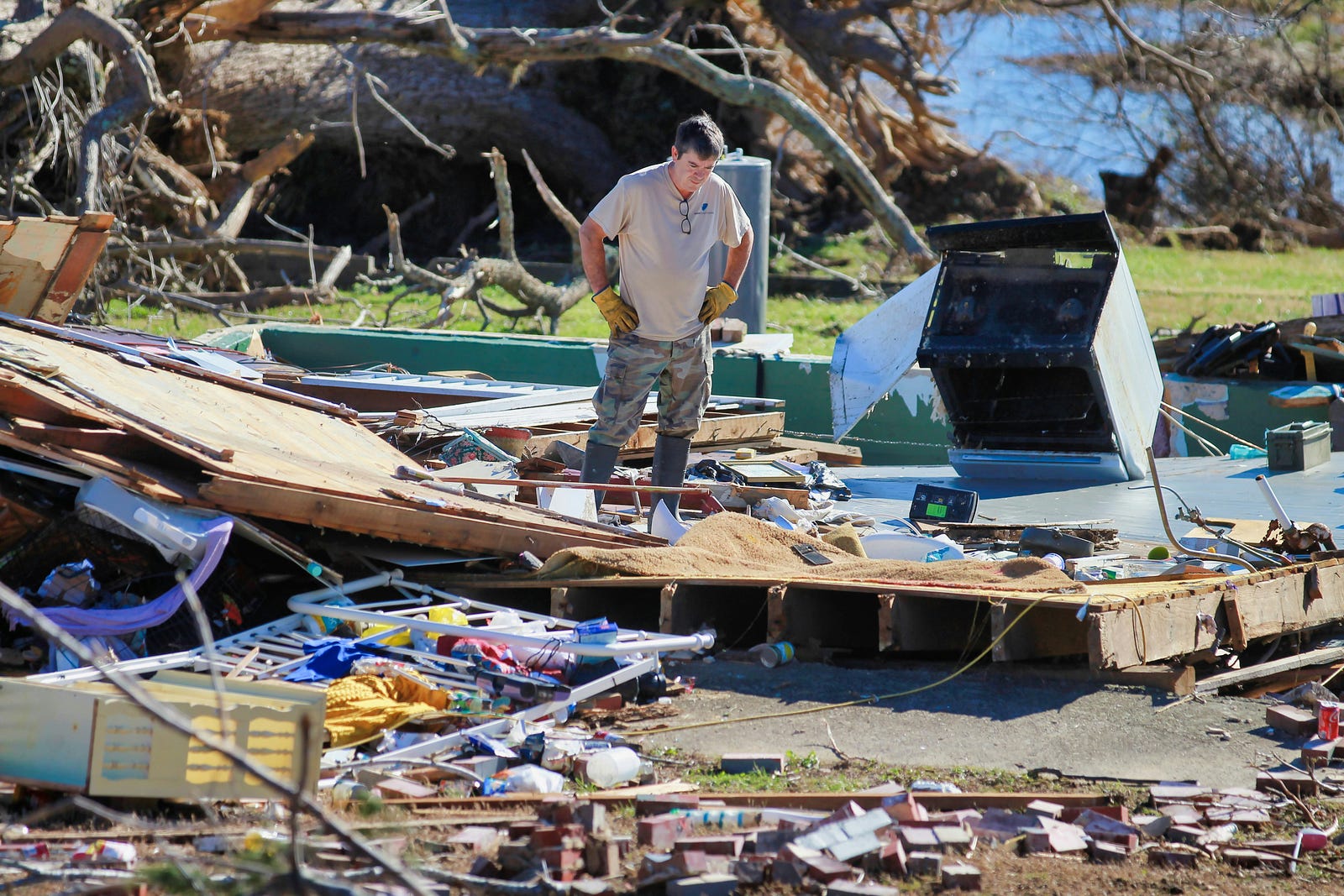
Man looking at loss of home to a tornado in Cambridge Shores, Kentucky in 2021. Photo by Chandler Cruttenden on Unsplash

If you’re a prospective homebuyer and concerned about climate risk, Zillow is about to make your search much easier. By the end of 2024, for-sale listings on Zillow’s website will include climate risk information for flood, wildfire, wind, heat, and air quality by partnering with First Street, the gold standard for climate risk financial modeling. First Street’s models are developed by leading scientists and vetted through a peer-review process to transparently calculate the past, present, and future climate risk for properties and make it available for all. This ensures the climate insights given on Zillow are both credible and actionable.

Zillow will also include insurance recommendations, climate risk scores, interactive maps, and show if and when a property has experienced past climate events. It will be the first and only real estate listing site to provide this detailed data, giving the company a significant point of differentiation.

Consumer demand
Zillow decided to provide this data based on overwhelming consumer demand. Zillow research in September 2023 showed 83% of prospective U.S. home buyers consider climate risk. That percentage varies by geography—90% in the West, 85% in the Northeast, 79% in the South, and 77% in the Midwest. The average age of a U.S. homebuyer today is 39. Millennials and Gen Z are entering the home buying market and care deeply about climate. Zillow is centering their current and future users. 

A potential shift in the real estate market
This data could significantly shift the real estate market and the migration of home buyers within the U.S. because climate risk is growing more pervasive. Across all new listings in August 2024, 55.5% have a major risk of extreme heat, 1/3 for extreme wind exposure, 16.7% for wildfire, 13% for air quality, and 12.8% for flooding. 

The risks vary widely by geography. Over 70% of new listings in the Riverside, California metro area have a major wildfire risk. Wildfire risks impact 47% of new listings in Sacramento, and roughly 1/3 of listings in Jacksonville, Phoenix, San Diego, and Denver. 76.8% of new listings in the New Orleans metro area have a major flood risk, while roughly 1/3 in Houston, Miami, and Tampa and over 1/4 in Virginia Beach are at risk of flooding. In general, Midwest markets hold the lowest climate risk with less than 10% of new listings having any major climate risk in Cleveland, Columbus, Milwaukee, Indianapolis, Minneapolis, Detroit, and Kansas City.

Accuracy of First Street climate risk data
Some cities and the federal government through FEMA provide some climate risk information. This includes designated flood zones that help consumers partially assess risk. However, this is not comprehensive enough to help consumers holistically gauge insurance needs and potential future risks. This is where First Street’s modeling really shows its financial value. 

Consider Hurricane Debby, the storm that wreaked havoc along the U.S. east coast in August 2024. First Street’s analysis found 78% of properties flooded by Debby were outside FEMA flood zones, meaning flood insurance isn’t mandatory. 85% of these properties would have received an insurance recommendation on Zillow, highlighting how First Street’s climate risk data can inform buyers during their home search.

Climate data can change where and how we build
Not only does First Street’s data on Zillow inform prospective home buyers and real estate agents; it can also serve home builders, municipalities, and the federal government. Home builders can use it to assess the value of their potential construction sites. Municipalities can use it to assess where they need to focus their infrastructure dollars for climate resiliency and adaptation builds. The federal government can use the data to re-evaluate and assess FEMA designations for climate events and more effectively consider plans to support the expansion of the available housing market. It may also help us as a society plan for migration within the U.S. as we face climate change impacts. 

What I find most refreshing about Zillow’s approach is that it’s not about politics or marketing. It’s about science and data. Zillow isn’t telling consumers which property to buy, or which risks they should consider. It’s providing the data in a clear, consistent manner so consumers can make the most clear-eyed choices possible. With this data in-hand, consumers can understand the risk they’re taking and how to prepare for it. In this risky world of ours, that’s data we all desperately need.

creativity

Greenhouse Gas Reduction Fund creates economic opportunity and protects the planet

The Greenhouse Gas Reduction Fund is a powerful climate finance policy in the U.S. that hasn’t gotten enough attention. It effectively leverages blended finance, creating an effective model for future policies. Here’s the deal:

With the U.S. Environmental Protection Agency (EPA), Vice President Kamala Harris announced a $20 billion investment in climate and clean energy projects: three under the $14 billion National Clean Investment Fund and five under the $6 billion Clean Communities Investment Accelerator. They will create a national clean financing network for clean energy and climate solutions across sectors, ensuring communities have access to the capital they need to participate in and benefit from a cleaner, more sustainable economy.

Together, the eight selected projects will deliver on the three objectives of the Greenhouse Gas Reduction Fund: reducing climate and air pollution; delivering benefits to communities, especially low-income and disadvantaged communities; and mobilizing financing and private capital. As part of this collective effort, selected applicants have committed to the following:

Fund projects across sectors that will reduce or avoid greenhouse gas emissions

  • These projects fund net-zero buildings, zero-emissions transportation, distributed energy generation and storage, and the decarbonization of agriculture and heavy industry.

Reach communities in all 50 states, the 6 U.S. territories, and Tribal Landswith a particular focus on low-income and disadvantaged communities

  • $14 billion funds low-income and disadvantaged communities that need it most, ensuring that program benefits flow to the communities most in need and advance the President’s Justice40 Initiative
  • Over $4 billion to rural and energy communities
  • Nearly $1.5 billion to Tribal communities

Mobilize private capital at an almost 7:1 ratio over the next seven years, with every dollar in grant funds leveraged for almost seven dollars in private funds

  • This is a significant point because a sustainable world requires private investment. This means $20 billion in U.S. government funding activates an additional $130 billion in private capital from banks, asset managers, and individual investors for a total of $150 billion. (This is known as “blended finance” — investments from different sources are combined to achieve a common goal.)

Fund community lenders and partners who are already working in communities across the country to deliver investments quickly

  • 1,000 community lenders are lending in low-income and disadvantaged communities, including Community Development Financial Institutions (including Community Development Loan Funds, Community Development Banks, Community Development Credit Unions, and Community Development Venture Capital Funds); low-income credit unions, and green banks.

Hundreds of thousands of good-paying, high-quality jobs, especially in low-income and disadvantaged communities

  • Create hundreds of thousands of good-paying, high-quality jobs, supported by a number of local, regional, and national labor union jobs

Vice President Harris has spent her career standing up for people and the planet. She’s not resting on her laurels. She’s moving us forward toward a healthy, sustainable world for all. The Greenhouse Gas Reduction Fund is a cornerstone of a set of policies that create economic opportunities while protecting the planet we share.

creativity

A divestment case study: How the University of Cambridge divested from fossil fuels

University of Cambridge. Photo by Tim Alex on Unsplash

Driven by the university student protests across the country, divestment is a top topic in U.S. media today. I’m currently getting my Masters in Sustainability Leadership at the University of Cambridge. At our December 2023 workshop, I learned about the complexities of the university’s divestment from fossil fuel companies. 

I was fortunate to have a small seminar class with the lead researcher on this effort, Dr. Ellen Quigley, who is a brilliant, passionate, and seasoned researcher. We dove deep into the research, which is hundreds of pages long and took years of concentrated, concerted effort to conduct and use to drive change. There were years of negotiation throughout the university that ultimately led to a university vote in accordance with governance parameters.

I was particularly interested in this topic at my December workshop at Cambridge because in late 2022 at the start of my group project for my program, I tried to completely divest my personal retirement funds from fossil fuels. I had a clear goal of divestment from fossil fuels, and only a few funds at two financial institutions (one from my current job and another for my roll-over accounts from retirement funding I earned at previous jobs). I planned to talk to someone at the financial institutions, make a few changes to my investments, and have my portfolio free from fossil fuels. 

Divesting my own small retirement fund from fossil fuels was anything but simple. 18 months, many phone calls, emails, and hours of research later, and I still have some investments in fossil fuel companies despite all my efforts and time. It’s fewer than I had when I started this process, which is progress, but it’s not the perfect change I hoped for. My personal work to divest from fossil fuels in ongoing.

While the divestment process is complex, I wanted to use this post to provide a few insights from the efforts at Cambridge along with links to those who want to dive deeper into this topic and case study. This case study helped me learn more about the divestment process and informs me about how it could be utilized by university administrators, faculty, students, and alumni who want to be actively engaged in the management of a university’s endowment, overall financials, and operations. Of course, this is just one case study at one university and other divestment processes at other universities may differ in their journey and the results.  

A clear goal
A clear goal focuses efforts and time. In the case of my retirement funds, I wanted to divest from fossil fuels. For the University of Cambridge, their goal was more nuanced than mine because of the size, complexity, signaling, varied stakeholder community, and potential consequences (intentional and unintentional) of their divestment. To make a decision, Cambridge needed to consider whether it could divest from fossil fuels without incurring significant costs and/or if it must do so in order to retain supporters and beneficiaries.

Activism takes many forms
A single goal can have many different tactics, and different players can share the same goal and adopt different tactics. Cambridge’s constituencies were united around the science that proves fossil fuels are driving climate change. The decision process for the university as a whole was about which specific actions to take — divesting, government action, and many other stakeholder engagement options

The form(s) of activism best suited for any individual or organization has many considerations. Examples include organized protests, public letters and other media outreach, contact with elected and appointed officials and policy makers, local actions in a specific community (caring for a natural area through rewilding, replanting, regenerating, clean-ups, etc.), buying goods and services from companies that align with our values, running for elected or appointed office, having conversations with people in our community about our personal experiences, and starting, working, and volunteering for companies, organizations, and partners that align with our values. This is only a small list of possible actions. 

One thing I’ve learned in this process is one form of activism is not better, nor more valid, than another. How, when, and why people engage in activism is impacted by many circumstances — our resources of time and money, where we feel we can best contribute and make an impact, personal and professional commitments, and our mental and physical health to name just a few. 

Trade-offs, negotiations, and incremental progress
Another consideration in all divestment conversations is the topic of trade-offs and negotiations because it is rare (though perhaps not impossible) to find a perfect solution or action to a challenge we want to solve. As an individual, I only have to consider my own trade-offs. A university like Cambridge has many stakeholders to consider so their trade-offs and negotiations are much more complicated than mine as an individual.

A transition process is part of Cambridge’s plan to divest from fossil fuels. The University has committed to divestment from fossil fuels by 2030 and to achieving net zero by 2038. That net zero commitment is nearly 19 years after the discussions about fossil fuel divestment began in 2019. 

Divestment with a clear goal, an agreement on specific tactics and actions, an understanding of trade-offs, negotiations, and incremental progress is a journey. It takes continuous efforts by many people over a long period of time. Lasting change is a collective, collaborative process of coalitions. 

Here are the links I refer to in this post for easy access. I hope they’re helpful for anyone interested in learning more about divestment:

1.) Grace on Fossil Fuel Industry Ties: A report into the impacts of implementing the Grace on fossil fuel industry ties on Cambridge University’s mission (July 2023)
https://www.cam.ac.uk/notices/grace-on-fossil-fuel-industry-ties

2.) To Divest or to Engage? A Case Study of Investor Responses to Climate Activism (2020) 
https://www.pm-research.com/content/iijinvest/29/2/10

3.) Divestment: Advantages and Disadvantages for the University of Cambridge (2020)
https://www.cam.ac.uk/sites/www.cam.ac.uk/files/sm6_divestment_report.pdf

4.) Cambridge to Divest from Fossil Fuels with net zero plan(2020)
https://www.cam.ac.uk/news/cambridge-to-divest-from-fossil-fuels-with-net-zero-plan