
We are currently watching the redrawing of New York City’s energy map from two opposite directions at the exact same time. One boundary is shifting hundreds of miles away in the Canadian wilderness; the other is moving right at your apartment window frame.
For decades, the city’s grid has felt like a massive, untouchable black box managed entirely from the top down. But as the climate transition accelerates, a fascinating dynamic is emerging: we are realizing that achieving true resilience requires a dual strategy—coupling massive, industrial infrastructure with hyper-local, decentralized community power operating at an individual apartment level.
Two recent breakthroughs show exactly how this macro-micro puzzle is coming together.
The Macro Frontier: The Deep Wire from Canada
This month, the energy landscape downstate underwent a monumental shift with the activation of the Champlain Hudson Power Express (CHPE). This 339-mile, high-voltage direct current line runs underground and underwater all the way from Quebec straight into Astoria, Queens.
This is infrastructure engineering on a massive scale, designed to funnel 10.4 terawatt-hours of clean Canadian hydropower directly into our local electricity market—enough to meet up to 20% of New York City’s entire energy load. Since the closure of the Indian Point nuclear plant, the city has leaned heavily on fossil fuel plants, causing local emissions to spike. The arrival of this deep wire is a vital macro-level act of mitigation, helping to displace those dirty peak plants and clean up the regional grid baseline.
The Micro Frontier: The Fight for Balcony Solar
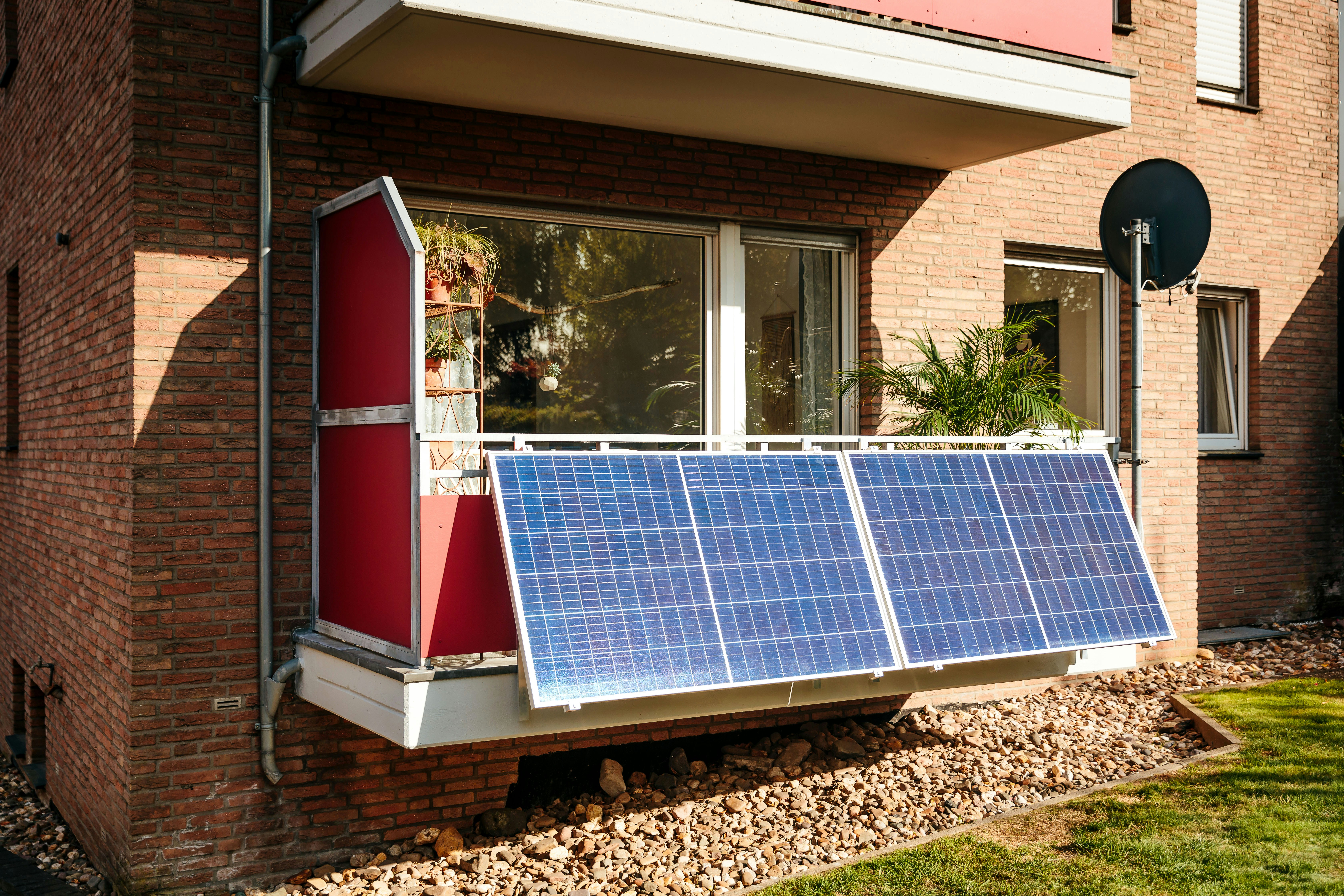
But while the city hooks up to Canadian dams, a parallel revolution is brewing right on our brick facades. The state Legislature just passed the Solar Up Now NY (SUNNY) Act—the balcony solar bill—which is now heading to the governor’s desk.
Historically, participating in clean energy has been a luxury reserved for suburban homeowners with vast roof lines, leaving millions of apartment dwellers entirely shut out of the transition. The SUNNY Act flips this dynamic by allowing New Yorkers to legally hang small, portable solar panels from their windows or balconies and plug them right into a standard wall outlet without needing complex utility agreements.
These plug-in panels max out at 1,200 watts. They won’t power an entire building, but they allow everyday renters to generate their own green electricity to shave money off their utility bills. It turns passive energy consumers into active participants in the grid. Even ConEd has backed the bill, noting that these tiny, localized generation devices pose minimal risk to the broader infrastructure.
The Synergy of the Ecosystem
True urban resilience is built in the space between these two extremes. We cannot run a global metropolis solely on window panels, but we also cannot foster a culture of sustainability if regular citizens feel entirely disconnected from the systems that power their lives.
The macro grid gives us the foundation we need to survive; the micro panels give us the agency to be engaged in the decision-making process for our future.
The Togetherhood Takeaway
Building a clean future means looking at the energy transition as an ecosystem that requires both major public investment and local, individual action.
- Track Your Baseline: Take a look at your next utility bill. As big projects like the Champlain Hudson line come online, pay attention to where your power is actually sourced and keep an eye on how the regional mix is shifting.
- Watch Your Windows: Keep an eye on the progress of the SUNNY Act. If it signs into law, audit your own apartment’s sun exposure. Even a small window setup is a vote for decentralized energy independence.
- Support Local Legislation: Change happens when state and local representatives push bills that democratize access to green technology. Call your representatives and remind them that climate policy needs to work for renters, not just property owners.
The future of energy isn’t just arriving through a massive pipeline in Queens—it’s also setting up shop on our fire escapes and windows.
 Christa Avampato