
creativity

Beyond the Candidates: Climate Wins on the 2026 U.S. Election Ballot

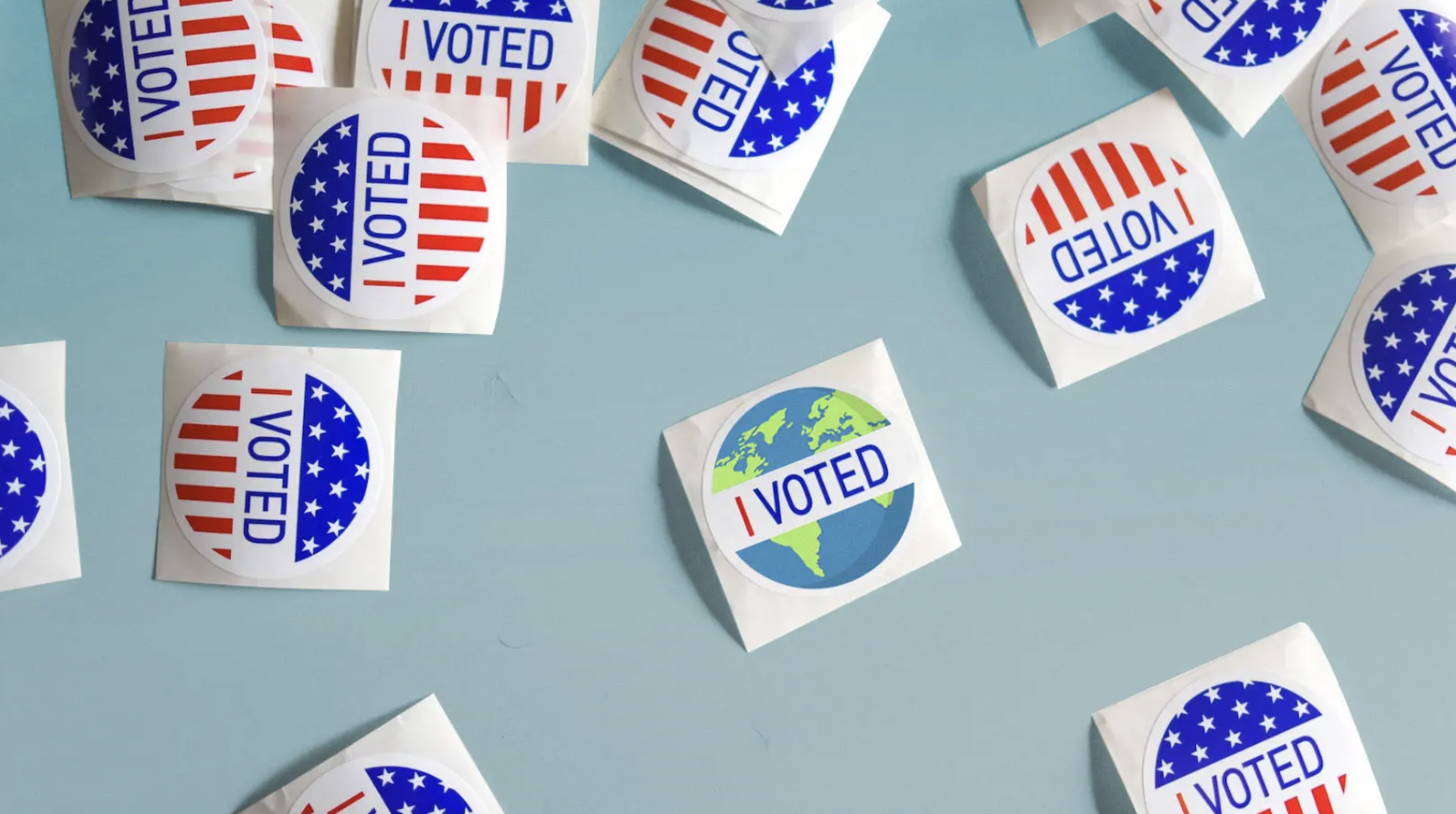
Image from Grist. https://grist.org/elections/tax-the-rich-for-climate-action-protect-towns-from-floods-its-on-state-ballots-this-november/

As many of us watched the election results roll in on Tuesday night, a quiet revolution for climate policy played out at the bottom of the ballot.

When environmental policy is filtered through candidate campaigns, it routinely gets buried by other issues that are viewed as more tangible and immediate such as the price of groceries and gas, cost of living, job creation, and foreign relations. But when clean water, local open space, and energy sovereignty are put directly to voters as standalone questions, a different political reality emerges: the public is far more protective of the environment than conventional politics and politicians would have us believe.

Across the country, 2026’s direct ballot initiatives revealed a decisive grassroots mandate centered on three clear climate issues:

1. Water Unifies All of Us

From coastal Texas to the suburban counties of North Carolina and Florida, voters treated water infrastructure for what it is – vital to survival.

  • In Corpus Christi, Texas, a community recently on the brink of a water supply crisis, voters overwhelmingly passed a citizen-led initiative imposing mandatory drought surcharges on heavy industrial water users.
  • Across county ballots nationwide, voters authorized nearly $1 billion in dedicated funding for river restoration, lead service line removal, and coastal lagoon defense—consistently choosing to tax themselves pennies on the dollar to ensure their water supply remains clean and safe.

When it’s on the ballot, water wins.

2. Pushing Back on AI Data Centers

In more than 40 municipal and county ballot initiatives across 10 states—including Ohio, Kansas, Illinois, Maine, and Wisconsin—voters were asked whether to approve zoning changes, tax incentives, or permits for massive AI data centers.

The result was a resounding no. In over 30 municipalities, electorates voted to ban, pause, or strictly regulate data center construction.

  • In Kansas, voters banned high-impact data centers (defined as consuming over 100,000 gallons of water a day for a decade), requiring any future reversal to go back to a public vote.
  • In Ohio, communities pushed back against utility-scale facilities that threaten to strain the regional grid and shift the costs of fossil-fuel plants onto residential bills.

Measures like these are about defending resources. Communities saw tech firms siphoning local water tables and stressing electrical capacity, and they used direct democracy to protect their communities.

3. Defeating Fossil Fuels

Direct democracy also proved to be a critical shield against corporate rollbacks:

  • In Colorado, voters defeated Amendment 82, an industry-backed effort to enshrine a constitutional “right to natural gas” that would have preempted local building electrification and municipal heat-pump adoption.
  • In California, voters resisted Proposition 45, rejecting attempts to gut environmental review standards for major development projects.

The Togetherhood Takeaway

Electing progressive legislators is essential, but candidate victories can be tenuous. Will they keep the promises they made on the campaign trail? Will adversaries prevent them from enacting the policies they campaigned on? Will donors, special interests, and the next election cycle cause distractions? The answers to these questions are at the root of modern politics and political policy.

While electing candidates with strong climate platforms is essential to protecting the planet, ballot measures are an additional lever for voters and communities to exercise:

  1. Initiate Local Water Bonds: Look into whether your municipality or county has the statutory power to run a dedicated infrastructure bond for stormwater mitigation or lead pipe replacement.
  2. Watch Local Zoning on Data Centers: Pay close attention to local planning boards considering data centers or industrial energy expansions; the 2026 midterms proved that citizen-led ballot referendums can stop unsustainable projects that threaten energy grid capacity.
  3. Put Policy Directly to the People: If state legislatures stall on clean energy or conservation, grassroots coalitions can bypass the statehouse and take the question directly to the voters via the ballot. This takes a tremendous amount of time and effort, but in states where this is allowed and considering what’s at stake, it’s worth it!

An Actionable Playbook for Organizers

To get environmental measures on the ballot, here are three strategic takeaways for community organizers:

  1. Audit Your Local Ballot Options: Look up your city or county charter to see how many signatures are required to trigger a ballot proposition.
  2. Track the Anti-Initiative Backlash: As more environmental propositions show up on ballots, special interests such as fossil fuel companies may attempt to sponsor measures to raise signature thresholds or require supermajorities (like 60% requirements rather than a simple majority, as happened in Florida). In addition to getting climate policy on the ballot, we also have to defend the ballot proposition process as a whole.
  3. Start with Single-Issue Local Efforts: You don’t have to start with a massive statewide effort. As seen with this year’s data center referendums and local water protections, single-town zoning and utility initiatives can stop major resource exploitation and set precedents that can be used to ladder up to state and national efforts.

The voting ballot isn’t just for picking candidates—it is also a direct tool we have to protect our planet and all beings who share it so let’s use it the fullest extent possible. We have no time to waste!

creativity

This is why your vote matters

These are more energizing scenes from my long weekend of canvassing in New York, New Jersey, and Pennsylvania with Senator Cory Booker, Sue Altman, Mondaire Jones, and for Vice President Kamala Harris and Governor Tim Walz.

Now election day is here! My heart is full of hope. The great Congressman John Lewis said so beautifully, “Freedom isn’t a state; it’s an act.” So is democracy. So is joy.

Voting is how we reaffirm and recommit to our well-being, to each other, to the world, and for our collective future. It is how we evolve this grand experiment of a country. It is, like our favorite characters in novels and throughout history, deeply flawed and deeply loved. Today is the day we exercise our right to make it better for all of us. Please vote.

creativity

New York City’s 2024 election ballot explained

nycvotes.org

Early voting starts in New York and New Jersey today, October 26, 2024. In New York City, we have a number of races and proposals on our ballot. Here are informational links about them. Thank you for being a voter, encouraging your friends, family members, and neighbors to vote, and participating in our democracy. 

Early voting days, times, and location

  • Saturday, October 26, 2024 — Sunday, November 3, 2024. Hours vary by day
  • The location of your early voting polling station may be different than your election day polling station.
  • To find the location and hours of your early voting polling site, visit https://findmypollsite.vote.nyc/

Election day

  • Tuesday, November 5th. 6am — 9pm. 
  • The location of your early voting polling station may be different than your election day polling station.
  • To find the location of your election day polling site, visit https://findmypollsite.vote.nyc/

If you’re voting by mail

Candidates on the New York City ballot this year

We will be voting for candidates for the following offices:
President and Vice President
U.S. Senate
Congressional district
State Assembly
State Senate

You can see the candidates who will be on your ballot and read about them at https://www.nycvotes.org/whats-on-the-ballot/2024-state-and-federal-general-election/

Proposals on the New York City ballot this year

We also have six city proposals on our ballot: https://www.nycvotes.org/whats-on-the-ballot/2024-state-and-federal-general-election/2024-ballot-proposals/. 

Here is the name and direct link to each proposal that explains what it means as well as arguments for and against it. Proposal 1 aims to prevent discrimination and enhance civil rights. Proposals 2 — 6 grant increased power to the mayor and the mayor’s appointees.  

Ballot Proposal 1: Adds Certain Rights Protections to the State Bill of Rights
https://www.nycvotes.org/whats-on-the-ballot/2024-state-and-federal-general-election/2024-ballot-proposals/ballot-proposal-1/

Ballot Proposal 2: Cleaning Public Property
https://www.nycvotes.org/whats-on-the-ballot/2024-state-and-federal-general-election/2024-ballot-proposals/ballot-proposal-2/
 
Ballot Proposal 3: Additional Estimates of the Cost of Proposed Laws and Updates to Budget Deadlines
https://www.nycvotes.org/whats-on-the-ballot/2024-state-and-federal-general-election/2024-ballot-proposals/ballot-proposal-3/

Ballot Proposal 4: More Notice and Time Before Votes on Public Safety Legislation
https://www.nycvotes.org/whats-on-the-ballot/2024-state-and-federal-general-election/2024-ballot-proposals/ballot-proposal-4/

Ballot Proposal 5: Capital Planning
https://www.nycvotes.org/whats-on-the-ballot/2024-state-and-federal-general-election/2024-ballot-proposals/ballot-proposal-5/

Ballot Proposal 6: Minority and Women-Owned Business Enterprises (MWBES), Film Permits, and Archive Review Boards
https://www.nycvotes.org/whats-on-the-ballot/2024-state-and-federal-general-election/2024-ballot-proposals/ballot-proposal-6/

Again, thank you for being a voter!

creativity

A Year of Yes: Don’t just march; run for office

“Not everyone starts their work in politics by running for Congress. School & community boards have critical impacts on local communities. Run!” ~Vicki Eastus

My friend, Vicki, said this to me this week and it empowered me to consider running for a hyperlocal local office in my New York City community. If you’ve had similar thoughts, or you’re just curious about the whole election process on any level, there are so many resources available:

Run for Something
National Democratic Training Committee
Progressive Change Campaign Committee
Democracy for America
Wellstone
EMILY’s List
She Should Run

creativity

In the pause: My faith and gratitude are with the press, and the Newseum

“The viability of news organizations today rests in their ability to make themselves relevant by providing news that improves people’s lives.” ~Bob Schieffer

The Newseum’s event “The President and the Press: The First Amendment in the First 100 Days” attempted to open the dialogue on the present and future of the press in politics. At times contentious and at other times collegial, all of the conversations were open and honest. And this idea was clear: journalists are determined to uncover the truth in every facet of their work and they won’t rest until they do. Their commitment and passion, often at their own personal expense, is inspiring. This isn’t a job; it’s a calling no matter where a journalist sits on the ideological spectrum. This is sacred work and it deserves respect.

The state of news today
And that said, the criticism often leveled at the press must be listened to and acted upon. Feedback, whether or not we agree with it, is a gift because it allows us to figure out what matters to us. 21% of Americans have little or no faith in media. That is a massive number. We think more highly of nearly every other profession.

And it shows in the sales numbers. In the past ten years, we’ve lost 126 newspapers in this country. Today many remaining ones are thinner than our water bill now. “If we don’t fix this,” said Bob, “we will see unprecedented corruption across society. It’s the great crisis of journalism today.”

So how do we fix it? What do we do? What do we stop doing?

And I go back to Bob Schieffer. He’s been a journalist for 60 years. And in his long history in the only profession he’s ever had, he sees the answer as not only relevance but in impact. The news must make people’s lives better.

How do we do that? I think we need to get more trained reporters on the ground in more communities uncovering the facts, listening to people, and telling a greater array of stories. I appreciate data, but I appreciate the narrative the data reveals even more. As a society, we’ve become analytical to the point of sacrificing our humanity. We’ve been so busy assigning labels to ourselves and to others that we’ve actually forgotten to walk in their shoes.

Does more data make us wiser or overwhelmed?
In his closing address, Bob Schieffer went on to share a few quotes that had a powerful impact on me.

“We have started thinking in statistics and analytics,” said Peter Hart, NBC/WSJ Pollster. “That’s doesn’t work. [Polls] don’t tell you what’s in people’s hearts.” That’s quite a claim from a man who makes his living in statistics, but we can’t deny its truth. Our latest presidential campaign revealed that a significant number of voters, though not the majority, had more faith in Donald Trump than the polls ever thought possible.

“We look on polling data as higher truth,” wrote Jill Lepore, Pulitzer Prize winning historian at Harvard and staff writer for The New Yorker. “Too many times we are replacing beat reporting with polling data. Publications don’t send reporters to PTA meetings or local bars anymore, to talk to people. They can no longer afford it and there aren’t enough reporters to do the job.”

The evolving role of social media in news today
Many of the conversations at the Newseum focused on the integral role of social media and the press. Washington Post reporter David Fahrenthold credits his Twitter following with helping him win the Pulitzer Prize for his coverage of Trump’s charitable contribution claims. Facebook is now the number one source where we access and share news. CBS now has a 24/7 streaming news network, and during the election it often had more engagement than hallmark programs such as the CBS Evening News. Dan Rather’s News and Guts is another fantastic example of new channels for news.

“Hillary Clinton challenged norms [of what a woman should be.] And the hatred that has hung around her for that is irrational.” I put that quote from former Communications Director Jennifer Palmieri on Twitter and it drew immediate attention for and against Hillary, much of it very intense, and that level of response sums up the key insight I got while at this event. The news, in every channel, has become more a point of connection for people and less a vehicle to change hearts and minds. I’m not sure if that’s a good thing or a bad thing. It’s just a fact.

The Buddha said, “Three things cannot be long hidden: the sun, the moon, and the truth.” Nowhere is this more true than in journalism. Martin Luther called the printing press “God’s highest act of grace.” That was in 1436. It took centuries for society to make full use of his invention. It may be many more years before we realize the full extent of the power that we now have in all of our current communication channels and the many more that are to come. Equilibrium, as Bob said, is going to take some time. But we’ll get there.

The gift of the First Amendment
As I walked home from the Newseum, I kept thinking how lucky we are to have our First Amendment. While we may fight vehemently and against one another for our beliefs, the fact that we can do so is a priceless gift. The freedoms of religion, speech, the press, assembly, and complaining to / seeking the assistance of government are the lifeblood of our society. They must be protected by all of us, not just those in elected office. And if anyone, our elected officials included, attempts to take those rights from others, it is our collective responsibility to fight that injustice. The press fights for us every day, and we must fight for the press.

The job of every journalist, and every citizen, is to ask questions, and keep asking until we get an answer. A deep and unabiding ability to question everything and everyone is the foundation of our society. We cannot silence ourselves or others, and we cannot allow anyone else to do so. Nevertheless, we must persist.

More Newseum programming
The Newseum is offering a year-long program about the relationship between the Trump White House and the press. Many of the events will be available on live stream. You can learn more by visiting http://www.newseum.org/.

Email list signup: If you’d like to be kept up-to-date on my latest writing, please signup for my email list.

creativity

In the pause: A shout out of thanks and gratitude to the men who supported the Women’s March

Thank you to all of the men, and especially my male friends, who supported the women’s marches all over the world. I’m grateful for all of the efforts you made to support the marches in a myriad of ways—for being at the marches, for taking care of kids so the women in your life could march, and for every text and social media message of support. It is all appreciated more than you know. I’m lucky to have you in my life. Thank you for being on this journey, for courageously standing up for women (especially in situations when men are saying and doing things that are disrespectful), and for raising your voices with ours. The world needs more of you.