medical, medicine, OLED, technology

The Consumer Electronics Show: The "Eyes" May Not Have It

I’ve been given a project by my boss to track what’s happening at CES (the Consumer Electronics Show) in Las Vegas. The trick is I need to track it from my office in New Jersey. Thanks to publications like Wired, CNET, USA Today, Business Week, and the plethora of bloggers at the show, the tough part isn’t getting the information – it’s sifting through all of it. I’m not complaining in the least; I am a master sifter. And this project feels much more like play than work- my gratitude for this terrific job has now reached an all-time high!

I came across a post on Amazon Current’s blog regarding Sony’s OLED TV, one of the hottest products at the show. http://www.amazon.com/gp/blog/post/PLNK30ULMBBBDWULY Among their many features, these TVs feature “super deep black” levels. Pictures pop with a vibrancy never before seen in a TV. This started my nerd wheels going – can our own eyes even experience “super deep black” on their own?

After a few hours of looking far and wide on numerous medical sites, I couldn’t find any evidence of whether or not this color contrast is something we can naturally experience without the aid of technology. (I did discover that the human eyeball weighs approximately 28 grams, can discern between 500 shades of grey, and that sailors once thought that wearing a gold earring would improve their eyesight!) It’s possible that the answer to my question is out there living on some website I have yet to discover. It’s also possible that these advanced technologies are helping us experience the world “out there” from the comfort of our own couches in a way that we could not see it on our own.

art, museum, technology, theatre

A meeting of the minds: art and technology

I have been out of professional theatre management for quite some time now. I love going to shows, love reading about the industry. Every once in a while I get a twinge to go back to it, and then about 5 seconds later I have a moonstruck “snap out of it” moment. We idealize the past.

While I am not sure if I will ever return to the industry, I am passionate about propagating the arts. I read Michael Eisner’s book A Work in Progress about 6 months before I moved to New York City to begin my career in theatre. It is not an exaggeration to say that he very much influenced my decision to give it a shot and see what I could do in the industry. He has a quote in the front cover that to this day is one of my favorites, and it bears repeating. “What hope there is for us lies in our nascent arts, for if we are to be remembered as more than a mass of people who lived and fought wars and died, it is for our arts that we will be remembered. The fortunes wither, the kings depart. What survives are the creations of people who are makers and artificers of the spirit.”

I am now an outsider of the industry with some wonderful friends still very much inside. Over the past few months I have begun to wonder how on Earth the industry expects to survive without embracing technology beyond complicating lighting plots and set designs. With all of the competing interests for time that consumers now face and a shaky economy, the arts cannot expect to rely on local audiences and tourists to make up the whole of their subscriber base. The traditional subscriber model needs to be ripped to shreds and rebuilt. Why should Lincoln Center limit their viewers to only those who can get to NYC? Why not develop a subscriber base that spans the globe?

I’m talking about a technological platform that would film performances and museum exhibits in very high definition to be broadcast via subscription on the web to those who pay per log-in. I am already hearing the naysayers – “theatre is about being there”, “what about the live interaction that the actors need?”, “no technology can replace actually being there in person”. I agree with all of that. And the die-hard subscribers will, too. They will still come to performances and exhibits.

Let’s consider those who can’t get to the theatre or museum: why should art institutions leave that money on the table? Why shouldn’t all people everywhere be able to experience and appreciate art wherever it is? If we don’t do this, can we hope to hang on to young audiences who are so intrinsically linked to technology? And don’t our artists deserve to have the ability to reach audiences far and wide?

The other bonus that this kind of technology would offer is the ability for those who see the performances to interact with one another, to keep the artistic discussion going long after the curtain goes down. Not to mention the diversification of revenue – new subscribers and the increased ad money that could be made available to arts organizations to not only survive but to thrive.

I have a certain disdain for critics – how they kill works of art before the performers even get their arms around a piece. Why should the critics decide what shows stays open on Broadway and what closes? Why does this very select group of people get to determine the art we see and enjoy? Opening up the subscriber base and encouraging the conversation among patrons returns the power to the people it rightfully belongs to – the patrons.

The above images can be found at http://infocusmagazine.org/3.2/images/eng_beyond.gif

books, Mark Penn, society, technology

Social geeks

I love ethnographers. I appreciate their fervent desire to bucket people in an attempt to figure out the human race, though I must admit I have never been one to enjoy being in a box. My boss recently passed me the book, Microtrends by Mark Penn, an advisor to Hillary Clinton’s campaign.

When I tell people I work in the field of trend and innovation they assume that I must be checking out the latest “fads” and “fashions”. And I do check those things out, only to the extent that they reveal some underlying and unifying trends that may be emerging. Trends take the long-view, have a psycho-social implication, and signal major shifts in how a large group of people see themselves and their place in the world. This long-view is what holds my interest.

As I read through Microtrends, I discovered a few new interesting groups that I actually belong to, on my own terms. I’m a joiner (there in lying the paradox that while I love groups I hate formal classifications), and so this news of “my people” coming together has got me jazzed. First up, those of us who believe in being DIY doctors. I’ve previously blogged on my neurotic addiction to WebMD, mostly stemming from my preoccupation with health and wellness and the sense of worry etched in my DNA. Turns out that my years-long tracking of WebMD just meant that I was ahead of the trend curve. The tipping point for DIY medicine is approaching, thanks in part to our horrid health insurance system.

Another group I love and seek acceptance to: the Tech Fatales – women and girls who are not only interested in technology but seek to be the people who change and improve the systems and their applications. Finally, those of us who have long been hanging out on the edge contemplating how in the heck all of these technological advancements actually apply to us are not only figuring out that conundrum – we’re also finding new uses for the technologies to make them more applicable to us.

And the last group of note for me – the social geeks. How I love this! Finally a description in two words that does justice to my weirdo nature. I’m so nerdy that at times in my life it has been a source of embarrassment. I was one of those kids who embraced the word “why” with every fiber of my being. My library is my most precious material possession. I have a hard time parting with any of my books, even if I never intend to read them again. And the subject matters are so varied that I have a hard time placing any two books into a single category.

The flipside to my nerd nature is that I have often been correctly accused of being a social butterfly. I love making the rounds, meeting new people, and bringing people together. So imagine my delight when social networking came on the scene in a big way – it would be possible for me to connect with tons of people with all kinds of interests, spread across the globe, all from my cute and comfy apartment. Are you kidding me? Count me in!

Mark Penn points out that Myers-Briggs recently needed to alter their classifications. Previously people interested in technology had been placed in the “introvert” bucket. That’s changed – now people most interested and active in technology are also the most extroverted. Sorry Myers and Briggs: the social geeks will define their own characteristics in their own words.

The above photo can be found at http://www.cnet.co.uk/i/c/blg/websites_feature/1.jpg

charity, health, philanthropy, technology

Be one of a 1,000,000 before NYE to go pink

Yahoo! Search has partnered with Pink Ribbon to create LookPink.com–a search engine with world-class search results that contributes its revenue to Breast Cancer Research.

Every time, you search with http://www.lookpink.com/, you help fight against breast cancer! If over 1,000,000 people search with LookPink on any day before the New Year arrives, then over $100,000 will be generated by LookPink Search to help prevent breast cancer.

Help reach this goal by searching with LookPink today and by setting your homepage to http://www.lookpink.com/!

business, career, creativity, entertainment, happiness, innovation, money, New York, society, technology, trend, writing

No one needs to pay you

From my earliest memories about what profession I’d like to have, I wanted to write. And the troublesome thing to me was always that I may never get anyone to pay me for doing what I love. I’m 31 so when I was growing up, blogs and the like didn’t exist. We were still living in the days of big blue chip companies dominating the globe. “New media” as it’s known today was just a dream inside the imaginations of a handful of people.

Today, I can confidently say that I am a writer. I don’t have a magazine gig. I don’t write for television of film. You can’t see my work in a theatre. I never signed a contract and I don’t have an agent. No one gives me assignments. And it’s no longer just tucked away in some old journal that even I’ll never go back and review, much less have anyone else read. It’s out in the world, in this wonderful thing called the blogosphere and I write whatever I’d like to write about. I do what I want, when I want, which is really the only way I am capable of living my life. I have a disdain for authority or anything that hampers personal freedom and creativity and I am largely a contrarian at the mere mention of phrases like “well, you HAVE to do it this way.” I actually don’t HAVE to do anything, and I won’t.

I used to be weird for feeling this way. Now, it’s become the way of the world. With user-generated content growing by leaps and bounds by the minute, the limits that have been placed on our lives are being ripped down in the blink of an eye. Agents, creative unions, casting directors, TV networks, producers, and film studios used to rule the roost. And while they still wield some power, it is largely dwindling to a modicum of what it used to be. We are very quickly becoming the “take charge of our lives” generation. Contrarians rejoice, we have worked our own way out of the job of being contrarians. (And not a moment too soon. Being a contrarian is exhausting work and I have other things I’d like to be doing!)

Last night I attended the Mustaches for Kids event at the Montauck Club in Park Slope. A hilarious and worthwhile event. The only nosh available was pickles by Bob from McClure’s pickles. (http://www.mcclurespickles.com/) When not in the kitchen whipping up his grandmother’s recipes, he’s acting and writing. He was telling my friend, Monika, and I about a new webtv show he’s on – http://www.theburg.tv/. It’s entirely created by his friends from college who live in Williamsburg. They didn’t create it to make money, they did it for the love of creating. And here’s the good news: they have 4 million people who have watched the show on-line, the audience is global, SAG is contacting, and Michael Eisner’s company is interested in investing in the project. The paradigm of entertainment is being torn down and built up by the talent rather than being dictated to them.

These kinds of success stories by the underdog brighten my day. It is indeed a brand new world. Focus on being great and creating your life, and the money will follow.

business, career, change, creativity, discovery, dreams, experience, Google, innovation, society, technology

Get your head in the clouds

I spend about 8 hours on my computer, and roughly 10% of that time belongs to some Google application. I stand in awe of a system that can pull up exactly what I’m looking for, regardless of how obscure the subject, in a fraction of a second. Until today, I had resigned myself to the fact that there was some magic Google elf pulling the info for me. I have confirmed that not only is there an elf, there could actually be a million of them out there in the Googlesphere, known increasingly as a “cloud”.

While it focuses on Google and one engineer’s story, Business Week’s cover story this week talks broadly about how our information world is increasingly being built upon this idea of clouds, a group of hundreds of thousands of computers that are all bolted together to store massive quantities of data. While many companies are struggling this holiday season to stay afloat, Google is contemplating world domination of information. Their mantra can be described as “Whatever you can dream, dream it bigger.” Imagine being at a company that tells you you’re wildest dreams are too small, and that you need to formulate projects that are far more outlandish than even your wildest expectations.

There is a lesson in this wild dream making: every dream can be broken down into very small pieces that can be handled by individual “cloud elves” and then aggregated to get you exactly to where you need to be, all in about half a second. And there is no finite number of tasks. The possibilities are truly endless.

While many companies are in the mode of tempering expectations, pulling in spending, and plummeting morale this holiday season, Google is doing the exact opposite. They are determined to fly high and make sense of the massive amount of knowledge out there. They are so optimistic about what they are capable of accomplishing that they feel these clouds may ultimately push the limits of human imagination. Talk about a tipping point! We have been told for centuries that the human imagination is the most powerful tool on Earth – is it possible that when we pool our imaginations together, we can build something larger than our own sense of creativity?

One last astonishing thing about Google. In all of its success and dreaming, they maintain a public humility that is staggering. They are absolutely fearless when it comes to failure so long as there is learning involved. Their CEO, arguably one of the most powerful and wealthiest men on the planet, sits in a cubicle and moves around from building to building so as to interact with different people at all levels of the organization. And he responds to emails from people at all levels at a unbelievable rate. He is respectful of people’s time, both on and off the job. With someone like this at the helm, it’s no wonder that Google believes in defying limits.

The Business Week article can be found at http://www.businessweek.com/magazine/content/07_52/b4064048925836.htm?chan=magazine+channel_top+stories

The picture above can be found at http://www.businessweek.com/magazine/toc/07_52/B4064magazine.htm

finance, money, technology

Making a mint

For a number of years, I have built elaborate spreadsheets of budgets to keep myself on track. I put myself through college and through graduate school working a whole host of jobs and with more than a little help from school loans and grants. I grew up in a family with very little money and was always paranoid about not having enough money or about not managing well the little I did have. These spreadsheets helped me stay on track and let me know when I needed to reel in the spending and when I could loosen the reigns a bit.
It is a lot of work to keep track this closely. A number of different sites to check, receipts to track, and accounts to balance. www.Mint.com has made that old news. A new, fun site recently featured in Fast Company, the founders wanted to help encourage young people to be more financial responsible and help all people to simplify the process of budgeting. Best of all it’s free. You can record budgets, have bank accounts, investments, and credit cards all tracked on one site. It will give you graphs that make it easy to see just how you’re faring in the world of balancing your spending and savings, and offer up specials that can help you take advantage of special bonuses from financial products you may not be aware of.
This is no easy feat. Most people don’t like the balancing act of money or the complexity of personal financial management. Mint.com just goes to show you that everything, even the most stressful of tasks, can be infused with a little fun for a whole lot of impact.
anthropology, creativity, experience, history, innovation, language, New York, society, technology, trend

Words on the street

I am fascinated by language. My dad spoke six of them. While I didn’t inherit his ability to learn language, as is evidenced by my sad attempts at French, I did inherit a love of hearing different languages and dialects. I particularly enjoy studying how a language truly shapes a culture and national behavior patterns. And the dynamism of language allows it to reflect societal trends.

It’s no wonder that my recent discovery of Urban Dictionary, http://www.urbandictionary.com/ , brought a smile to my face. The more tech-saavy readers of this blog will think that I just now have emerged from the dark ages. I fear that this is proof that my long, slow slide from hip, urban chick to crusty old broad may have finally begun. Nevertheless, I think this may also be a new find for some of you, or a refresher of knowledge gained long ago, so it is worthwhile to post the link.

Those out of the know may be asking, “So what is this urban dictionary all about?” It is a slang dictionary that is based on user-generated definitions. Literally, it is helping to define this quickly evolving world around us. And then there is a feature that allows the community members to vote on the definitions added. For example, “wOOt” is top of mind on Urban Dictionary today. It means “an expression of joy”. 3106 people give this definition a thumbs up. 565 shot it down.

The other cool feature that I love is that community members are recording the history of these words. From many definitions, we can learn where words come from, their original use, and how they’ve been adapted to become more main stream. So not only is this a dictionary, it is an anthropological history book. I’m so excited about this, it’s hard for me to sit still!

“WOOt” was recently voted word of the year for 2007 by the dictionary gurus at Merriam-Webster. Facebook was the runner up. In years past words like “google” and “blog” have received the top word honor – not a bad track record as these words are now commonplace in daily conversations. Is “wOOt” destined for this type of fame and recognition? Unclear. But it’s found its place in the American lexicon and I’m all for anything, or any word for that matter, that spreads joy.

business, career, files, Gmail, Google, technology, work

Can a mega-company like Google rewire our brains?

A few years ago I switched over to Gmail from AOL and have never looked back. I love the friendly interface, the nearly-infinite storage, the ever-expanding address book, and on and on it goes. It took some getting used to after I had been with AOL for so long. In particular I had to adjust to the lack of buckets and folders in which I was used to grouping my emails.

I am a file fanatic. I like being able to pull a folder on a topic and seeing everything I have on the subject. Doesn’t happen with Google. Instead, it has a robust search function that will pull up every email I have that contains a keyword I type in. It’s forced me to be very deliberate in how I select email titles so that I can easily recall them later on. The trouble with this is I have had to become a synonym expert. For example, if I want to pull up all of my emails relating to “being green”, I may need to search “sustainability”, “eco-friendly”, “environment”, etc. If I had a folder entitled “green”, I could drop them all in there and pull them in one swoop!
Gmail’s search function has forced into a few work-arounds. I am considering starting a business, so I’ve created a new Gmail account of emails that just relate to the business idea. I’ve also become more addicted to blog posting so I’ve started emailing to a new account about everything I need to post on my blog. For the truly important topics like these, I’m still finding that my buckets are necessary.
While I love the idea of a way to simplify and reduce the amount of filing, bookmarking, and flagging I need to do, a certain amount of it may be so deeply entrenched in my behavior patterns that it will be tough to shake! More food for thought for the talented folks at Google to consider in their quest for continuous improvement.
Mac, technology

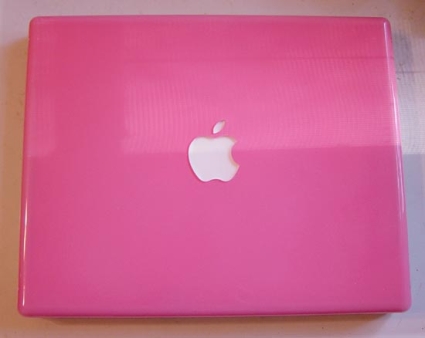
Going Mac

Recently I’ve found myself considering the switch to a Mac. I am a PC person through and through. Though when I think about what I use my computer for – writing, blogging, pictures, music – and what I’d like to use it for – design – it doesn’t make sense to not be on a Mac.

The trouble with PCs is that they are not intuitive and lack an ease of usability for those of us who are not computer geeks. I need platforms that let me create without knowing how to code. I’m not interested in code; I am interested in expressing myself.

There’s something frightening about switching platforms. I’m feeling as much anxiety about it as I did about moving to New York. I know it’s the right thing to do, it’s just that making the leap into the unknown is tough to conceptualize.

So I’ve been hunting around on-line for articles that help easy my anxiety; ones that ultimately will help me make a better choice. Today, an article in USA Today’s Technology section was a big help on both fronts. If you’re making the switch, you may find it helpful, too. http://www.usatoday.com/tech/columnist/edwardbaig/2007-12-05-mac_N.htm

I also learned that something called Mac World happens in January and it is possible that the price of a Mac may drop shortly thereafter, or be significantly upgraded at the same price.