art, creativity, film

Step 210: The Role of the Critic and Criticism

“In many ways, the work of a critic is easy. We risk very little yet enjoy a position over those who offer up their work and their selves to our judgment. We thrive on negative criticism, which is fun to write and to read. But the bitter truth we critics must face, is that in the grand scheme of things, the average piece of junk is more meaningful than our criticism designating it so. But there are times when a critic truly risks something, and that is in the discovery and defense of the new. The world is often unkind to new talent, new creations, the new needs friends… Not everyone can become a great artist, but a great artist can come from anywhere.” ~ Anton Ego (voiced by Peter O’Toole) in Ratatouille (2007), written by Brad Bird

While on vacation in Florida, my brother-in-law pointed out this quote to me. I had seen Ratatouille before though had not paid this quote nearly the credit it deserves. If someone covered the attribution, I would have assumed a seasoned journalist as its writer. The gorgeous language, the lament, the honesty, and then the sense of purpose have an eloquence and dignity to them. I want to make t-shirts with this quote on them. I will certainly paste it up at my desk.

The new, indeed, needs friends. Supporters. Believers. People who can let go of past ideas and conceptions in favor of something different and out of the ordinary. They must step away from the safe, sure bet, and make their way out to the ledge to join the artist who had the courage to go it alone with only his imagination as his guide. Critics and artists alike earn their true credit out there on that ledge together.

Great artists can come from elite pedigree schools and backgrounds – critics often hold up those examples as the pinnacle of high art. As Brad Bird sees it, a great artist could just as easily come from any far-reaching corner of the globe, no training even required, only friends. An artist needs vision and the ability to bear out her ideas for the world to witness and critique. Making art, putting our hearts on our sleeves and inviting others to view them takes conviction, confidence, and bravery. Artists do and must throw caution to the wind. Their pallets may consist of paints, brushes, pens, computer design programs, clay, performance abilities, and a variety of other tools. The medium does not determine greatness. What makes a great artist, and also a great critic, is the unquenchable desire to make and remake, to believe that their greatest work and their greatest discoveries always lie ahead.

My brother-in-law, Kyle Waldrep, painted the image above. Visit his art blog here.

children, Disney, film, happiness

Step 149: Blue Skies and Sunshine

After a 3 hour flight delay, I finally arrived in Florida to spend some vacation time with my sister, brother-in-law, and 2-year-old niece, Lorelei. I love how kids get so focused on a topic that they can’t think about anything else. My niece can’t get enough of her favorite flicks. The Princess and the Frog currently rules her movie world. She sings the songs spontaneously, in and out of context. She does a heart-felt rendition of “Blue Skies and Sunshine”.

The Princess and the Frog centers on a female would-be entrepreneur in New Orleans who wants to carry on her family’s dream of opening a restaurant. She diligently saves her money, places a down payment on a space, and then, of course, runs into a lot of trouble along the way. She meets a cast of hilarious, sensitive characters, as well as a vilian, and overcomes great odds to realize her dream. A wonderful example of courage, faith, and good business sense for my niece.

As we sang the songs from The Princess and the Frog yesterday, in public spaces and at home, my niece never paid any mind to our surroundings. We twirled around in our sun dresses, gave ourselves numerous rounds of spontaneous applause, and clapped along to our self-made beat. Every space we found became a place where she made herself comfortable. Even her neighborhood Target store. Everywhere we went became a place a joy because we had our songs, and our dancing, and each other. We created those blue skies and sunshine in every corner of our day. Two year olds have a lot to teach us.

Image above is from The Princess and the Frog, courtesy of Disney.

Africa, art, film

Step 131: Meet Kate Ofwono, Documentary Film Maker from Uganda

My friend, Amy, has been staying with me for the week. She is an exceptionally talented production stage manager (currently on the Phantom of the Opera tour) and a trained trauma counselor. Amy and I worked together many years ago as young theater managers and we’ve stayed close pals ever since. She has an incredible heart and has spent much of her free time abroad doing international volunteer projects. Last year she spent 6 months at the UNHCR in Geneva working on refugee issues.

In graduate school, Amy met Paulette Moore, a documentary filmmaker. Paulette’s blog, Story Doula, chronicles her film work and one aspect of her work involves making films about social justice and peace building. Paulette was able to find a way to premiere the work of Kate Ofwono, a 22-year old filmmaker from Uganda who currently resides in the Kakuma Refugee Camp in Kenya, in Geneva in March. Kate filmed her daily life with the help of FilmAid International’s participatory video program.

Kate’s film is exquisite. She is so honest, strong, and articulate. Her courage inspired me. Watch her film clips here.

community, community service, film, Muppet

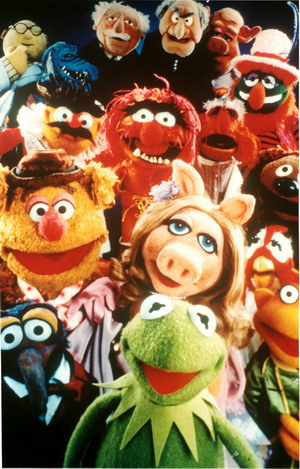
My Year of Hopefulness – We Could Learn a Lot from the Muppets

On Sunday night I watched A Very Merry Muppet Christmas on TV. Kermit and his pals realize their dream of having their own theatre only to have it threatened by a scheming landlord who wants to shut them down to open a posh new nightclub. Kermit blames himself for losing the fight to save the theatre, confiding to an angel that he wishes he was never born.

As the story unfolds, we see how the lives of his friends would have been different without Kermit. All of them, without question, would have achieved far less without Kermit as their friend. Through this lesson, the angel teaches Kermit that our actions and words have a greater impact on people than we realize – a good lesson for all of us. This lesson prodded me to think of all the ways in which we influence one another.

The encouragement that we offer to others, our belief in one another’s abilities to create change, and our own willingness to take a stand on issues of great importance all have deeper reaching impact than we know. With our words we can foster dreams, ours and those of others. Our simple belief that someone else can achieve a lofty goal can provide a much needed boost to someone who lacks personal confidence. If and how we work on issues such as healthcare, education, poverty, and the environment conveys who we are on a very deep and personal level.

Not only do our actions and words have impact, but our lack of action and the sentiments we do not convey have an impact as well. When a friend or colleague turns to us for help and support, do we stand with them or do we turn away? When someone tells us they don’t think they can achieve their dream, do we doubt them or do we encourage them? When something in our community, or in the world at-large, has gone haywire, do we accept the current situation as is or do we decide to change it?

Our answers to these questions also reveal our integrity of character. So often, we think life lessons have to come from books of philosophy or in the classrooms of the Ivy League. My experience yesterday watching the Muppets reminded me that inspiration exists all around us, in every conversation, in every TV viewing, and in everyday experiences. We would be wise and the world would be a better place if we could pay greater attention to the callings and reminders that show up at our door all the time. We never know what pearl of wisdom may fall from the lips of a lovable, unassuming frog.

The photo above is not my own. It can be found here.

art, film, free, hope, The Journal of Cultural Conversation, war, women, writing

The Journal of Cultural Conversation – Pray the Devil Back to Hell

Exciting news over in TJCC-land! Laura, my brilliant friend and writing partner as well as the mastermind behind The Journal of Cultural Conversation, is working on a front-end re-design for the site that will be up within the week. We’re also working on a re-branding effort as well, though again, Laura must take 99% of the credit here. I’m just lucky to have a role on the virtual stage next to her.

My latest post on TJCC is up today! I was on a brief hiatus as I dealt with some personal issues and am now back, fully present. This one is about the documentary Pray the Devil Back to Hell and it goes something like this:

“There will come a time when you believe that everything is finished. That will be the beginning.” ~ Louis L’Amour

A few weeks ago I attended a screening of Pray the Devil Back to Hell, a documentary that tells the story of the how the women of Liberia ended the civil war that ravaged their country for well over a decade. Donning identical white t-shirts, no weapons, 2500+ women linked arms and made their opinions and demands known, loudly and publicly, week after week, until Charles Taylor and the warlords sat down together.

For my full post about this film, please visit http://www.thejcconline.com/2009/10/pray-devil-back-to-hell.html
art, fear, film, government, happiness, kindness, love, safety, Tibet, war

My Year of Hopefulness – Daniel Ellsberg and John Dean

On Tuesday night I attended an event at the New York Society of Ethical Culture. The event was a talk moderated by Ann Beeson, Executive Director for U.S. Programs at the Open Society Institute and former Associate Legal Director at the ACLU. She interviewed Daniel Ellsberg and John Dean on the eve of the release of a documentary entitled The Most Dangerous Man in America: Daniel Ellsberg and the Pentagon Papers. Judith Ehrlich and Rick Goldsmith, the film makers, were in attendance as well. I’m looking forward to seeing it some time soon, and you should, too. We all should. While its set around the events of the 1970s, its moral implications are just as relevant today.


From the moment the footage began to role, my eyes started to tear up. With scenes of the massive amounts of missiles that we poured into Vietnam, 7.8M tons, it was hard to not consider all that we have been doing in Afghanistan and Iraq for years. And while the specific circumstances and players may differ, the outcome is likely to be the same. Innocent people are placed in the line of fire, and harmed. Those people are looked at as casualty numbers, the equivalent of statistics in some government report. In truth, those people are someone’s parent, sibling, child, friend, neighbor, lover. And after years of watching the news night after night, watching the death tolls climb higher and higher, I can’t find a logical reason to have incurred any of those losses.

Daniel Ellsberg and John Dean, government insiders, stood up once they realized that we could not win in Vietnam, once they had proof in black and white, via the Pentagon Papers, that there was no morally, ethically, or even legally correct reasoning for our occupation of Vietnam. At great personal peril, they risked everything, even their own freedom, their own lives, to reveal these findings. It would have been easier, far easier, to turn a blind eye – at least in the short run. In the long run, they just didn’t feel like they could live with themselves if they didn’t release the classified information they had that showed the fallacy of the war. They saved, literally, thousands, tens of thousands, maybe even hundreds of thousands, of lives by standing up with every odd stacked against them. Their courage is immeasurable.

As I sat in the audience I considered the bravery and fear these men must have had for years, how they risked everything of personal value for the good of the world. It was completely humbling to be in their presence. The most fascinating piece of the talk was the last question they answered: “What would you say to other potential whistle blowers out there who are contemplating taking the path you took?” John Dean couldn’t recommend it. Daniel Ellsberg asked those people to seriously consider taking the same road he took. I left understanding both of their points of view, wondering what I’d do, what my friends would do, if faced with similar circumstances.

I fell asleep Tuesday night thinking about the Dalai Lama’s letter to the world after September 11th. We later found out that he didn’t write the letter at all; it was a hoax written by someone else who was very concerned that in the wake of the attacks, we would find ourselves entering a deadly war that we could not win. The author may have felt that it had more relevance coming from the Dalai Lama; perhaps the author felt more people would listen to its reason. Perhaps that person didn’t have the ability or the knowledge to be as courageous as Daniel Ellsberg and John Dean. No matter; the author’s intention was the same – he or she felt compelled to stand up, speak up, and try to encourage others to do the same.

The letter is a beautiful one and bears repeating. I still cry when I read it; it’s that powerful. It’s reproduced below and can also be found on the website of The Government of Tibet in Exile. Daniel Ellsberg and John Dean seized the time of their teaching. I wonder if we will have the courage to seize ours, too, not just in issues of war but in issues of every day life as well.

“Dear friends around the world,

The events of this day cause every thinking person to stop their daily lives, whatever is going on in them, and to ponder deeply the larger questions of life. We search again for not only the meaning of life, but the purpose of our individual and collective experience as we have created it-and we look earnestly for ways in which we might recreate ourselves anew as a human species, so that we will never treat each other this way again.

The hour has come for us to demonstrate at the highest level our most extraordinary thought about Who We Really Are. There are two possible responses to what has occurred today. The first comes from love, the second from fear.

If we come from fear we may panic and do things -as individuals and as nations- that could only cause further damage. If we come from love we will find refuge and strength, even as we provide it to others.

This is the moment of your ministry. This is the time of teaching. What you teach at this time, through your every word and action right now, will remain as indelible lessons in the hearts and minds of those whose lives you touch, both now, and for years to come.

We will set the course for tomorrow, today. At this hour. In this moment. Let us seek not to pinpoint blame, but to pinpoint cause. Unless we take this time to look at the cause of our experience, we will never remove ourselves from the experiences it creates. Instead, we will forever live in fear of retribution from those within the human family who feel aggrieved, and, likewise, seek retribution from them.

To us the reasons are clear. We have not learned the most basic human lessons. We have not remembered the most basic human truths. We have not understood the most basic spiritual wisdom. In short, we have not been listening to God, and because we have not, we watch ourselves do ungodly things.

The message we hear from all sources of truth is clear: We are all one. That is a message the human race has largely ignored. Forgetting this truth is the only cause of hatred and war, and the way to remember is simple: Love, this and every moment.

If we could love even those who have attacked us, and seek to understand why they have done so, what then would be our response? Yet if we meet negativity with negativity, rage with rage, attack with attack, what then will be the outcome?

These are the questions that are placed before the human race today. They are questions that we have failed to answer for thousands of years. Failure to answer them now could eliminate the need to answer them at all.

If we want the beauty of the world that we have co-created to be experienced by our children and our children’s children, we will have to become spiritual activists right here, right now, and cause that to happen. We must choose to be at cause in the matter.

So, talk with God today. Ask God for help, for counsel and advice. For insight and for strength and for inner peace and for deep wisdom. Ask God on this day to show us how to show up in the world in a way that will cause the world itself to change. And join all those people around the world who are praying right now, adding your Light to the Light that dispels all fear.

That is the challenge that is placed before every thinking person today. Today the human soul asks the question: What can I do to preserve the beauty and the wonder of our world and to eliminate the anger and hatred-and the disparity that inevitably causes it – in that part of the world which I touch?

Please seek to answer that question today, with all the magnificence that is You. What can you do TODAY…this very moment? A central teaching in most spiritual traditions is: What you wish to experience, provide for another.

Look to see, now, what it is you wish to experience-in your own life, and in the world. Then see if there is another for whom you may be the source of that. If you wish to experience peace, provide peace for another. If you wish to know that you are safe, cause another to know that they are safe.

If you wish to better understand seemingly incomprehensible things, help another to better understand. If you wish to heal your own sadness or anger, seek to heal the sadness or anger of another.

Those others are waiting for you now. They are looking to you for guidance, for help, for courage, for strength, for understanding, and for assurance at this hour. Most of all, they are looking to you for love.

My religion is very simple. My religion is kindness.”

film, friendship, human rights, justice, movie

My Year of Hopefulness – Human Rights Watch Film Festival

“My favorite place is my imagination.” ~ Jackie Pagan, featured narrator in Youth Producing Change

My friend, Linda, invited me to the Human Rights Watch film festival here in New York at Lincoln Center’s Walter Reade Theatre. We went to see Youth Producing Change, a documentary created from the stories of 10 young film makers on issues ranging from youth homelessness to HIV / AID to water conservation. The stories are deeply moving, and all the more remarkable because they were made by film makers under 18 years old, many from impoverished countries who belong to marginalized populations.

How often do we catch ourselves saying, “how can I make a difference?” or “what change can I really achieve in this complicated world?” We had the great privilege to have a question and answer session with the film makers after Youth Producing Change had its screening. The producers don’t ask themselves these questions. They have gone confidently in the direction of their dreams, believing now only that they can have an impact, but rather that it is their obligation and their duty to create change.

Most times, young people are told to respect their elders, to follow the lead of adults, to learn from their mentors. Sitting in the Walter Reade Theatre today, I found that these young adults have much more to teach us than we have to teach them. They have seen, heard, and experienced life in a way that is very difficult for most of us to even imagine; the vivid images and language of the documentary give us a frame of reference that is critical to build our empathy and compassion for the human experience. Thankfully, their stories are the stuff of movies now, and we should do our best to nurture, support, and encourage their drive, ambition, and courage to tell their stories.

Youth Producing Change will be screened in high schools across the U.S. and was shown at the festivals in Chicago, Toronto, San Francisco, and London. The Human Rights Watch film festival continues in New York through June 25th.

film, movie, New York, news, Pangea Day, TED

Tribeca Film Festival Talk: Pangea Day

Every year, TED gives a set of honorees a “prize” – the chance to articulate their wish for the world. Sometimes the world is fortunate enough to witness the work that brings one of these wishes to life. May 10th will be a day that one of those prizes comes into being.


Two years ago TED awarded its annual prize to Jehane Noujaim, an Egyptian-born film maker best known for her document “Control Room” which chronicles the role of media in war. Her TED wish was that the whole world would have the opportunity to sit down together at a common time for several hours to enjoy a set of short films that represented universal themes. Pangea Day, May 10th, will provide that opportunity. 


The Tribeca Film Festival hosted a discussion this week to promote Pangea Day. Held at the Director’s Guild Theatre, Chris Anderson, the host of TED, moderated a panel that included Jehane, Christiane Amanpour, the famed CNN journalist, and Gideon Yago, the journalist largely credited with bringing the world’s news to MTV. This 90 minutes gave me such hope for the future of this world, and the role that art, and particularly film, can play in bringing about social justice and mutual understanding. As Christiane Amanpour so brilliantly stated, “An attempt to understand someone else is the soul of diplomacy.”


From the talk, the most poignant and powerful sentiment communicated by the films of Pangea Day is empathy. For example, an agency called Johannes Leonardo created a set of films that feature a choir of one nationality singing the national anthem of another nation. France sings USUS sings MexicoKenya sings India. The film of France singing the US was so powerful that I teared up and actually shivered. That feeling of compassion through music was indescribable.


Many of the short films are up on YouTube, and they will all be available on the Pangea website on May 11th. Not surprisingly, Jehane means “world” in Farsi. And in her closing thoughts of the talk she provided perhaps the best quote of empathy and understanding I have ever heard. “If we could read the diaries of our enemies we would find enough pain and sorrow to extinguish all hostility.” It’s my hope that the short films on Pangea Day will start us down that road.       

film, Golden Globes, technology, television, wirters strike, writing

The Writers’s Strike Latest Victim: the Golden Globes

I had planned to spend today shopping for some delicious morsels and cocktail ingredients to host a Golden Globes party. I sent an email around to a few people several weeks ago and my friend Dan replied “I’d love to watch the awards at your place, if they air them.” I have been watching the writers’ strike with intensity, mostly because there isn’t much else to watch these days. I may actually accomplish my goal of learning more about classic films because I will soon be forced to subscribe to Netflix.

And despite the threats of picketing the Golden Globes and actors refusing to cross the line, I thought they’d make an exception. I thought that some things would be kept sacred and writers and producers would call a truce just for a night to pay tribute to the incredible work that has been done in film this year. In an effort of full disclosure, I agree with the writers. If producers are making money off their work, regardless of medium, they should get a cut. Anything short of that, in my opinion, is stealing. And it’s just plain mean.

In spite of my political views on the strike, the ones I feel most for are the nominees this season. To make it in your career to a point that your entire industry recognizes your contribution is cause for extreme celebration. And instead of having their moment, they’ll get a press conference with their names read in a no-doubt glum tone of voice.

I think it’s time for a boxing match. Get those that represent the writers and those that represent the producers, lock them in a room, give them food, water, and regular bathroom breaks, and don’t let them out until there’s a green light to restore episodes of Brothers and Sisters, along with all of the other shows I have been missing these past few months.

I know negotiations are difficult; I know both sides are so sick of one another that the idea of being in a room with one another is enough to make them all sick to their stomachs. I don’t care – walking away from conversations just because they’re hard is immature and irresponsible. A lot of people are being hurt in this process and I am a firm believer that if it is within something’s power to mitigate the pain they are causing others, then the only reasonable and kind thing to do is relieve that suffering.

I am getting off my soapbox now and will be found watching movies like Casablanca and Guess Who’s Coming to Dinner until the picket signs come down.

The photo above can be found at http://www.nytimes.com/2007/11/16/us/16writers.html.