celebration, choices, family, friendship, relationships, Seth Godin, travel

My Year of Hopefulness – Boundaries

Seth Godin wrote a great post this morning about boundaries. It reminded me of the boxes that one of my leadership professors at Darden, Alec Horniman, talked about: the boxes we put other people into, the boxes we put ourselves into, and the boxes we allow others to put us into. We do this with our careers, relationships, friendships, hobbies, interests. We take on roles and keep them, and it’s tough to break the behavior patterns we develop in those roles. And we have a real knack for giving people roles in our lives, whether or not those are the roles they want.

To make sense of our lives and keep us from going crazy, boundaries might be necessary. The key is to make them flexible and adaptable. Seth puts it in perspective of a brand, and explains that the brand can be our own personal one or that of a company. He stresses that brand loyalists are much more forgiving than the holders of a brand give them credit for. We have to give ourselves permission to try new things that truly interest us. If we are authentic and sincere in our pursuit of something new, the people who loves us will help us get there.

I’ve never been one for being put into a category. I’ve always felt free to explore different careers and interests, and have made a concerted effort to bring a diverse group of people into my life. From the outside it might seem that I just can’t make up my mind about where to focus my time and effort. A recruiter once said to me, “seems like you’ve spent your whole life exploring.” This sounded like a positive thing to me — apparently he didn’t mean it to be positive!

In actuality I have made a very specific decision to follow my interests wherever they may lead. I’m not exploring because I’m lost; I’m exploring because I’m interested in making the most of my life. I want to be someone with a broad perspective, someone who loves traveling, and new experiences, and meeting new people. I want to make sure that when my time comes, I’ve lived as much life as I possibly could.

My close friends, family, and supporters have been very accepting of this choice. They’ve celebrated my patchwork life with me. With every new experience, they are there, cheering me on and sometimes my life has even inspired them to do something different that they previously didn’t think they do. It’s a personal passion to extend my boundaries and grow my comfort zone, and I’d like to help others do the same.

choices, health, social media, technology

My Year of Hopefulness – Mayo Clinic & Social Media

Incorporating the world of social media into an existing business can be challenging. And scary. You want to get involved and building community, but where do you start? How do you start? Which tools and materials are the most relevant for a specific business? The number of choices is overwhelming and growing all the time.

If you have a start-up, it’s easier to bake social media plans right into the initial marketing and communications strategy. Established businesses have a tougher time — they’ve made significant investments in brand building and customer loyalty that didn’t involve social media. A few efforts in social media that lack authenticity and the business will be hung out to dry by every power that exists in social media land.

I was tooling around on slideshare recently and found a presentation by Mayo Clinic that described their journey into the uncertain world of social media. With a brand this powerful and with so much debate swirling about patient privacy, Mayo Clinic took a risk by testing social media’s potential to increase their impact and reach. A few of the key points touched upon in the presentation are key for any business interested in a similar pursuit and they’re good reminders for all of us whenever we take on a large project in unfamiliar territory:

1.) Start small. Mayo Clinic could have came into the world of social media guns a-blazin’, hopping on to every social media service available. They didn’t. They first assembled a space on their website that tracked all of the stories about them showing up in traditional media, and gave people a way to respond to those stories through comments on their own site. The branded this site ‘Medical Edge’. Smart – they got a lot of great feedback and leveraged written material that already existed.

2.) Use what’s free and available from others first rather than building your own platform from scratch. Mayo Clinic took advantage of the iTune platform to first create radio mp3s. Then it graduated to podcasts, more and longer podcasts, and then eventually built its own platform at podcasts.mayoclinic.org. Rather than jumping right in and building their own platform, they wanted to see if there was even any interest in this type of material and they experimented with length and topics. Might as well learn on someone else’s platform before you build your own.

3.) Use what works. For some organizations, a blog and a Twitter account are the best vehicles for building community. Others find that Facebook Groups work really well for them. For Mayo Clinic, it’s videos. That shared experience by real people who are a part of the Mayo Clinic global community provided the most bang for the buck. And with a Flip video camera, the interviews became very easy to record, edit, and post – first to YouTube and then to their own sharing platform at sharing.mayoclinic.org.

These small tips added up to big impact for Mayo Clinic, an established brand that found a way to make social media work for them by taking small steps forward. They are flourishing in the world of social media and can be found participating in multiple outlets. They went slowly, and took the time to discover which path suited them best. It’s a wonderful framework to consider. Find it at http://www.slideshare.net/LeeAase/mayo-clinic-best-of-blogwell09

choices, decision-making, environment, family, future, garden, nature, time

My Year of Hopefulness – Stay on Path

At the Brooklyn Botanic Garden yesterday, Mom and I kept seeing these small wooden signs that said simply “Please Stay on Path”. As we talked about my life and career, we considered what my path might be and how I can shape it to encompass all of my interests and passions. We thought about all the different ways that we get distracted, what causes us to lose focus, and how we can regain our bearings.

Staying on path at the garden is much easier than it is in life. It’s easy to lose direction, to veer off our course, some times without even realizing exactly how it happened. Some opportunity seemed like something we wanted to follow or we had an experience that made us consider a different way forward. Sometimes these side trips are life changing for the better and sometimes our interest in these new pursuit fades as quickly as it appeared.

And then there’s the question of flexibility. We get new information all of the time and we want to make sure that we have enough flexibility to incorporate the relevant info into our plans. Think of it like our bones. We want our bodies to be flexible, though the strength of our bone structure makes all of our activities possible. Without the rigidity of our bones, we’d never go anywhere! A life road map provides the same kind support.

I’ve found very often that I make much better life choices when I am running toward something and not away from something. It’s the difference between looking forward and looking back, and making choices depending upon which of these actions has more say in our decisions. I like a good balance of both. I want to be informed by my past and not ruled by it. I want to be hopeful and excited about my future without sacrificing the wonderful things about the present.

There’s nothing that says a path has to be a straight shot. Mom and I wound through the Brooklyn Botanic Garden, explored the different routes, and trusted in a healthy dose of meandering. Our map helped to make sure that we didn’t miss things we really wanted to see and that we headed only down roads that interested us. We had our priorities of what we wanted to see, things that would be fun if we had time, and things that we’d prefer to skip. And we took time to smell the flowers along the way. We enjoyed being surprised by things around the bend. We let our senses guide us on some adventures to things we had missed on the map. It’s a beautiful metaphor for how to live life.

career, change, choices, family, friendship, movie, priorities

My Year of Hopefulness – 10 Items or Less

Phil Terry recommended the movie 10 Items or Less on his Facebook page. It is one of those exceptional indie films that slipped by me and I am glad Phil encouraged his friends to see it. In the movie, the two main characters discuss 10 items or less of things they love, hate, can’t do without, etc.

It’s a poignant and revealing premise. In a few short words, these lists can get at the heart of what’s really important to you. So here are my 3 lists of 10 items or less: things I love, things I need to do in my life, and impacts I’d like to have.

Things I love to do
Write
Develop new business ideas
Research
Read
Meet new people

Travel
Volunteer
Organize

Things I need to do in my life
Start my own business

Own the place where I live
Write and publish books
Fall in love for life
Travel a lot
Learn to play an instrument well

Impacts I’d like to have

Live an extraordinary life
Help other people live extraordinary lives
Help other people start their own businesses so they can be independent and create their own lives on their own terms

Further the cause of creativity and innovation

books, career, choices, friendship, future, happiness, relationships

What Now?

About a month ago I read Ann Patchett’s book, What Now?. It’s a reproduction of her graduation speech at Sarah Lawrence University, her alma mater. And she talks about crossroads and where you might look when considering your next step. I wonder if she realized how poignant this question would become in the year after the book’s publication. 


In the month since reading the book, I’ve been considering “What Now?” almost daily. It seems that I am at an eternal crossroads in almost every area of my life. As I talk to my friends and my family I realize that many people are doing the same thing. So I thought it might be helpful to detail the way I’m framing up this question to myself in an effort to answer it as effectively as possible. 

Career: My friend, Susan, whom I consider my career guru, is always concerned about the story that our careers are weaving. And this is especially important for us 30-somethings. We have amassed a good deal of experience and expertise and we may be teetering on a taking the plunge into a higher level position a a big company, starting our own company, or making a career switch. How are those pieces weaving together into one cohesive story? When have we been happiest in our careers? What skills are we happiest exercising and what skills do we still want to polish up? These questions help me think about what’s next for me. 

Relationships: A tough one for us single 30-somethings. We’ve likely had a number of relationships at this point. And we’ve gone through the highest of highs and lowest of lows in love. We’ve had our hearts broken, perhaps broken someone else’s heart, walked away, been walked out on. We’ve loved and lost and loved again. Some people think this is the time to find a husband or settle in to be single for a long time to come. I don’t. There’s a calm that has settled in for me around love in the 30’s. Either it works or it doesn’t. And if it doesn’t, I’ve given up the sadness and sulking of my 20’s – it must mean that I had better get back out there because that relationship just wasn’t the right one for me.

Friends: My friend, Amy, and I always talk about how important it is to get energy from our friends rather than have or energy sapped by people. My friend, Kelly, describes it as not wanting to be around people who suck our will to live. A bit dramatic? Sure. Accurate? Definitely. We have just so much time to devote to people in our lives. Make sure that each one enriches your life. It’s not easy to clean out our lives of old friendships that don’t work anymore – for one thing, we may find our lives have more holes than we’d like. But the good news is that if we do that we’ll have more time for the people in our lives who really matter to us, and you’ll be surprised what good fortune finds you when you make room in your life for it to stay awhile.

Happiness: This is the area of my life I work on the most. It effects our health, the foundation for every other area of our lives. It effects those around us. A recent study found that surrounding ourselves with happy people has enormous benefits – physically, emotionally, and spiritually. When I think about what’s next in my life, the greatest consideration I give is a decision’s effect on my happiness. And having that one guiding principle, light’s the way. 
business, choices, corporation, environment, retail, shop.org

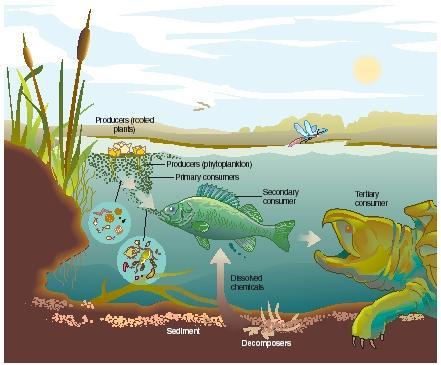
Living in an ecosystem

A few nights ago I went to a dinner co-sponsored by Shop.org (a retail trade organization) and Demandware, an e-commerce platform provider. They were kind enough to host a soft sell dinner for 50 retailers in New York City at Ruth’s Chris. While the dinner and networking were terrific, a researcher from Jupiter Research, Patti Freeman Evans, gave a brief speech on e-commerce, though her insights had much broader-reaching applications.


I have written often about the act of curation – in writing and in life. As a retailer, there is also a curatorial aspect to my company’s work. In our brick-and-mortar stores, we are constrained by the size of the box. Even on our website, there is just so much merchandise that any one Guest is willing to click-through. Navigation must be easy. Content must be relevant. Frustration, confusion, and wait time must be held to an absolute minimum from parking in our parking lot all the way through the Guest exit. As retailers, we are curators. Yes, the content matters, though the thoughtful edit matters even more. Or point-of-view and clear expression of it is mission critical. There’s no room in retail for “wishy-washy”.


It’s easy to have a POV about a store, or a chain or stores, or a website. But what about an enterprise POV? Much more difficult when there are parties of conflicting interest. Our business, like so many others, is currently siloed beyond belief. Many people see an ecosystem within their own microcosm. And you can’t build a brand that way. I am surprised every day at how many people drive their respective buses with blinders on. This is only complicated by the fact that we are a turn-around, so we are, as my boss likes to say “driving the bus at breakneck speed while also trying to paint it.” Again, if only I could draw…


What Patti Freeman Evans asked us to do, as retailers, is consider our entire business and indeed our entire industry, as an ecosystem. What we do in one store, one chain of stores, or on one site has an incredible effect on many other people and companies. And her thought provoking analogy of businesses being living, breathing entities offers us a chance to reflect on the question, “what would we do, in our businesses, if we were conscious at every moment that our decisions profoundly effect the lives of everyone we reach for years to come?”

career, choices, job

They’re all choices

“I was part of that strange race of people aptly described as spending their lives doing things they detest to make money they don’t want to buy things they don’t need to impress people they dislike.” ~ Emile Henry Gavreau


It’s review time at the office in many companies. The sales have been tallied for the fiscal year, the plans for the coming year have been set. Now the moment of truth – did all your hard work pay off? And what is it you’d like to do in the coming year? My boss and I began to informally talk about my review. I’ve been at my job for just over 7 months, just enough “to be dangerous” as my boss likes to say. 

The beginning of our discussion about my review led us to a deeper conversation about the choices that the review process necessitates – not in terms of bonuses or promotions, but in terms of the choices individuals need to make about their lives going forward. Too often people see their hands as tied by an employer. “My job requires me to work X number of (very long) hours.” “I have to do X or Y even if I don’t agree with it because my boss says I have to.” My boss and I came to the conclusion that in fact no one has to do anything. Sure, there will be consequences for any action, good or bad, but ultimately the choice of what to do with one’s career and in one’s job is that person’s decision. You are the only one who has to live with you. As my favorite Native American poem asks, “in the empty moments, do you like the company you keep?”

Too often we do things to keep up, show off, puff out our chests, and strut around with a badge of honor for some great sacrifice we’ve made on our employer’s behalf. And sadly, too often that sacrifice is our health or our loved ones or worst of all, our happiness. The truth of the matter is that whether or not we work for that employer, we have to be genuinely proud of who we are and the choices we make at every moment. Companies fall away, people move on, the ink on contracts fades. And no matter who signs my paycheck, the only person I see in the mirror every morning is me. Defining ourselves on our own terms, on our own turf, is the most important work we will ever do because who we choose to become travels with us wherever we go.
business, choices

Monday’s new way of thinking – Barry Schwartz

I have been toying with the idea of putting themes to certain days I blog in an attempt to make sense of all these blog postings I create. I examine other blogs very closely everyday to see what they’re writing about, how they categorize their posts, etc. I’ve noticed that the ones I enjoy the most are the ones where I know what to expect. There’s a lot of this general on-line diary stuff happening in the blogosphere, though I get bored with that pretty quickly. I’d like to be more relevant than that.

I started to consider things I am most passionate about:
The creation and maintenance of happiness
Thought-provoking quotes
Green and sustainability, the environment
Innovation
Design

Books
Relationships, etc.

If you google any on of these + blogs, hundreds will pop up. Thousands. I was worried that I may have nothing to contribute to these conversations. What do I have that would be unique or interesting or different? In a conversation via email with my friend, Dan, I realized what I could add, as well as one with my boss about a related topic, I stumbled on it. Action. I can add suggested to action to these conversations, and action, how we play out in our lives the information we take in, is always unique. It has to be because my life, examined holistically, is distinct from anyone else’s.

In going through this process, I was reminded again of a talk that Barry Schwartz, the author of a book entitled The Paradox of Choice, gives at innovation conferences. He brings to light that all this choice we have in our society has increased our stress levels and made us less happy. He gives a multitude of examples, and at the end leaves us with the exact same sentiment he started with – more choices may intuitively lead us to believe that we can increase our happiness, though in actuality, it leaves us paralyzed.

I recently sent the link to Barry’s talk to my friend, Dan, who then wrote an email to me with the sentiment, “So what?” (said much nicer than that of course.) While it is good food for thought, what the heck do we DO about it? And that’s where I realized that writer give context to what’s happening around us. That’s my responsibility as a writer, and I have something to add here.

The “so what?” is that if the world is going to offer us limitless choices, then it is up to us to place our own boundaries in order to create happiness, satisfaction, and a sense of purpose. While I have known this for some time, it has taken me up until this moment to put the sentiment into action.

As an example, whenever someone asks me some question like, “If you had a million dollars, what would you do with it?” I freeze completely. There’s so much I want to do with it that I don’t know where to start. Buy a house? Start a business? Pay off my school loans? Donate to charity? And if I donate to a charity, which one? And if I buy a house, where? If I start a business, what field would it be in? So much choice it makes my head hurt. And then I start to think, “a million dollars is not enough, I need at least 5 million!” And the ridiculousness goes on and on.


I take a deep breathe and give myself a small haven to say, “Christa, you make X amount of dollars in salary, and you have to prioritize what you want to do.” And I begin to calm down and consider what’s really important to me. Small goals, earned one day at a time through careful planning. Making less money than a million dollars actually eases my anxiety. The constraint, in this instance, at this point in my life, ironically helps. (And this is only because I do have enough money to pay my bills and have a bit of fun, too. If I couldn’t make ends meet, then of course the constraint is too confining and I have to look at ways to incraese my earnings. This is exactly one of the big reasons I went to business school.)

This also happened to me when I was trying to decide what to do with my career after business school. I was a mess when given the line, “The world is your oyster.” In actuality, it’s not, and I am so grateful for that. I will never become a surgeon, a lawyer, or an astronaut. I am too selfish with my free time to be in banking or management consulting.

I really wanted to be in retail. I wanted to live in New York. I wanted a boss who was supportive of my growth and development. A turn-around would be preferable. And if my job was in the vein of creativity and innovation that would make my day. I got exactly what I asked for in my current job – it fits all of these criteria, and I’m happier than I’ve ever been.

Several years ago, I was beginning to feel overwhelmed that I couldn’t keep up with all my friends from every period of my life. I felt like a bad friend, a bad person. And then a co-worker of mine at the time, much older, said to me that that’s okay. People will cycle in and out of your life. Some you will always keep close, others are close now because you live in the same city or have the same job, and some will appear just exactly when you need them, or vice versa. Some will fall away all together. And this pattern has proven true. There are just so many hours in a day and choosing to whom to allocate those hours is critical to our happiness. The great thing about technology, like email, these personal blogs, Facebook, is that keeping in touch and staying close is made much easier, and in many ways richer.

In terms of my blog, there are a lot of things I could write about because I’m interested in many different topics. So each day of the week, I’ll post a piece on a specific interest of mine. (And maybe other random ones will sneak in as well if I’m feeling especially prolific!) You’ll know what to expect, I’ll have more of a context to write within, and hopefully this blog will become more useful.

From the title of this post, you’ll see that Mondays will be about innovation and trend, in other words “a new way of thinking”. I am very lucky in that I am learning so much at my current job and it’s proving so beneficial to me that I want to share it in the hope that it inspires people the way all of this knowledge inspires me. Today in particular focuses on Barry Schwartz, an innovation and trend expert. You can see his video from the TED conference at http://www.ted.com/index.php/talks/view/id/93


So while there are a dizzying amount of choices out there no matter what concept we talk about, not all of the choices pertain to you. Carve out your priorities, what really matters to you, and then evaluate options based on those priorities. You’ll be amazed by the number of choices you will have to set aside for the sake of better options, and that limiting will increase your satisfaction with the end result.