books, children, education

Step 31: Whatever It Takes

Yesterday on my blogging / computer break, I finished the book Whatever It Takes: Geoffrey Canada’s Quest to Change Harlem and America, an intimate look at Harlem Childrens Zone (HCZ), a nonprofit run by Geoffrey Canada. If you are interested in the future of public education, this book is a must-read. Author Paul Tough could have easily made it a ra-ra HCZ book, and he would have been justified in doing so. He didn’t. He shows us the good, the bad, and the ugly, the organization’s great successes, the painful choices, and the grave disappointments. It’s a beautifully crafted book about an organization that is changing the odds for poor, inner-city children.

When I finished the last word of the book, I started to think about Geoffrey Canada’s strategy and mission statement for HCZ: “Whatever It Takes”. He is willing to do whatever it takes to not just improve the odds of success for poor children in Harlem, but to change the odds of the game entirely for poor children all over the country. He provides health services, nutritious meals, parent education, and even pays back-due library fines for families enrolled in his program so that they can take their children to the public library and read to them. His list of services strives to be comprehensive of every possible need a child could have so that they can focus on their studies. His unwavering confidence in his approach and his laser beam focus are inspiring, and they’re working in his favor.

What if we could all do that with the area of our life that we are most passionate about? What if we could commit to the “Whatever It Takes” philosophy? How would that change our odds of success and fulfillment? I can’t help but think that there is so much power in those three little words that it would be truly impossible to fail if we took those words to heart. In those three words, the sky ceases to be the limit because they obliterate any limit at all.

Africa, children, education, innovation, technology

Step 19: The Boy Who Harnessed the Wind

“If the first people to experiment with great inventions such as radios, generators, or airplanes had been afraid of being arrested, we’d never be enjoying those things today. ‘Let them come arrest me,’ I’d say. ‘It would be an honor.'” ~ William Kamkwamba, author of The Boy Who Harnessed the Wind

I just finished The Boy Who Harnessed the Wind by William Kamkwamba. William elegantly tells the story of how he constructed a windmill in his village in Malawi to provide his family with electricity in order to save them from suffering another famine. With Bryan Mealer, a former Associated Press correspondent, he elegantly explains how the will of one boy can change an entire community, even an entire nation.

Rather than give a recap of his remarkable feat, I want to emphasize the great lesson that William has for all of us: tell the naysayers in your life to “shut it”. (Those are my words, not his.) How many times do we develop an idea only to have it crushed by someone else’s criticism? William faced this many times, from his family, friends, and community members. He refused to doubt himself. He refused to give in to negative energy. He just kept right on building his windmill, despite all of the criticism and mocking. In the process, he inspired millions of people all over the world. Read the book – you’ll be inspired by his energy, curiosity, and determination.

The next time someone even hints that you can’t do something you want to do, I want you to tell them the following:
“A kid in Malawi with one year of elementary school education built a windmill to help prevent his family from starving. He built it by following diagrams in a beat-up, out-of-date science textbook from a local library miles away from his home and using salvaged items from a scrap yard, all while everyone in his life told him he was mad. He couldn’t read English well so all he could do was follow the pictures. So, do I think I can do (fill in the blank)? Yes. Yes, I do. If William Kamkwamba can build a windmill, despite every roadblock imaginable, then I can certainly bring all of my ideas to life.”

To learn more about Williams and his continuing journey, visit his blog: http://williamkamkwamba.typepad.com/. You can also learn about his project, Moving Windmills, by visiting http://movingwindmills.org/ Follow William on Twitter at: http://twitter.com/wkamkwamba

For more information on Bryan Mealer, visit http://www.bryanmealer.com/

children, design, education, New York City, student

Step 9: Perseverance

“With ordinary talent and extraordinary perseverance, all things are attainable.” ~ Thomas Foxwell Buxton

I’ve known some people in my life who are so brilliant, so capable, and yet they never seem to reach heights that are well within their grasp. They toil away in jobs that aren’t quite right. They miss the opportunity for love, for community impact, for profound influence because they weren’t willing to put in just a bit more effort. My father was one of these people. He had a truly brilliant mind and could have been the leading clinical psychologist of his day. Unfortunately, he thought the world should reward him specifically because he was brilliant. He didn’t realize the world doesn’t work that way.

And then I’ve known people of fairly modest talent who were just relentless in their efforts, and achieved not only what was within their natural reach, but also successes that no one else thought possible. It’s the people in this latter group who have been my greatest teachers. They showed me that the world rewards those who work as hard as they can and give the best they’ve got everyday. The world rewards commitment, particularly commitment that perseveres in the face of great adversity.

I thought about this ideal this morning when I found out that my after-school education program with Citizen Schools starts the week of February 8th, not the week of February 25th as I had originally planned. This accelerates the time line I now have to work under. I’m going to have to shuffle around some other commitments so that my first few lessons plans are created and edited in time for the class. I’ve been collecting resources for several months and now is the time to just sit down and plow through the work.

And then I paused as I looked at all of these resources, most from designers of incredible talent. I appreciate design and use the tools of a designer in my profession as a product developer, though I am not a traditionally trained designer. I didn’t go to art school and I’m not an engineer. My product development skills have been self-taught. I’m a volunteer teacher, though I don’t have a degree from an education school and I don’t have a teacher certification. My teaching skills have also been self-taught. To top it off, I’ll be teaching in a school in East Harlem with more than its fair share of challenges: it is the lowest performing school in the Citizen Schools portfolio. 87% of the students receive free or reduced-price lunch (this is an indicator that 87% fall at or below the poverty line), 86% read below grade level, and 78% have math skills below grade level.

I leaned back in my chair, and asked myself, “What exactly are you doing, Christa?” But I didn’t ask this question with an air of despair or fear. I asked myself the question to mean, “What is the heart of the matter here? What gifts do you have to give these children who need you so much?” With that motivation in mind, any trace of trepidation disappeared.

I have modest design talents with extraordinary passion, empathy, and determination to back them up. I grew up below the poverty line, and still many adults believed in my talents and abilities. Now its my turn to manifest that same belief in these children. I’m paying forward the great and good gifts that so many people gave me when I was in school.

My idea to use design as the backbone to engage students in the learning process is not revolutionary; many people have thought of this idea, and many of them are far better designers than I am. No matter. There are so many children who need help, so many children who need an adult to show up for them and take a vested interest in their lives and education, that it is impossible for me to not have a profound impact in this field. My own individual commitment and perseverance is the only limitation on the amount of good I can do with this program, and I’ve got both of those in spades.

children, Christmas, curiosity, holiday

My Year of Hopefulness – Sense of Wonder

This morning as I flipped through the latest copy of Fast Company on my way to work, I came across a short article featuring Nicole Lazzaro, a passionate game developer and the designer of Tilt, the first iPhone accelerometer game. She talked about the phenomenon of mobile gaming as having “a lot of curiosity, wonder, and surprise, which is very powerful because wonder is a hard emotion for adults to feel.” That statement hit me like a ton of bricks. I then walked into a Starbucks and saw a sign by the cream and sugar area that read something akin to “I wish that adults could dream like children.” Coincidence, or is the world giving me something to seriously think about?

Have we let the world make us so bitter that we lost our sense of wonder? If ever there was a time of year that we could, should, and must look around us in wonder, it’s Christmas time, a season of dreams, a season that is grounded in faith and belief, even in things that seem impossible. It is a time of miracles. Christmas always arrives just in time to rekindle my spirits and give me fresh hopes and dreams for the new year. Christmas keeps me going.

There are a few traditions I have, things I do that restore my sense of wonder every Christmas. I wanted to share them with you in case you need a bit more dreaming in your life. I’d love to hear yours, too!

1.) I always take a trip down to Rockefeller Center to see the tree. I like to go very late at night or very early in the morning when it’s dark out and there aren’t many people around. I stare at those lights until they go a little fuzzy and there’s a glow across the whole plaza. And then I soak up as much of that glow as possible and carry it with me wherever I go.

2.) When I first moved to New York 11 years ago, I wanted to figure out how to get a job dressing windows at Bergdorf Goodman. Maybe I’ve seen the movie Mannequin way too many times. There is something so magical about those windows. I’m always amazed that they can top themselves year over year. In 2010, I’m going to find a way to do something for one of those windows. I don’t care if it just means tearing up tiny bits of paper that a collage artist uses to make something magnificent – I just want to see the process of how it all comes together!

3.) I walk up to St. John the Divine and light a Christmas candle. I spend some time in the Cathedral mulling over the year that’s almost behind me and considering what I’d like to do in the year ahead. I ask God for some help and guidance, and I thank him for continuing to show up in my life in mysterious and surprising ways.

4.) A visit to Balducci’s is one of the single greatest memories from my childhood. I would wonder around the store with my sister, Weez, and brother, Joey, and we would take in all of those delicious scents. At Christmas time, the store reminds me of the wonderful heritage I come from.

5.) I make my end-of-year charitable donations: money, clothing, and food items. This simple act reminds me how lucky I am, and how much I can help others.

6.) Prime time TV is bursting with Christmas specials in December. I try to catch The Grinch and Charlie Brown’s Christmas at the very least while sipping hot cocoa and remembering how my family used to gather around the TV to watch those very same shows so many years ago. They hold special memories for me.

7.) Christmas concerts of all kinds are happening all over the city this month – I love to stop in to a few of them, especially if it’s permissible to sing along! You can also find me spending some amount of time each day in December cranking up Christmas tunes in my apartment and having a little dance party as I rock around my very tiny Christmas tree – Brenda Lee would be proud.

8.) About this time, the weather starts to turn a bit colder. As I get out my winter coat and bundle up, I stop to consider the miracle that here we are on the same planet, with the same sun, moon, and stars, and depending on a slight axis tilt one way or the other, we get a heat wave or a blizzard. Amazing.

9.) The Christmas markets in Columbus Circle and Union Square are some of my favorite places at Christmas time. I get a donut, a cup of apple cider, and browse around for a few unique gifts, all while pretending that I’ve stepped back in time when markets like these were the primary shopping destinations for gifts.

10.) Marking time is an ancient, sacred act. Before we know it, December 25th will have come and gone from our lives for another year. As I try to rush to get everything done in time for the big day, I remind myself that in every countdown is the embedded message that time is precious. And is there anything more full of wonder than the passing of time itself and our own ability to survive, adapt, and thrive in this ever-changing, challenging world?

Wishing you a season full of wonder-renewing moments!

books, children, education

Book Buddy Letter 2

Dwight, the 3rd grader I write letters to as part of the Learning Leaders Book Buddy program, just sent me his first letter. We are reading Charlotte’s Web together and we write letters back and forth at designated points in our reading. As promised, here is Dwight’s letter to me, and my letter back to him.

“Dear Christa,

I like writing letters to you, too. This is one of my favorite books, too. I enjoy reading, too. I find inspiration in my reading, too. I grew up in Queens. My favorite part of Charlotte’s Web is when Wilbur and Charlotte meet.

Your Book Buddy,

Dwight”

“Dear Dwight,


I enjoyed reading your letter. We have so much in common! We both like to write letters, we both find inspiration in our reading, and we both like meeting new friends.


Another activity I really enjoy is helping my friends and family members, just like Charlotte

helped Wilbur. It is a very special thing to know that we have skills and resources to help someone we care about when they have a problem that they need to solve. I am very close to my family and friends, and they are a very important part of my life.


We are at an interesting point in Charlotte’s Web. Her solution to use her webs to talk about Wilbur was really creative! I like that she chose interesting words and phrases that were very different from how people usually described Wilbur. What did you think of Charlotte’s plan?


Now that they are off to the fair, I wonder if Charlotte will continue putting words into her webs or if she will think of something different to do. Wilbur is really counting on her to help him win the competition at the fair. What do you think her plan for the fair will be?


I’m looking forward to getting your next letter!


Your Book Buddy,

Christa”


These letters remind me of how important it is for children to have adult role models in their lives, people they can talk to about their thoughts and opinions. Articulating our own stories is an underrated skill, and one that I hope I can help Dwight with through these letters.

art, books, children, creativity

My Year of Hopefulness – Everyone Can Draw

“If you think you can’t draw, too bad. Do it anyway.” ~ Tim Brown, CEO of IDEO, in his book Change by Design

I’ve been lamenting for some time that I can’t draw. I’m a much better writer than visual artist, and this is exacerbated because I am an auditory learner, not a visual learner. Thank that’s weird? You’re right – auditory learners make up only 20% of the population. Add it up and it’s easy to understand why I don’t have any natural ability to draw, nor have I ever really had a desire to learn.
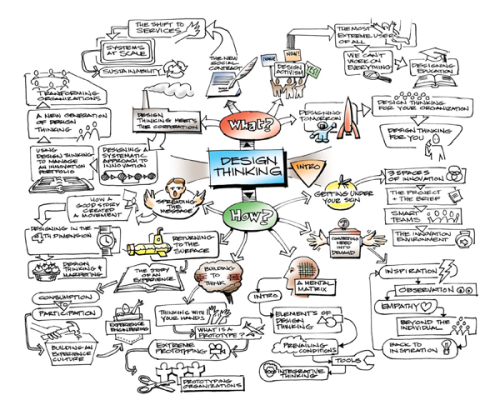
And then I read Tim Brown’s excellent book, Change by Design, that explains his philosophy on design-thinking and the future of the field. He talks about mind maps, schematics that illustrate ideas though visual depictions rather than through written briefs or powerpoint presentations. This is a kind of drawing I can get into. Think of them as multi-dimensional tree diagrams blending pictures and words to illustrate ideas. Rather than just working left to right and using the basic construct of option A or B to progress from problem to solution, a mind map starts with a question that takes the form of “How might we ( fill in the blank)?” for a specific population. For my program with Citizen Schools, I will be asking the kids I work with to solve this dilemma with a mind map “How might we build a public school curriculum for the graders to encourage creativity and entrepreneurship?”
As so often happens, as I was reading Tim’s book, I saw an interview with another Tim whom I greatly admire, Tim Burton. He was discussing his views on drawing and creativity and echoed Tim Brown’s sentiment. “Every child believes he or she can draw. Too many adults have found their creativity beaten out of them.” And this brings me back to my long-held belief that I have only just begun to fully articulate: it is much easier (and effective) to help children maintain their creativity through to adulthood than it is to repair the confidence of adults who believe they have no creativity at all.
The truth is that I’ve lost confidence in my ability to draw, believing that my creativity is relegated to writing and developing products and not at all to drawing. The Tims helped me realize that I am selling myself short. Somewhere inside me is a visual artist of some sort yearning for a paint brush (or crayon or chalk or colored pencil) and a canvas (or piece of paper or blank wall or empty piece of sidewalk).
So here I go with another resolution to live a more authentic life: even if it’s not good, I’m going to draw a little bit every week with the help of my mind maps. I’ll let you know, or better yet I’ll show you, how it goes by publishing the pieces to this blog. Stay tuned as I re-teach myself to draw.
The image above is not my own; I’m just starting to draw so my pictures aren’t this good – yet. It is the image created by Tim Brown for the table of content of his book Change by Design. It can be found here.
children, education, New York City, teaching

My Year of Hopefulness – It Takes A Village, or an Army

I’ve been having a great time in Florida with my niece, Lorelei. I can hardly believe that she’ll be 2 in January. I wrote about her on this blog the day that she was born and she has appeared a number of other times in my posts. It’s fun to watch her learn and change. My sister and brother-in-law are tired pretty much all the time – Lorelei is always on the go and always curious. She’s also somehow inherited insomnia from my mom and I.

While many people say that it takes a village to raise a child, I’d add that it requires a very large village, or in many cases an army. It’s amazing how many things Lorelei gets into. Everything from electric outlets to cabinet doors to chairs that are a tiny bit too tall for her. She needs feeding and changing and washing and activities that teach her reading, her colors, her numbers, etc. And the list goes on. She needs an eye on her constantly.
Lorelei is lucky – she has so many people in her life who watch out for her, who love her, and take care of her. Every day, I think about how lucky she is, and how many kids are not so lucky. I think about how many kids don’t have a village much less an army. Some don’t have anyone at all. This is where we can all come in.
This Fall, I had the opportunity to volunteer teach at one of the best high schools in New York. When I told a friend of mine about the choice I had to make to do that assignment or work on my own program in East Harlem, she said, “Christa, those kids in that high school are fine. They don’t need you. They have plenty of advantages. Whether or not you’re there won’t matter to them. It will matter to those kids in East Harlem. Go where you’re needed.”
Every day, we have a chance to be a part of a child’s village, and it’s most important for us to begin building a village for kids who don’t have one at all. This might be the greatest challenge of our time. We can be that village, that army, with a small donation of time or money or concern. If we have any interest at all in the future of our planet, in the future of our own children, we have to stand up for other kids who need us.
children, education, learning, opportunity, poverty

My Year of Hopefulness – No Choice but to Help

Sometimes people ask me why I feel so called to service, why I feel passionately about giving back, particularly in the areas of education and poverty. Why do I spend time in the South Bronx and East Harlem? Here is the answer in cold, hard data: a study was recently done on the student population of the top 146 countries in the U.S. Over 70% come from the wealthiest 25% of families. Only 3% come from the poorest 25% of families. That’s me, down there in the latter group. I went to a top university not once, but twice, and I may be on my way to a third if I’m lucky. I beat the odds, big time.

I learned about this study through Michael Sandel’s weekly lecture on Justice. It hit me like a ton of bricks. 3%? Really? My mother always told me I was special, but stats like that don’t make me feel special. They make me sad and angry and frustrated. And I’ve learned that sadness, anger, and frustration are great motivators for change if we harness them properly. That’s what I do in my community service – I’m harnessing those feelings and using them to turn around the very situation that made me feel those feelings in the first place. It’s my attempt at leveling the playing field.

In this week’s Justice class, Sandel talks about the distribution of wealth, a favorite topic of mine and one that I think about every day of my ridiculously blessed life. I constantly wrestle with feelings of pride in my accomplishments, guilt over my lifestyle (which is modest, but good), and the obligation I have to help others who live in the same type of situation I faced as a child. I firmly stand behind the belief that those of great fortune must take on great responsibility.

Shutting ourselves up in our little homes tucked away in safe little neighborhoods is a recipe for disaster. Tom Friedman famously said “if you don’t visit the bad neighborhoods, the bad neighborhoods will visit you.” (Ironically, or not, Tom Friedman and his wife Ann, are two of the largest donors that make Michael Sandel’s free online class possible.) I hold that thought at the front of my mind as much as possible.

Friedman is very clearly stating that the ability to choose our involvement with people who need our help is not a choice at all. We choose by our action or by our failure to act – the choice between these two options effects whether or not our worlds collide in a positive or negative event. There is no way to our worlds from mingling. By being involved, we have the opportunity to make the collision a positive one. The alternative shows up in our prisons and on the sad headlines of papers and news programs across this country.

What keeps me going most of all in my service work is knowing that there were a lot of people who gave of themselves so I could have the education and opportunity I had at Penn and at UVA. There were policy makers and elected officials who fought for my access to student loans at affordable rates. There were donors who made gifts to these universities so that I could be granted financial aid and top quality resources. There were teachers and mentors and staff members who made it the work of their lives to help students get the very best education possible so long as they were willing to work hard.

A lot of people gave an awful lot of themselves to help total strangers like me – I’ll never meet them all; I’ll never even know all of their names. And still I owe them a huge amount of gratitude. I show that gratitude by paying it forward to others, and I hope the people I help will be willing and able to pay it forward, too. It’s the only way we’re going to make this world a better place for everyone. We’ve got to come together; we’ve got to show up for one another.

The image above is not my own. It can be found here.

children, literature, writer, writing

My Year of Hopefulness – Where the Wild Things Are (and Were)

“One does not discover new lands without consenting to lose sight of the shore for a very long time.” ~ Andre Gide, Nobel laureate in literature

My sister, Weez, and her family are visiting me for a week. My brother-in-law, Kyle, is a painter and given the cold weather we’re having in New York City, this vacation is all about museums. For several weeks, he’s been scouting cultural websites to see what exhibits are currently open. One of the exhibits that caught his interest is at the Morgan Library, and includes original sketches, watercolors, and book notes from Where the Wild Things Are by Maurice Sendak. Being avid fans of children’s literature, we stopped in there today to have a look.

I have loved Where the Wild Things Are since I was little. I loved it because of its use of theatre and imagination. Max and his make-believe adventures made me believe that I could travel to distant and strange lands, too. Now as a writer, visiting this exhibit brought a whole new back story to the book. Originally the story was about wild horses, not the Wild Things we have come to know and love. Sendak abandoned the project for many years before completing it. During his first attempt he wrote that the story felt forced so he had to put it aside for now. He kept returning to it again and again to see if the story might flow more easily on another attempt. Eventually, he found an open door. My favorite margin note is “focus on Max.” Despite his mastery of storytelling, he had to deal with all of the same anxieties so many other writers deal with: not knowing what comes next, starting a story, dropping it, and picking it back up again at a more suitable time, and the feeling that his focus was sometimes a bit off.

As much as I love Sendak’s writing, his thoughts on his writing were even more interesting to me. The exhibit reaffirmed for me that writing is a physical workout in many respects. It’s something that must be practiced consistently, even when the writing doesn’t come easily. There will be periods of frustration when the words just don’t flow the way we’d like them to and that’s okay. Focus and commitment is something we must continually strive for, and some times we will need to write ourselves a prescription for them, a reminder of what’s really important. And that’s okay, too.

It’s so easy to think that genius in any form belongs to the few, the gifted. Realizing that people whom I admire so much, such as Sendak, are just ordinary people like me reminds me that there is a little genius in all of us. Within everyone’s imaginations, there is a brilliant story, our own Where the Wild Things Are, that is brewing. The land of the Wild Things is always right here beside us. To get it down, we just need to commit to showing up at our computers or at our notebooks with a wide open heart, a good set of ears, and an abundance of patience and determination in equal amounts.

The image above is an illustration by Sendak from Where the Wild Things Are

children, health, healthcare, nonprofit, philanthropy

My Year of Hopefulness – Children’s Health Fund

Tonight my friend and colleague, Wayne, took me to the annual meeting for Children’s Health Fund (CHF). Knowing my interest in and past experience with nonprofit organizations, he knew I would be interested. What he didn’t know, and frankly what I didn’t know, is that CHF would be a perfect match for my interests on a variety of levels.

Personally and professionally, the mission of CHF to provide and advocate for quality medical care for every child resonates with me. Due to a drastic change in my family situation when I was a young child, my family lived below the poverty line and without health care for a good number of years. As an undergraduate, I did my senior economics thesis on the quality of healthcare for children below the poverty line living in West Philadelphia; the paper was based on my work-study job assisting one of the lead pediatricians at Children’s Seashore House (now a part of The Children’s Hospital of Philadelphia). Additionally, I am considering the Public and Urban Policy PhD program at The New School because of my growing interest in inner-city education, and inner-city education requires caring for the whole child, healthcare included. There are certain points in our lives when the stars perfectly align, and tonight felt like one of those nights.

I had the great honor of hearing Karen Redlener, the Executive Director, and her talented staff speak about the 2008 accomplishments of CHF. 70,000 children received medical care through 210,000 patient visits and 613 medical professional received training through CHF’s programs in 25 cities across the country. In a time when so many organizations, for-profit and non-profit, are pulling back and remaining cautious, CHF is stepping up their game.

Jane Pauley, one of CHF’s dedicated board members and someone I greatly admire, explained why CHF is continuing to push forward and grow their goals as opposed to cutting back. In this recession, fear is everywhere. And while it might at first seem inconceivable that any organization could maintain their funding during this recession much less grow it, CHF keeps looking up and reaching higher.

Why, you ask? The sound barrier. Jane Pauley told the story of the first pilot to break the sound barrier. Previously, when pilots came up against the intense shaking caused by approaching speeds close to the sound barrier, they would pull the throttle back. A fatal mistake. Chuck Yeager did something different – when his plane approached the sound barrier, shaking badly, he pushed the throttle forward, went faster, and broke the sound barrier altogether. He is literal proof that if we press on, despite adversity, there are great rewards to be had when we come out the other side. CHF and Chuck Yeager are of the same mind.

Healthcare has been front page news every day this week; it’s been at the top of the Obama agenda for months; it was a major issue in the 2008 Presidential campaign. This is healthcare’s moment; this is CHF’s moment. For over 20 years, Irwin Redlener and Paul Simon, the co-founders, along with their dedicated, passionate team have been working tirelessly on behalf of children and their right to quality healthcare. The debates are raging on Capitol Hill and across this country. The plane is shaking, and we cannot pull the throttle back. We are so close to breaking through, so close to having quality, affordable care for every American. CHF is continuing to stand its ground with dignity and grace, fortified by the simple belief that all children everywhere have a right to be healthy.

We need them to succeed in this mission. By the end of 2009, 1:5 children in the U.S. will be below the poverty line. 1:5. Of all the facts and figures we review every day, that might be the scariest I’ve heard. We can’t afford to have 20% of our nation’s children grow up poor and unhealthy. Think the healthcare of others isn’t your problem? Think again. Their future is our future. And they need us. All of us. Someone has to stand up for them if we are to have any hope at all in the future of our nation. CHF is giving it everything they’ve got, and they need more. They need us. To find out how you can help, visit the Children’s Heath Fund website.