Our starting location for Write Around Disney World for NaNoWriMo
I usually write alone—just me and my story. Today I’m breaking that pattern to meet and write with other Orlando-based writers as we travel through Disney World while working on the drafts of our novels for National Novel Writing Month (NaNoWriMo). Last year, the event drew about 20 writers and they had a great time. Our schedule is below. I’ll post photos and reflections on the event to let you know how it went. If you’re in Orlando, please join us at any point. Thanks to the Orlando NaNoWriMo chapter for organizing this event!
Where: Downtown Disney Starbucks (starting location) When: November 16th, 2014 Start Time: 10 am End Time: Roughly 4, give or take 4 hours
Schedule:
Meet at Starbucks, Downtown Disney (DTD)
DTD to Port Orleans by Bus
Port Orleans to Epcot by Bus
Epcot to TTC by Monorail
TTC to Polynesianby Monorail
Polynesian to Grand Floridian by Monorail
Grand Floridian to Contemporary by Monorail
Contemporary to Wilderness Lodge by boat
Wilderness Lodge to Magic Kingdom by boat*
Magic Kingdom to Animal Kingdom Lodge by bus
Animal Kingdom Lodge to DTD by bus.
*No stop at Magic Kingdom, just get back on Monorail
Writers know where their characters will be on the last page of the book. That focus creates the flow of our characters’ actions and ups the ante when the many necessary conflicts and complications arise. Here’s the game of writing fiction: my character is on this side of the field and what she wants is on the other side. A million proverbial land mines lie in wait for her missteps. (And misstep she will!) She must learn to deftly navigate her way across the field to claim her prize. She needs to get help from others, build skills, and ditch her fears to fulfill her potential. By the time I type those two sweet words “The End”, she has to transform into the person who can traverse the risky landscape that stretches as far as her eyes can see in every direction. Writing fiction is an adventure.
I learned about Scrivener, a software package for writers, through National Novel Writing Month. As a sponsor of the event, Scrivener is offering a free extended trial for NaNoWriMo participants. Did you just groan? I did, at first. I’m usually wary of sponsor-offered trials, but the community around NaNoWriMo is so generous and supportive that I decided to at least give Scrivener a look. Apparently the snappy inventors of the software got inside my brain when I wasn’t looking and built me exactly what I’ve always wanted – writing software that makes me a better writer.
For writers of every feather I’ve shied away from other writing software packages because my writing varies widely: blog posts, essays, journalism, web copy, playwriting, nonfiction books, and now a novel. Many software options cover only one or two of these options. Scrivener works for all of them.
Organization I’m usually guilty of harboring numerous Word documents, Excel spreadsheets, photographs, scribbled notes on post-its and napkins, and a mess of links that resemble a giant blob of letters. I constantly worry that I’ll forget or miss a key lightbulb moment that I had somewhere along the way. Scrivener keeps even the most copious note takers organized and makes the mind numbing tasks of project management a joy.
Inspiration I’m not a terribly visual person by nature. I’m one of those oddball auditory learners. However, fiction pushes me to use my words to illustrate visuals. To help me in that process, I often pin photographs, sketches, graphs, and art onto several Pinterest boards that I consult during the writing process. I’m also a big believer in the power of inspirational quotes (and incidentally so is Emerson Page, the heroine in my current novel, Where the Light Enters.) Scrivener’s split screen option makes it possible for me to open a portion of my writing on one side of the screen and have images and virtual posts that I created on the other side. Scrivener makes these visuals a constant reminder and inspiration to me without hindering the act of writing.
Research incorporation Curious to the nth degree, the research aspect of writing gets me jazzed about a new project no matter what genre it takes. I love being an archaeologist of words and ideas. Scrivener helps me keep all of that research organized and on-hand with its research folders, easy-to-build research templates, bulletin board functionality, and synopsis creator.
Putting it all together God bless copyeditors. I adore them. I’m so glad there are people who love that work because it drives me bonkers. I also hate that my dislike for copyediting makes life for my copyeditors more difficult. The compiler feature of Scrivener helps lessen my copyediting guilt. With a few simple clicks, Scrivener assembles all the pieces of my manuscript into a cohesive whole in a variety of formats so at least the formatting is uniform and my copyeditors can focus on editing at the word level.
Support I hate to download software and then feel like I’m on my own to figure it out. Given all the work I’m doing to prepare for NaNoWriMo, I didn’t want software that would take weeks to learn nor a tool that would be clunky to use during the mad dash of the month-long event. Scrivener has a comprehensive set of informative and entertaining videos that show you its power to enhance your writing. The basic 10-minute video explains all of the key features any writer needs to dive into Scrivener. For those who want to use the more advanced features, there are short videos to explain each of those features. There’s even an interactive demo available to you at all times. Have specific question? Just email them. They got back to me in 24 hours with a detailed answer. Scrivener is a feature buffet: use as many or as few as you like and be a better writer for it.
Other goodies
Scrivener takes dictation and integrates with my audio recording software that I use for my voiceover work. This is perfect for getting true-to-life down on paper. Creating revisions in one document is a snap and the Scrivener dovetails well with Microsoft Word. Importing and exporting content is a snap with drag and drop. For fiction writers, it’s got a groovy name generator tool. Outliners (like me) rejoice – outline until your heart’s content with many layers of organized detail available as you build your story from the ground up.
I could go on, but just go see it for yourself. Invest 10 minutes to watch the intro video and you may discover your new perfect writing partner. I certainly did. Now if they could make my meals, do my laundry, and walk my dog during NaNoWriMo, that would be perfect!
If you’re participating in NaNoWriMo this year, may the force be with you and let’s connect to cheer each other to the finish line of writing 50,000 words in 30 days. You can find me on the NaNoWriMo platform as christanyc.
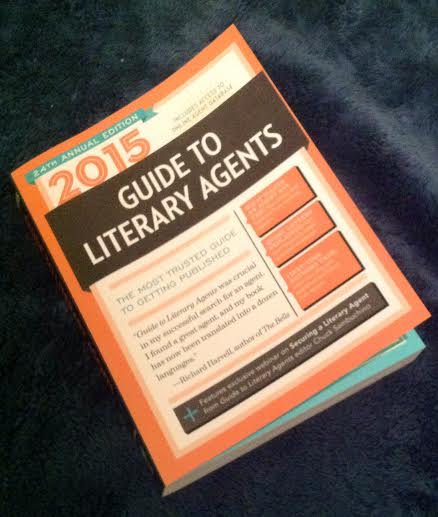
Yesterday my hot-off-the-presses copy of Chuck Sambuchino’s 2015 Guide to Literary Agents arrived on my doorstep. I quickly sliced open the box and cracked it open. As I prepare to write Where the Light Enters for National Novel Writing Month, a portion of that planning involves marketing the book and learning as much as I can about the agent and book publishing world. This is completely new territory for me, and this book is one of my main sources of research, advice, and guidance. If you’re taking a serious step into the writing world, I highly recommend the book. In an hour, I learned more information from it than I’ve learned in months of doing my own piecemeal research. It’s that good. Let’s do this!
People say they care about issues, but what people really care about are people who have issues they care about. To motivate someone to reflect and then act, we need to give them a flawed character, someone who’s far from perfect but incredibly likable. Give us a hero or heroine to root for in an against-all-odds quest that forces him or her to grow, evolve, and rise up to a seemingly impossible challenge. We care about that, and that is the seed of all fiction. It’s about character.
My novel, Where the Light Enters, is about Emerson Page, a 15-year old girl who’s been dealt a tough hand and is forced to take an improbable journey that only she can take to save a world she never knew existed and that we all desperately need to remain intact. My book is really about the two greatest sources of magic we will ever have: love and stories. It’s about being brave enough to follow the light that is within us. It’s about the goodness we create when we have the courage to manifest the gifts and talents we are all born with and to celebrate our ability to craft a world in which we take care of each other.
Fiction isn’t invented. It’s with us all the time; it’s the very best part of us. It’s grounded in our potential and our aspirations. Fiction is who we are and who we want to be. That’s why I’m writing a novel: to inspire everyone who reads it to figure out who they are, who they want to be, and how to cross the bridge that connects the two. That’s my issue.
“For me Madeline is therapy in the dark hours.” ~ Ludwig Bemelmans
“In an old house in Paris that was covered with vines lived twelve little girls in two straight lines…” is one of the most famous introductions to one of the most famous characters in children’s literature: Madeline. Ludwig Bemelmans created Madeline after a terrible accident that left him hospitalized at the age of 39. His hospital roommate was a young girl who had her appendix removed. Her stories of her life inspired Bemelmans to create Madeline.
Eventually Bemelmans recovered from his injuries and published his first Madeline book at age 41 after 20+ years of working in hotels in New York. During those two decades, he consistently practiced his art and slowly built up his freelance portfolio. His example has been a great inspiration to me as a writer.
Madeline was Bemelmans’ second act after many years of difficult work in a completely different industry. He never lost his optimism and never gave up. And thank goodness. Not only is Madeline therapy for him, but it’s therapy for all of his readers and admirers, particularly little girls who strive to be strong, brave, and courageous. The New-York Historical Society has mounted a retrospective of Bemelmans’ life and art with Madeline in New York: The Art of Ludwig Bemelmans.
Bemelmans Bar is one of my favorite bars in New York – tucked away in the Carlyle Hotel on East 76th Street. The walls are covered with his original drawings. It’s a good place to dream, and drink. If you’re in New York, I highly recommend it.
One of the pictures from my Pinterest board that inspires Emerson Page.
“Early on, all our movies suck. Saying that in a softer way fails to convey how bad the first versions really are. Pixar films are not good at first, and our job is to make them so–to go ‘from suck to not-suck’.” ~ Ed Catmull, President of Pixar
I’ve been working through my story plan checklist for my novel, Where the Light Enters. I’ve got lists, notes, index cards, links, and photos that I’m using for inspiration. What seemed like a lot of disparate pieces are now gelling together, and the story barely resembles the original idea. To make this progress, I had to stay open to possibilities, remain aware of new information that could help move the story forward, and begin to share bits and pieces of ideas with others to get their feedback. You can be part of the process and follow Emerson Page, the heroine of Where the Light Enters, on Facebook, Twitter, and Pinterest. She’s loved to talk to you.
I took my first yoga teacher training through Beth Shaw’s YogaFit program. At the time, her approach appealed to my desire to cultivate fitness and health without continuing to pound my body through competitive running and heavy gym workouts. Her program caused me to further investigate yoga as a physical, mental, and spiritual practice, and 14 years later, I’m still teaching.
Beth has a new book out this week, YOGALEAN: Poses and Recipes to Promote Weight Loss and Vitality-for Life. This book is perfect for people who want to integrate yoga and nutrition into a 360-degree program to lose weight and increase their energy levels. The book walks readers through cohesive plans for four distinct motivations: amp up energy, promote a leaner body, increase immunity, and promote youthfulness inside and out. Each motivation has a common set of components:
Yoga poses that promote a lean physique, strengthen your core, and increase energy
Cardio and weight-training workouts to complement your yoga, refine your physical strength, and ward off disease
Easy recipes for breakfast, lunch, dinner, and snacks that will help you burn fat more efficiently
Stress-reducing and clarity-enhancing daily meditations
Breathing exercises to calm your mind and sharpen your focus
A one-week jumpstart plan outlining precisely what to eat and how to exercise your body and mind
The book is now on sale in bookstores across the country and online. Congrats to Beth on the next evolution of her mission to bring health and wellness to all people everywhere!
I’m participating in National Novel Writing Month this year when I’ll write the first draft of Where the Light Enters. I’m excited to craft the story of my heroine, Emerson Page. I love a good plan so as I do my preparation research, I hunted around online for resources to help me plan my novel. I’m incredibly surprised (and grateful!) for all of the resources and generous advice on planning. If you’re writing a novel, here is a list of the resources that are helping me during this exciting time. I hope they help you, too!:
Your Novel Blue Print – Author Kevin T Johns wrote a free ebook titled 12 Common Mistakes Rookie Authors Make (& How to Avoid Them!) to describe 12 of the lessons he learned the hard way when writing his first books. It’s like a map that shows you all the places not to go when writing a book. And couldn’t we all use that kind of advice?
Story Plan Checklist – Writing instructor Karen Wiesner wrote an incredible thorough post for Writer’s Digest that outlines all of the key considerations necessary to craft a cohesive, compelling story. Again, totally free and actionable! This is the plan I’ll be working on for the next two months.
Bill Holland’s HubPage – Author and teacher William D. Holland discusses many of the main points that Karen Wiesner makes though it’s a more condensed version and he throws in a few extra bits of wisdom. For example, all of the agents and publishers he’s worked with over the past several decades have told him you have about 10 seconds to grab their attention when introducing your book. I’ve heard of elevator pitches in the business world, but in the writing world, time is even more precious.
How to Write Killer Fiction – Author Carolyn Wheat wrote this book to describe her four-arc system to outline a novel. The beauty of her system is that you can either use it to plan your novel, or use it to rework your draft into a tighter draft before querying agents and publishers. I also love that she diligently emphasizes the importance of the end of a book. So many authors start from the beginning and then fall apart somewhere in the middle. If we start at the ending, we have a better shot at delivering a work that will stick with readers long after they close the book. Though not free, it’s worth the investment.
Writing a novel is grueling work, and we could all use a little help. Luckily for us, there’s plenty of it to go around. The writing world is a generous world.
Did I miss any resources that you’ve found particularly helpful? Please share in the comments below!
I want you to meet someone I’m going to spend a lot of time with this Fall. This is a sketch of Emerson Page, the heroine of my first novel, Where the Light Enters. She’s 15, strong-willed, curious, and battling both personal and external demons. She’s stronger than she thinks she is, more talented than she ever imagined in ways she never knew were possible, and is about to learn some deep secrets about her heritage, the world around her, and the world that exists just below the surface of our awareness. Emerson loves technology, is fascinated by the weather and nature, happily gets lost in stories, and is devoted to animals, especially her therapy dog, Friday. For now, she lives in New York City, but that’s about to change, sort of.
I’ll write the first draft of Where the Light Enters this November as part of National Novel Writing Month. The title is inspired by this quote from Leonard Cohen’s song, Anthem: “Ring the bells that still can ring. Forget your perfect offering. There is a crack in everything. That’s how the light gets in.” And by this quote from Rumi: “The wound is the place where the Light enters you.”
I found this picture while scrolling through Pinterest and pinned it up at my desk. This visual helps me watch the story unfold. I tried to figure out who the artist is, but no luck. If you recognize this sketch, please let me know!





 Christa Avampato