books, change, education, Fast Company, social change, society

Step 22: Seeing Spots

“You cannot think your way into a new way of acting, you have to act your way into a new way of thinking.” ~ Jerry Sternin, Founder of The Positive Deviance Initiative

In this month’s issue of Fast Company, there is an excerpt from Switch: How to Change Things When Change is Hard by Chip Heath and Dan Heath. The book goes on sale February 16th, and this excerpt provides insights into how to find the bright spots, as small and few as they may be, that lead to radical, large-scale, successful change when replicated. The Heaths take a cue from Jerry Sternin, a professor of nutrition at Tufts University, who, along with his wife, Monique (also a professor at Tufts), gave so much to so many around the world. The Professors Sternin founded the movement of positive deviance and advocated for its use around the world.

There is some societal belief that when someone is exceptional, they’re weird. We think that the exceptional do things that no one else can do when really they just do things that no one is doing. William Kamkwamba in Malawi, whom I wrote about earlier this week, illustrates this point perfectly. If we studied them closely, we would find that a couple of key things that they do are different from the majority, and those few differences can be replicated so that the exception becomes the new norm. Jerry and Monique Sternin believed that if we can find the bright spots, we’ll get more understanding of a situation and greater progress than we ever thought possible.

All day today I’ve been looking for bright spots in specific areas of my life. I’m keeping track of them in my little black book. This idea of positive deviance has had me grinning ear to ear all day. Tomorrow, I’ll be back here to talk about some of these recent discoveries. I hope you’ll join me.

The image above is not my own. It can be found here.

books, education

Book Buddy: Letter 3

I received my second letter from Dwight, my 3rd grade book buddy. He and I connected through Learning Leaders, a nonprofit education organization that pairs local elementary school students with business professionals. Dwight and I are reading Charlotte’s Web by E.B. White and then sending several letters to one another to share how we feel about the book.

Here’s Dwight’s latest letter to me and my reply to him:

“December 21, 2009

What I think of Charlotte’s plan is wonderful. Me, too, I like how she chose interesting words, too, because they are good. Me, too, I will wonder if Wilbur will continue putting words into his head. Charlotte has good words, too.

Your book buddy,
Dwight”

“January 18, 2010

Dear Dwight,

Happy New Year! I hope you had a great holiday. I went to visit my family and friends in Florida and really enjoyed spending time with them. I finished up Charlotte’s Web while I was there What did you think of the ending of the book? Were you surprised by it?

I really liked the scenes at the fair, though I was hoping all of that food would make Templeton, the rat, a nicer friend. I bet he would enjoy living at the farm a lot more if he was a little bit nicer. At least he agreed to help Charlotte find the final word for her web. What did you think of the events at the fair?

Losing someone we love it difficult, so I really related with how sad Wilbur was to lose his friend, Charlotte. I was very impressed with his sense of responsibility to care for Charlotte’s children; his actions showed how much he cared about Charlotte and how appreciative he was for her efforts to help him. I was a little bit worried that all of Charlotte’s children will leave. I felt relieved when Joy, Aranea, and Nellie decided to live at the farm. I am sure Wilbur was relieved, too!

Your book buddy,
Christa”

books, Examiner, government, politics

Examiner.com: Interview with Sasha Abramsky, author of Inside Obama’s Brain

Over the Christmas holiday I read the book Inside Obama’s Brain by Sasha Abramsky, journalist and Senior Fellow at Demos. The book is a beautifully crafted work that examines the charismatic draw of President Obama by exploring the experiences and insights from dozens of people who have worked alongside the President throughout his career. Abramsky masterfully articulates what qualities draw us to Obama, and how Obama honed those qualities in preparation for his ascent to the Presidency. The book intertwines President Obama’s personal history with his professional accomplishments in a way that makes the book impossible to put down until readers have absorbed every last word of Abramsky’s prose. I never wanted this book to end.

I had the great fortune to speak with Sasha Abramsky last week. To read the interview, click here.

books, Obama, politics

Step 11: It’s the Little Things

“Let’s not forget that the little emotions are the great captains of our lives and we obey them without realizing it.” ~ Vincent Van Gogh

It’s easy to pay attention to the big emotions of our lives: Falling in love, grief from losing a loved one, pride for a hard-won accomplishment, or disappointment caused by betrayal. There’s no way to avoid those huge swells, positive or negative, because they take over our lives. Reading this Van Gogh quote made me think about all those tiny emotions that we feel at every moment, and that often pass by unconsciously: frustration at getting on a crowded subway car, wincing at the sting of the cold weather, gratitude when someone holds the door open for us, and joy from an encouraging message from a friend. These smaller emotions, while less significant in size, can add up to a great deal of our happiness quotient.

How do we feel about lives in the empty moments, when nothing particularly emotional is happening, when our lives are just humming along without any type of massive shift? In those quiet moments, we get a sense of our base emotions and attitude. The trick is to recognize and appreciate that empty moment. With all of the opportunities to fill up empty space, it’s easy to avoid ever having an empty moment. The empty moments are important because they allow us to take stock of the little emotions; they let us get a sense of where we are on the happiness curve.

On the way to work this morning, I was thinking about how we handle the constant tweaks of the little emotions that every day circumstances cause. Because I just interviewed Sasha Abramsky, author of Inside Obama’s Brain, I’ve been considering Obama as a role model for how to conduct our daily lives. Whenever Obama is thrown a curve ball, and isn’t quite sure how to react, he smiles. We can observe this behavior in his debates, during his press conferences, and during one-on-one media interviews. The smile lets him pause, gather his thoughts, and remain outwardly composed in the process.

This tactic gives him the opportunity to work through his small emotions, rather than having to obey them. And he looks good all the way through the process: he looks as if nothing ever phases him and provides a thoughtful, articulate response. A wonderful example to manage the little emotions we all experience.

books, economy, education, yoga

Step 6: The Roots of Ideas

I double majored in Economics and American History and got a minor in Psychology at Penn because I was interested in the energy of money, its influence on major world events, and its effect on the human psyche. Through the lens of History and Psychology, I found that Economics was much more a moral discipline than a disinterested field. Early on, we learned the name John Maynard Keynes and the underlying theories of Keynesian economics: a system of checks and balances, a fervent acceptance of the role of uncertainty, and a logical, predictable linking of specific actions to specific consequences. Because of my interest in the human impact of money, I was made to be his student.

He was an economist who loathed an over-reliance on data. Data can say anything we want it to say; it can be twisted and turned and reinterpreted to suit any hypothesis. To really understand a situation, we’ve got to pick our heads up, knowledgeable of the current data, though able to correlate it to easily expressed principles and moral values.

This morning I started reading Keynes: The Return of the Master by Robert Skidelsky. From the very first words, I re-discovered how important it is to read original theories and primary source material, not just interpretation of that material. As I got out of the subway, I thought about the other books I’m currently reading. I’ve started to gravitate toward these primary sources: books of Yogic scripture to prepare for my yoga teacher training class, works by John Dewey to understand the underpinning of our education system, autobiographical accounts of world events, and original documentation that established our government.

While it’s one thing to observe, practice, and read the works of experts and influencers, it’s only in reading the original grounding work of a philosophy, of a movement, that we can develop our own views and deep observations. If all we do is interpret and translate someone else’s interpretations of primary material, eventually we enter into a game of telephone, and the original beliefs are likely distorted beyond recognition.

To truly understand an idea, we have to go to the source, to the seed that gave that idea to the word. As Keynes so brilliantly stated and Skidelsky rightly echos, “ideas matter profoundly…indeed the world is ruled by little else.” The roots of those ideas matter profoundly, too. Get to the root.
art, books, inspiration, New York City, theatre, travel

My Year of Hopefulness – Chasing Down Inspiration

“You can’t wait for inspiration. You have to go after it with a club.” ~ Jack London, author

Before 2009, I used to think of inspiration a something that just hits us. I kept a folder of inspirational pictures, stories, quotes, and clippings that I trolled through when I needed some uplifting thoughts and none seemed to find me. I believed in writer’s block and the mystical muse of creativity who decided if, when, and how to show up in our lives. No more. After a year of actively seeking out hope and writing about it every day, I believe in the Jack London method, my inspiration-chasing club always at the ready.

In New York City, we’re lucky that chasing down inspiration means just putting on a pair of shoes and walking outside our doors. Inspiration is everywhere. We have a host of amazing museums that I visit frequently (thanks to my employer’s fantastic perk that gets us into almost every museum in New York for free!) Central Park and Riverside Park are two blocks away from my apartment. Broadway, off-Broadway, and off-off Broadway are burgeoning with some of the most inventive work to come along in decades. Bookstores are on nearly every corner, and there is no shortage of fascinating lectures, readings, and continuing ed classes in every subject, at every level. And if all else fails, just take a walk around the block, any block. You’re sure to find some characters.

In other cities, some much smaller than New York, inspiration abound as well. In Orlando, Florida, I found the largest collection of Tiffany glass in the world. In Charlottesville, Virginia, I had some of the best meals of my life. In my own hometown of Highland, New York, the view from the Catskill Mountains still takes my breathe away. In Providence, Rhode Island, I saw one of the finest productions of Moon for the Misbegotten that I’ve ever seen.

Inspiration is everywhere – all we need to do is get out into the world and look. We can travel thousands of miles from home, or we can hang around in our own backyard. What matters is the pursuit: do we want to be inspired and are we willing to “sift the sands of the desert to see what we can find,” as Clarissa Pinkola Estes says so eloquently in Women Who Run with the Wolves? If the answer is yes, then there are adventures upon adventures just waiting for us to hope on board. And if you can get your hands on a big club, that may help, too.
The image above is not my own. It can be found here.
books, childhood, Christmas, dreams, gratitude, Randy Pausch, writer, writing

My Year of Hopefulness – Thanks for Making My Childhood Dream Come True

Last year I wrote a few posts about Randy Pausch’s Last Lecture. I first watched him give the Last Lecture on YouTube through tear-filled eyes and had to take myself for a long walk 3 months later when I read about his passing. His Last Lecture, devoted entirely to his pursuit of childhood dreams, reminded me of how important our earliest dreams are and how they shape us in adulthood. Randy Pausch reconfirmed my belief that childhood dreams, those daring, bold expressions of our deepest desire before we ever realize we have limitations, are some of the most valuable things we own. We should celebrate them and go for them with gusto, no matter what our age is.

This morning, I watched Lorelei, my two year old niece, open her gifts with wild abandon. She threw her head back and laughed with each one, regardless of how big or small it was. She liked the wrapping paper and boxes as much as the gifts inside. Watching her, I wondered how she would remember our Christmases together when she gets older. I want to do everything possible to make her childhood a blissfully happy period of her life, a time when great dreams were formed inside her beautiful heart.

Children change us, whether those children are our own, in our family, part of our friends’ families, or children we work with in our communities. We rediscover a sense of wonder and magic through their eyes, and Christmas magnifies that wonder. They use that same wonder about the world to formulate the ideas that will become their childhood dreams, and if we spend enough time with them we’ll find that they can help us formulate new dreams, too, while also reminding us of everything we dreamed of as children.

When I made up my list of childhood dreams, one of the big things I wanted to do was to be a published author. I thought that meant convincing a publisher that I was good enough for print. I never imagined there would be free (on-line) tools that would make this dream possible to achieve regardless of whether or not any publisher believed in me. I did spend a good amount of time worrying that no one would ever read what I wrote. In the past two and a half years writing this blog, I realized this incredible childhood dream with your help and support, and I wish I knew how to thank you all enough.

This Christmas, I am deeply grateful to all of you who have come to this blog to read about my journey. Your comments, emails, text messages, conversations, and face-to-face opinions and advice mean more to me than I could ever adequately explain. You made one of the great dreams of my life come true – you made me a writer. I hope you’ll stick with me, and that my writing will continue to be helpful to you. I hope we’ll be able to build some more dreams together. Wishing you a very Merry Christmas, this year and always.
The image above is not my own. It can be found here.
books, speaking

My Year of Hopefulness – Teaching butterflies to fall in line

“The best speakers know enough to be scared…the only difference between the pros and novices is that the pros have trained the butterflies to fly in formation.” ~ Edward R. Murrow

I have a little secret – all my life I have had a terrible battle with stage fright. Job interviews, first dates, meeting new friends, first day of class. Any new experience with new people has me quaking in my boots for weeks beforehand. I combat this with a brave face and decent acting skills, but it’s painful. In college, I lost 10 pounds in a week preparing for the play, Agnes of God. I kept getting sick right before every rehearsal and then right before every show. I have a hard time watching debates on TV because I get sympathy stage fright!

This weekend I read the book Confessions of a Public Speaker by Scott Berkun. The book is riotously funny and Berkun is an endearingly honest writer. He makes no bones about the knocks he gets for his profession, and yet his humor brings about such a sense of respect and admiration for what he does day in and day out to earn a living.

The quote by Edward R. Murrow is one of my favorites that Berkun uses, and the chapter of the book that follows this quote is better yet. Berkun lists the top 14 fears people indicated in a recent survey. Speaking before a group was the greatest fear people had. Death was #7, loneliness was #9, and escalators was #14. Crazy when we consider that for the most part we can avoid speaking in public, and we can’t avoid things like, oh, death. We’re most afraid of something we can control. What does that say about us?

Recognizing the ludicrous ranking, Berkun goes on to talk about his own fear of public speaking, and the fear of speaking publicly that many of the world’s notable speakers have (Bono, Elvis, JFK, and Barbara Walters to name just a few.) The trick isn’t eradicating the fear; it’s figuring out how to use it to our best advantage that counts. Get the butterflies to fall in line. For me, my fear is best used to teach and my defense is to prepare, prepare, prepare. And if you’re thinking about that ol’ “imagine everyone in their underwear” trick, Berkun will give you his perspective on why that is a very, very bad idea.

In Confessions of a Public Speaker, I realized that the fear of public speaking is really about being afraid we just aren’t enough. Essentially, public speakers of every variety stand up there and put themselves in the perfect position to be knocked down and dragged by the hair to the back of the room. They tell themselves “what if I’m not good enough, smart enough, or entertaining enough?” The fear of public speaking is really the fear of not being accepted for who we are.

Later on in the book, Berkun discusses the reasons people go to hear public speakers, including the desire to learn something, be inspired, and have a positive experience they can share with others. Simple reasons really, and when looked at through the lens of “give the people what they want”, the butterflies begin to work together to create one gorgeous pattern, each lending their own unique flair. For the many of us who suffer from stage fright, I’m convinced that Berkun is on to something here.

books, children, education

Book Buddy Letter 2

Dwight, the 3rd grader I write letters to as part of the Learning Leaders Book Buddy program, just sent me his first letter. We are reading Charlotte’s Web together and we write letters back and forth at designated points in our reading. As promised, here is Dwight’s letter to me, and my letter back to him.

“Dear Christa,

I like writing letters to you, too. This is one of my favorite books, too. I enjoy reading, too. I find inspiration in my reading, too. I grew up in Queens. My favorite part of Charlotte’s Web is when Wilbur and Charlotte meet.

Your Book Buddy,

Dwight”

“Dear Dwight,


I enjoyed reading your letter. We have so much in common! We both like to write letters, we both find inspiration in our reading, and we both like meeting new friends.


Another activity I really enjoy is helping my friends and family members, just like Charlotte

helped Wilbur. It is a very special thing to know that we have skills and resources to help someone we care about when they have a problem that they need to solve. I am very close to my family and friends, and they are a very important part of my life.


We are at an interesting point in Charlotte’s Web. Her solution to use her webs to talk about Wilbur was really creative! I like that she chose interesting words and phrases that were very different from how people usually described Wilbur. What did you think of Charlotte’s plan?


Now that they are off to the fair, I wonder if Charlotte will continue putting words into her webs or if she will think of something different to do. Wilbur is really counting on her to help him win the competition at the fair. What do you think her plan for the fair will be?


I’m looking forward to getting your next letter!


Your Book Buddy,

Christa”


These letters remind me of how important it is for children to have adult role models in their lives, people they can talk to about their thoughts and opinions. Articulating our own stories is an underrated skill, and one that I hope I can help Dwight with through these letters.

art, books, children, creativity

My Year of Hopefulness – Everyone Can Draw

“If you think you can’t draw, too bad. Do it anyway.” ~ Tim Brown, CEO of IDEO, in his book Change by Design

I’ve been lamenting for some time that I can’t draw. I’m a much better writer than visual artist, and this is exacerbated because I am an auditory learner, not a visual learner. Thank that’s weird? You’re right – auditory learners make up only 20% of the population. Add it up and it’s easy to understand why I don’t have any natural ability to draw, nor have I ever really had a desire to learn.
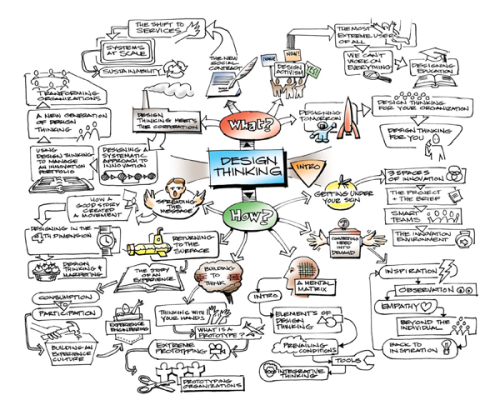
And then I read Tim Brown’s excellent book, Change by Design, that explains his philosophy on design-thinking and the future of the field. He talks about mind maps, schematics that illustrate ideas though visual depictions rather than through written briefs or powerpoint presentations. This is a kind of drawing I can get into. Think of them as multi-dimensional tree diagrams blending pictures and words to illustrate ideas. Rather than just working left to right and using the basic construct of option A or B to progress from problem to solution, a mind map starts with a question that takes the form of “How might we ( fill in the blank)?” for a specific population. For my program with Citizen Schools, I will be asking the kids I work with to solve this dilemma with a mind map “How might we build a public school curriculum for the graders to encourage creativity and entrepreneurship?”
As so often happens, as I was reading Tim’s book, I saw an interview with another Tim whom I greatly admire, Tim Burton. He was discussing his views on drawing and creativity and echoed Tim Brown’s sentiment. “Every child believes he or she can draw. Too many adults have found their creativity beaten out of them.” And this brings me back to my long-held belief that I have only just begun to fully articulate: it is much easier (and effective) to help children maintain their creativity through to adulthood than it is to repair the confidence of adults who believe they have no creativity at all.
The truth is that I’ve lost confidence in my ability to draw, believing that my creativity is relegated to writing and developing products and not at all to drawing. The Tims helped me realize that I am selling myself short. Somewhere inside me is a visual artist of some sort yearning for a paint brush (or crayon or chalk or colored pencil) and a canvas (or piece of paper or blank wall or empty piece of sidewalk).
So here I go with another resolution to live a more authentic life: even if it’s not good, I’m going to draw a little bit every week with the help of my mind maps. I’ll let you know, or better yet I’ll show you, how it goes by publishing the pieces to this blog. Stay tuned as I re-teach myself to draw.
The image above is not my own; I’m just starting to draw so my pictures aren’t this good – yet. It is the image created by Tim Brown for the table of content of his book Change by Design. It can be found here.