
March 20th marks the spring equinox and World Rewilding Day. Around the globe, conservationists and community leaders are celebrating this year’s theme: Choose Our Future.
We often operate under the assumption that we have to engineer our way out of every crisis. We build concrete seawalls to stop flooding and pour chemicals into the soil to force crops to grow. But the rewilding movement offers a radically different approach to leadership and resilience. It suggests that nature already holds the solutions. When we step back, relinquish a little control, and restore the natural balance, the ecosystem heals itself.
We can see this extraordinary transformation happening right now across diverse landscapes and communities.
The Affric Highlands In the central Highlands of Scotland, a groundbreaking, community-led coalition is leading the largest rewilding project in the United Kingdom. For centuries, intensive grazing and logging severely depleted the region, fragmenting the ancient Caledonian pinewoods.
Instead of forcing a heavily engineered recovery, the Affric Highlands project focuses on natural regeneration across 200,000 hectares of land. A diverse group of local landowners, businesses, and volunteers work together to remove barriers and simply allow native birch, rowan, and alder to reclaim the bare hillsides. As the trees return, so do the red squirrels, golden eagles, and black grouse. They are proving that large-scale nature recovery works best when deeply rooted in local collaboration, creating a landscape where both the wildlife and the rural economy thrive together.
The Naval Cemetery Landscape Rewilding does not require thousands of acres; it happens in the densest urban environments. Right here in Brooklyn, a forgotten piece of history recently experienced a profound ecological rebirth. For almost a century, a plot of land at the Brooklyn Navy Yard served as a hospital burial ground before the military decommissioned it.
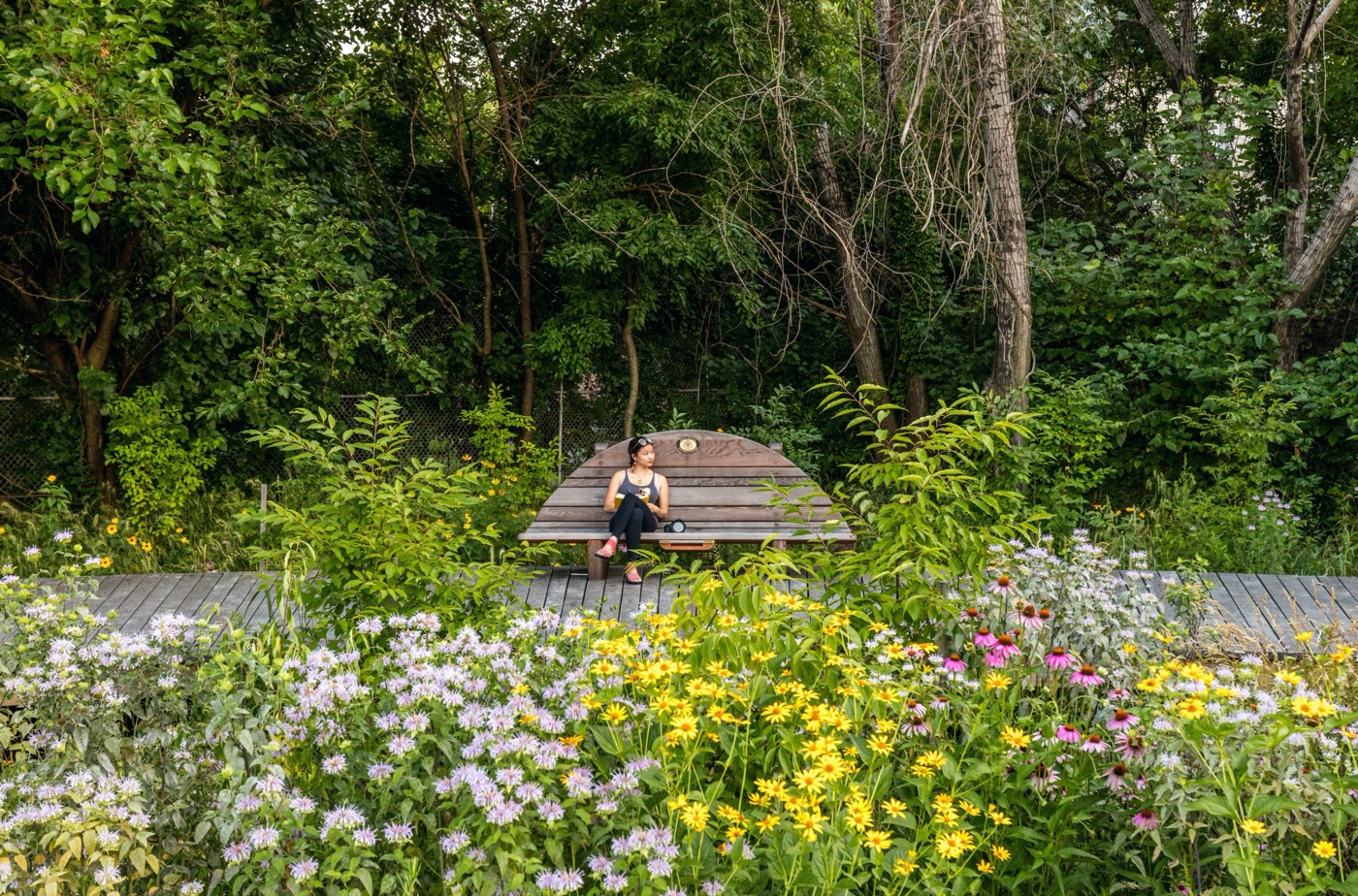
Instead of paving it over for commercial development, the Brooklyn Greenway Initiative transformed the site into the Naval Cemetery Landscape. They planted a 1.8-acre meadow teeming with over fifty native plant species like milkweed, asters, and switchgrass. Today, this formerly restricted land is a public haven buzzing with native bees, moths, and migratory birds. A raised wooden boardwalk allows visitors to experience the vibrant ecosystem without disturbing the soil. By bringing abundant life to a space that memorializes the dead, the community created a powerful sanctuary honoring the cycles of nature.
The Saw Mill River Daylighting In Yonkers, New York, city planners buried the Saw Mill River under a concrete parking lot in the 1920s. For nearly a century, the waterway vanished from the community. Recently, a coalition of residents and environmentalists championed a daylighting project to tear up the concrete and bring the river back to the surface.
Today, a thriving aquatic ecosystem runs right through the downtown plaza. American eels, snapping turtles, and migratory birds returned almost immediately. Uncovering the river revitalized the local economy and proved that removing artificial barriers allows life to rush back in with incredible speed.
The Snowchange Cooperative In Finland, decades of industrial peat mining severely damaged the boreal forests and wetlands. A network of local villages and Indigenous Sámi communities formed the Snowchange Cooperative to buy back the degraded land and restore it.
They block the old drainage ditches and allow the water to flood the peatlands once again. This simple act creates vital habitats for nesting birds and traps massive amounts of carbon. They combine traditional ecological knowledge with modern science, showing that the people who live closest to the land are often its most effective healers.
Green Forests Work Across the Appalachian region of the United States, legacy coal mining left behind millions of acres of compacted, barren land. Traditional reclamation simply planted non-native grasses, creating ecological dead zones.
An organization called Green Forests Work takes a completely different approach. They use heavy machinery to deliberately rip up the compacted earth, loosening the soil so water can penetrate. Then, volunteers plant native hardwood trees like American chestnut and oak. By breaking up the hardened surface, they allow a diverse, native forest ecosystem to replace an extractive wasteland.
The Togetherhood Takeaway Rewilding is more than an ecological strategy; it is a mindset for community building.
When we look at our own neighborhoods, our workplaces, and our creative projects, we often try to force outcomes. We exhaust ourselves trying to micromanage every detail. Rewilding teaches us to focus on the environment instead. When we cultivate healthy soil, encourage diversity, and remove the toxic barriers, we do not have to force growth. It happens naturally.
This spring, consider how you can rewild your own life. Plant native species in your window box. Support local ecosystem restoration projects. If you have a lawn, let it grow wild and free – better for you and better for the planet. Give yourself permission to grow, thrive, and create joy even in times of difficulty. Save room in your life for the unexpected and the not-yet-imagined. Be a joiner and link arms with those around you. Nature teaches us that when we uplift others, we create the conditions for everyone to rise together.
 Christa Avampato