If you’ve been watching the Winter Olympics in Milan-Cortina this week, you’ve likely seen the mascots: two adorable, ferret-like creatures named Tina and Milo.
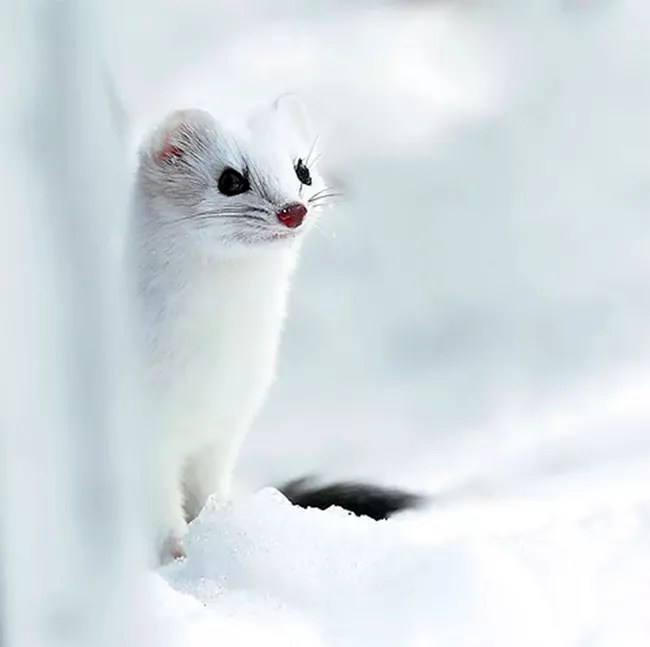
They are stoats (also known as ermines when they have their winter white coats!), and they were chosen to represent the games because of their liveliness and resilience. But biologically speaking, the stoat isn’t just cute. They are engineering marvels that have been refining their technology for over 5 million years.
While athletes are pushing the limits of human performance on the slopes, the stoat offers a masterclass in biomimicry—inspiring everything from search-and-rescue robots to “smart” clothing.
Here are three ways this little creature is shaping the future of technology:
1. The Soft Robotics Revolution
The stoat’s superpower is their shape. They’re elongated, highly flexible body allow them to navigate complex, burrow-like environments that other predators can’t touch.
Engineers are now studying this slender agility to design soft, maneuverable robots. Unlike rigid machines, these stoat-inspired bots can twist and flex to navigate narrow, restricted spaces—making them perfect for search-and-rescue operations in collapsed buildings or inspecting intricate pipeline infrastructure.
2. Adaptive Camouflage (Smart Materials)
We know the stoat changes their coat from rusty brown to snowy white in the winter. But biomimicry looks deeper than just the color change.
Researchers are studying the ermine transformation to develop adaptive materials that can change their properties based on environmental cues. Imagine stealth technologies or outdoor gear that doesn’t just insulate, but actively responds to temperature shifts and visual surroundings, mimicking the stoat’s ability to blend seamlessly into a snowy landscape.
3. Algorithms of Efficiency
Stoats are specialized hunters. Their movement is fast, fluid, and incredibly efficient.
Computer scientists are now analyzing their hunting dynamics and even their playful behavior to write better code. The way a stoat moves—making split-second decisions to navigate obstacles while maintaining speed—is informing movement algorithms for autonomous vehicles and drones.
The Togetherhood Takeaway
It is easy to look at nature as sweet and poetic. Nature’s that, and so much more. When we look at a stoat, we are looking at 5–7 million years of R&D and adaptation through experimentation.
As we cheer on the athletes this week, let’s give a little applause to Tina and Milo, too. They aren’t just mascots; they are blueprints for the next generation of adaptive, resilient technology.
Nature doesn’t just survive the winter. She engineers her way through it.
The short of it:
Writer. Health, education, and art advocate. Theater and film producer. Visual artist. Product geek. Proud alumnae of the University of Pennsylvania (BA) and the Darden School of Business at the University of Virginia (MBA). Inspired by ancient wisdom & modern tech. Proliferator of goodness. Opener of doors. Friend to animals. Fan of creative work in all its wondrous forms. I use my business skills to create passion projects that build a better world. I’ve been called the happiest New Yorker, and I try hard to live up to that title every day.
The long of it:
My career has stretched across Capitol Hill, Broadway theatre, education, nonprofit fundraising, health and wellness, and Fortune 500 companies in retail, media, entertainment, technology, and financial services. I’ve been a product developer and product manager, theater manager, strategic consultant, marketer, voice over artist, , teacher, and fundraiser. I use my business and storytelling to support and sustain passion projects that build a better world. In every experience, I’ve used my sense of and respect for elegant design to develop meaningful products, services, programs, and events.
While building a business career, I also built a strong portfolio as a journalist, novelist, freelance writer, interviewer, presenter, and public speaker. My writing has appeared in The Washington Post, The Huffington Post, PBS.org, Boston.com, Royal Media Partners publications, and The Motley Fool on a wide range of topics including business, technology, science, health, education, culture, and lifestyle. I have also been an invited speaker at SXSW, Teach for America, Avon headquarters, Games for Change, NYU, Columbia University, Hunter College, and the Alzheimer’s Foundation of America. The first book in my young adult book series, Emerson Page and Where the Light Enters, was acquired by a publisher and launched in November 2017. I’m currently working on the second book in the series.
A recovering multi-tasker, I’m equally at home in front of my Mac, on my yoga mat, walking my rescue dog, Phineas, traveling with a purpose, or practicing the high-art of people watching. I also cut up small bits of paper and put them back together as a collage artist.
My company:
I’m bringing together all of my business and creative career paths as the Founder of Double or Nothing Media:
• I craft products, programs, and projects that make a difference;
• I build the business plans that make what I craft financially sustainable;
• I tell the stories that matter about the people, places, and products that inspire me.
Follow my adventures on Twitter at https://twitter.com/christanyc and Instagram at https://instagram.com/christarosenyc.
View all posts by Christa Avampato
I'd love to know what you think of this post! Please leave a reply and I'll get back to you in a jiffy! ~ CRA Cancel reply


 Christa Avampato