“The past suggests what can be, not what must be. It shows some of what’s possible.” -Howard Zinn
This weekend I took a walking tour of President Lincoln’s Cottage. It’s located in the Petworth neighborhood of D.C., just north of where I live. My friend, Matt, told me about it. American history was one of my majors at Penn, and I’d never heard of this cottage even though President Lincoln spent 1/4 of his presidency living there with his family. He commuted to the White House every day during that time, often evading his cavalry (the Secret Service of the time) and passing Walt Whitman’s home. Whitman often emerged from his home to tip his hat to the President.
Visitors to the Cottage can stand in his bedroom where he wrote the Emancipation Proclamation. We gathered in his living room where he entertained guests and colleagues and on the lawn where he enjoyed a good game of checkers (he was a master of the game!) and read many books, comforted by the cool breezes there. From the porch, we saw the hills of Virginia where so much of the fighting of the Civil War happened. And if we peeked carefully through the trees, we saw the Capitol dome which is now being refurbished and was under construction during President Lincoln’s term. The ground there is sacred; the decisions and actions taken on that lawn drastically changed the course of history for our country.
The Cottage is off the beaten path, and well worth the visit. Throughout the house, visitors get a feel for the enormity of his task and times as well as a glimpse into what a complicated, conflicted, and thoughtful man he was. The accompanying museum is filled with interesting video footage, photos, and stories, many of which are little known to most of us. For example, President Lincoln took office with only 40% of the popular vote and his close friends such as Frederick Douglass kept him strong and on track during his many difficult moments of doubt. He was also nearly assassinated on his way to the White House once before the fateful day at Ford’s Theater. However, he firmly believed that no one would ever be so angry with his political decisions that they would actually kill him.
After leaving the cottage, I walked along Rock Creek Church Road, the dangerous route that President Lincoln traveled every day between the White House and the Cottage. I wondered what he would think of our country today with all of its challenges, many of which he faced and feared 150 years ago. I wonder how our nation would be different now had he lived to fulfill his second term, if somehow John Wilkes Booth had been stopped from firing that gun less than a week after the official end of the Civil War. Would our nation be in better shape? Worse shape? Maybe the same. That’s the funny thing about history—it’s full of chances and what if scenarios that can never be answered, it’s something that provides with so many more questions than solutions. And those questions are some of our very best teachers.
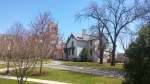
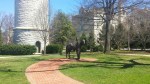
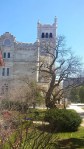
My picture gallery from the cottage:
The road leading to the cottage
The Capitol dome through the trees
The gazebo and canon replica
The exterior of the cottage
A view of the grounds from the museum
Statue of President Lincoln and his horse, Old Bob
The gate to the Soldier’s Home where Lincoln’s Cottage is
The first dormitory on the grounds of the Soldier’s Home
The front lawn of the cottage where many soldiers camped during the Civil War
IN BRIEF
Author, journalist, digital product manager, and licensed New York City tour guide. Creator and host of NYC's Secrets and Lies. Alumna of the University of Pennsylvania (BA), the Darden School of Business at the University of Virginia (MBA), Arizona State University (Biomimicry), and the University of Cambridge (MSt in Sustainability Leadership).
I build digital media platforms, report on urban climate resilience and biodiversity, and produce live narrative experiences that connect communities to history, nature, and place.
THE DEEP DIVE
My work centers on a single thread: building systems and stories that foster deep connection to our shared world. Across digital streaming, environmental reporting, and live civic storytelling, I design experiences that help people understand complex ideas and the environments around them.
DIGITAL PRODUCT STRATEGY & MEDIA LEADERSHIP
At Carnegie Hall, I serve as Digital Product Manager, leading product strategy, operations, and technical delivery for the video streaming platform Carnegie Hall+. I translate artistic mission into scalable, high-performance streaming architecture that reaches audiences globally. Previously, I led agile product and delivery teams across operations and compliance at American Express, managed Broadway theatrical productions and national tours, and guided strategic initiatives across cultural institutions.
ENVIRONMENTAL JOURNALISM & AUTHORSHIP
As a freelance journalist, I investigate how living systems, urban infrastructure, and human culture intersect. My reported features on urban decarbonization, biodiversity, coastal resilience, and biomimicry appear in publications including Smithsonian Magazine, The Washington Post, Mongabay, Natural History Magazine, and Foreign Policy Magazine. In fiction, I write the Emerson Page young adult novel series, alongside upcoming historical fiction and nonfiction works on New York history, mythology, and human resilience. I also write Togetherhood, a LinkedIn newsletter focused on urban ecology and community restoration, and co-host the podcast Frameworks in the Wild.
LIVE EXPERIENCE & CIVIC STORYTELLING
As a licensed New York City tour guide and live event producer, I transform urban landscapes into shared narrative encounters. I created, produce, and host NYC's Secrets and Lies, an interactive live storytelling series staged across cultural landmarks including the New York Transit Museum, the South Street Seaport Museum, and the historic tall ship Wavertree. I also design and lead site-specific walking tours exploring coastal ecology, food history, and neighborhood evolution, often with partners at Climate Week NYC and the Natural Areas Conservancy.
DOUBLE OR NOTHING MEDIA
Through my independent production studio, Double or Nothing Media, I develop ventures across media, ecology, and public history:
Digital Products & Strategy: Architecting scalable digital platforms, streaming experiences, and operational models for mission-driven institutions.
Environmental Reporting & Publications: Delivering long-form reporting, books, and newsletters grounded in climate resilience and regenerative design.
Site-Specific Live Storytelling: Producing immersive live shows and educational walking tours that engage public audiences in community history.
CONNECT
Website & Production Hub: doubleornothingmedia.com and christaavampato.com
Newsletter: Togetherhood on LinkedIn - linkedin.com/newsletters/togetherhood-7273771832221089792/
Instagram & Threads: @christarosenyc
Emerson Page Novels: emersonpagebook.wordpress.com/
View all posts by Christa Avampato
5 thoughts on “This just in: History is alive and well at President Lincoln’s Cottage”
Lovely photos, Christa. And a very powerful glimpse into history. I am guessing you’ve seen the movie Lincoln which came out a few years back?
Thanks, Jan. I loved the movie Lincoln. I kept thinking of that final scene and the final quote that he was known to say right before he left for Ford’s. “I suppose it’s time to go though I would rather stay.” Gives me chills. He spent his final night of sleep in that cottage, in the very room where we stood, and there certainly is still a part of his spirit there.
Hi Christa, I had forgotten that part of the movie. Very prescient. I’m sure you’re right about part of his spirit still being there; it seems places hold memories and energy in their very substance. -J
I’ve found myself completely fascinated by the days leading up to the end of his life. He had so many premonitions and dreams about impending personal disaster despite the war officially ending 5 days earlier.
I have heard that . . . I think some instances were even depicted in the movie; really I ought to go back and watch it. He had a special connection with destiny and the greater forces of Life.







Lovely photos, Christa. And a very powerful glimpse into history. I am guessing you’ve seen the movie Lincoln which came out a few years back?
LikeLike
Thanks, Jan. I loved the movie Lincoln. I kept thinking of that final scene and the final quote that he was known to say right before he left for Ford’s. “I suppose it’s time to go though I would rather stay.” Gives me chills. He spent his final night of sleep in that cottage, in the very room where we stood, and there certainly is still a part of his spirit there.
LikeLike
Hi Christa, I had forgotten that part of the movie. Very prescient. I’m sure you’re right about part of his spirit still being there; it seems places hold memories and energy in their very substance. -J
LikeLike
I’ve found myself completely fascinated by the days leading up to the end of his life. He had so many premonitions and dreams about impending personal disaster despite the war officially ending 5 days earlier.
LikeLike
I have heard that . . . I think some instances were even depicted in the movie; really I ought to go back and watch it. He had a special connection with destiny and the greater forces of Life.
LikeLike