art, history, New York City

My Year of Hopefulness – Camilo Jose Vergara

Today, I ventured over to the New-York Historical Society, a museum next door to the American Museum of Natural History. It is dedicated to history and story telling, particularly those stories that involve New York City. There is a beautiful photography exhibit by Camilo Jose Vergara currently on display, Harlem in Transition, 1970 – 2009. The exhibit depicts Vergara’s 4 decades of photographing Harlem. He began taking pictures on his lunch breaks from a large advertising agency located on Park Avenue. He often went back to visit the same sites over 40 years to document the change and transformation, and plenty of change has taken place in that neighborhood.

The roller coaster ride of Harlem is very apparent in the collection. From beautiful buildings, dilapidated, and rebuilt even beyond their original splendor to the images of people who arrived in the neighborhood and left one way or another, it is a story of rising, falling, and rising again. It covers places of worship and commerce, the art and politics, the people and addresses that are distinctly Harlem. It makes no apologies or excuses, nor does it forgive or forget. It simply and honestly tells the story of Harlem.

What struck me most about the photographs is the color that radiates from them. There’s a photo that depicts the urban gardening that used to be in Harlem and another showing the graffiti used to warn residents of the harm drugs and drug dealing bring into the neighborhood. There are photos of statues of prominent black Americans that instill pride and inspire everyone who walks by them. There are birds-eye views of the grand boulevards and photos of life on the streets as if we are seeing the scenes at ground level.

This exhibit takes us north from the Historical Society into that neighborhood, that mindset. It shows us the struggles and triumphs of Harlem residents, past and present. Vergara says of this collection, “This urban documentation project breaks with the ways historians, planners and other scholars traditionally approach urban space. My method of documentation is based on presenting sequences and networks of images to tell how Harlem evolved and what it gained and lost in the process. The premise behind all the work that I do is that 100 pictures are one hundred times more powerful than one picture. The more you track something, the deeper and more eloquently it speaks.”

And eloquence is the best descriptor of this exhibit and the proud people who share its story. It’s on view now through July 12, 2009 at the New-York Historical Society. To see more of Vargara’s work, visit his website: http://invinciblecities.camden.rutgers.edu/intro.html

art, story

My Year of Hopefulness – Giving the visual arts its fair share of attention

If you want to learn about the importance of impact in visual messaging, consider this: the average amount of time a painter has to engage a potential purchaser of his work in a gallery is 15 seconds. That’s about how much time people spend looking at any one painting as they’re strolling through an art space. In 15 seconds, the artist who likely spent hours, days, or months creating a single piece of work must make that viewer think, laugh, cry, and wonder. 15 seconds to make an impression, or not. In other words, the painter must immediately elicit some type of strong emotion and curiosity or risk being passed by and forgotten.

In writing, we give authors a decent number of pages before we decide to continue or put down a book. We’ll watch a TV show for a few episodes, a play for at least the first act, a few songs on an album or at a live concert. Visual artists barely ever get a fair shake. And here’s why it’s even more tragic: our minds physically cannot take in every detail of a painting in 15 seconds. But it’s exactly those details that will make all the difference in our opinion of a piece of work. In 15 seconds, we aren’t giving the artists nor ourselves a fair shake and my guess is that we are missing a lot of beauty and a lot of joy through this self-imposed limitation.

For the sake of the art world, here’s my suggestion: slow down and open the mind. I’m guilty of museum fever. I have to get through as much as possible as quickly as possible just to say I’ve seen it. Bad idea. Very bad idea. I have a tough time recalling details of works if I take that approach. So on my last visit to the Met, I went more slowly and I did less. I went to see one small showcase, Raphael to Renoir, and then let myself just wander and enjoy whatever happened to catch my eye for about an hour. I spent that hour looking at a handful of works and I took the time to enjoy, appreciate, and question each one. It was the best visit I ever had to the Met.

The visual arts can be overwhelming but they don’t have to be. Take small steps, question why the artist chose specific colors, textures, or points of view. Read the back story on the work if it’s published alongside the work in a gallery or museum. Take time to consider all the choices that could have been made and why an artist specifically made the decisions to create the work that now stands before you. We’ll be better off for this exercise – we’ll learn how to see and appreciate more of the world around us – and visual artists will finally get a chance to inspire us at least as much as other artists.

The painting above, Blank Image, was painted by Kyle Waldrep and is on display at the School of Visual Arts on the UCF campus. Oil on canvas.

art, museum

My Year of Hopefulness – The Metropolitan Museum of Art

A short bus ride across town from my apartment, the bus stops just outside the Metropolitan Museum of Art – a place that transports you to a different world once you enter its main hall that is now decorated with large urns full of cherry blossoms. Just beyond that main hall are the Greek and Roman Galleries, refurbished and re-opened almost exactly two years ago. In those halls and throughout the museum the array of art is dizzying. It took me a few moments today just to get my head around the treasures we have the good fortune to wander through.

What I find most amazing about the Met, and art in general, is that someone, an individual, had an image in his or her mind hundreds or thousands of years ago, put brush to canvas, anvil to stone, hand to clay, and shared with us, the world, what he or she was thinking of. These pieces of art are living history. They capture a moment in time for all of us to witness and appreciate.

After touring through the French Bronze exhibit and Rafael to Renoir sketches, I wanted to wander around the gift store and see if I could find some of the prints I’ve been looking for. The Met is so immense that I often just wander around from gallery to gallery, never quite sure where I am. I like to get lost in the art. I asked a docent just outside of the entrance to the Papua New Guinea Gallery how I could get to the gift shop.

“The Main Gift Shop?” he asked.

I nodded, thinking, “is there another one?”

“Walk straight ahead and take a left at the column from the Temple of Artemis.”

It’s not everyday you hear directions like this. I smiled to myself and followed the docent’s instructions, imagining that I was walking through Ancient Greece, appreciating all of the treasures that were my landmarks.

art, education, music, New York

My Year of Hopefulness – The Music Prodigy Down the Street

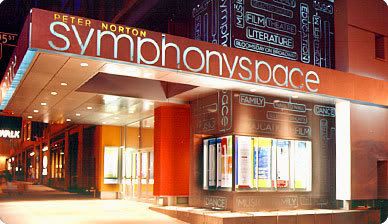
Last night my friend Richard and I stopped in to a piano competition at Symphony Space, a performing arts organization that has an incredible slate of programming. I’d never been to a piano competition and wasn’t sure if I’d like it but it was only $5 so I figured it was worth at least checking out. Little did I know that just down the street there were several virtuoso piano players offering up a concert for a next-to-nothing ticket price.

All over the country, these piano competitions are happening any given night of the week. Performers are young and yet undiscovered musicians who have gone to conservatory and now enter as many competition as they can in an effort to boost the potential of their careers. They dedicate their lives to their art. And so few of them ever make it despite the immense talent within each of them. And to get by they work at The Gap or as temps in high rise office buildings. Think of the incredible artistic ability of temp staffs buried in the gray cubicles of New York’s law firms and financial institutions.

So where is the hope in this? Hundreds, maybe even thousands, of young, talented musicians will never be discovered, never receive any acclaim, never achieve their dream of making their living through music. Or can they?

I emailed a friend of mine who works at Teach for America. A handful of corps members teach art or music in public schools. So look at the gap: a huge numbers of schools suffer from a complete lack of music and art education programs and a huge number of people in this world want to earn their living from music. I understand that most of these students want to earn their living from performance though wouldn’t they prefer to have a teaching job rather than taking phone messages and selling mass-market clothing until their time in the spotlight arrives?

It seems to me that this is a gap waiting to be filled. I know that funding for art and music is tough to come by but with all this talent in the world and all the students who want and need an arts education, we can’t let funding stand in the way. You can bet that I’m going to be looking into this further. There’s too much kismet to let this challenge continue unanswered.

art, history, music, opera

My Year of Hopefulness – Honor: The Voice at Carnegie Hall

Last week, I had the pleasure of watching the final performance of Honor: The Voice at Carnegie Hall. Curated by Jessye Norman, the show featured 6 young opera singers, 4 pianists, and an evening of traditional opera pieces, spirituals, and pop/Broadway numbers. The festival exists to “celebrate the African America cultural legacy”.

The set up was simple and elegant – a grand piano, a pianist, and a singer on a bare, shining stage. No microphones. The talent radiating from the stage was so pure and overwhelming that I had to physically prevent my mouth from hanging open. The power and emotion of the music in those voices on the Perelman Stage filled the Stern Auditorium and then some.

My friend, Chris, who runs the international education program at the Weill Music Institute at Carnegie Hall, explained to me that this festival exceeded all expectations. The audience was much more multi-cultural than usual and the sales were impressive. On a Monday night, the auditorium was packed and as I looked around, I could see every race, every age range, and an even mix of men and women. That festival brought together a community of diversity rarely seen at most New York institutions. Inclusive and diverse, it was representative of our city’s population – in other words, exactly what an audience should be.

And you might wonder what on Earth a white girl like me from a small rural town in upstate New York is doing at a place that celebrates the African American cultural legacy. I wondered, too. I love the music that was presented and the diversity of my city, though do I really belong here? Do I have the right to celebrate and honor a legacy that is not mine? Was I welcome?

According to Jessye Norman, the answers are yes, yes, and yes, because this legacy actually is my legacy. It is every American’s legacy. In her signature, elegant manner, I had the great fortune to hear Ms. Norman speak about the festival and its importance, not just to African Americans, but to all of us. If we live in America, then the history of African Americans is our history and we have not only the right but the obligation to pay tribute to it. The feeling of inclusion, respect, and admiration in that auditorium was undeniable. I am honored to have had the opportunity to bear witness to the performance and to the inspiration it provided for all of us within its reach.

At the end of the performance, the audience cheered and applauded with great energy and Ms. Norman looked on with pride. Her performers, however, would not let it go at that. They brought her to the center of the stage, applauding, hugging, and kissing her. You could see and feel their gratitute to this great talent standing before all of us. Through my loud applause, I hope she knows that I am grateful to her, too.

art, career, entrepreneurship, social entrepreneurship, Spring

My Year of Hopefulness – Spring arrives

Spring arrived yesterday with a last little flurry of snow. I was just finishing up my Friday morning shift at God’s Love We Deliver when I looked out the window to see flakes swirling in a mad rush to wave one last good-bye to the long, cold winter. And it was Winter’s nod to us to remind us that “I’ll be back”. I laughed as I thought about that dialogue between Spring and Winter. Nature’s changing of the guard. 


By all accounts I am a Winter person. I love my sweaters, jeans, and boots. Walking in the park or down 5th Avenue when it’s snowing is one of my favorite activities. Usually Winter reminds me of rest and healing, a time of contemplation, reflection, and preparation. Not this year. I have wanted Winter to end from the day it started. These past few months I’ve been praying for the end of the cold like never before. 

This morning as I stepped outside I felt a little lighter (though still cold thanks to the 32 degree temperature). There definitely was a shift in the air from Friday morning. I imagined the ice that’s surrounded us for 4 months cracking and shattering under the gentle gaze of the warm sunlight. The very tiny seeds that we planted last fall are beginning to inch upward, reaching for their stage. It’s almost their time. 

Now nearly three months into my writing, researching, and reading daily about hope, I’m ready to do something with all of these ideas I’ve been considering and shaping about my career and my life. It was a far longer process than I thought it would be. My very simple idea to do something in the social entrepreneurship space has been whittled down to something that looks more like a recognizable figure, though not yet fully formed. I consider how every sculptor starts with a mound of clay, slab of marble, or block of ice, knowing that with patience, passion, and hard work a masterpiece will emerge, eventually. 

In one of my college art history classes, I remember reading something about Donatello’s agonizing work style. There are accounts of him in his studio hammering away at the marble to create his next statue and screaming at it “speak, damn you, speak!” Though I’m not really at that level, I understand that desire to work away on the block so that the fully formed piece will step into the light and show itself. 

I think about that image, that metaphor of a sculptor, as I walk in the park, write, and adjust my idea for starting a social enterprise. In the light of Spring it seems to be taking shape more clearly. With every conversation and experience, every book, blog, magazine, and newspaper article I read and write, I get a tiny bit of information of how to shape my idea. And as I gather up all those tiny bits, I begin to see a vision that’s clearer and more reflective of who I am and who I’d like to be.  

animals, art, children, dreams, photographs

My Year of Hopefulness – The Art of Gregory Colbert

I recently purchased a print by photographer Gregory Colbert. I am in love with his work because it lifts me up in a way that is wholly different from most other fine art. He’s famous for his sepia-toned photographs of people interacting with animals. A boy in Mexico reads a story to an elephant, a gymnast swims with whales, a child crouches down beside a leopard.

The images are striking in their simplicity and their profound belief that animals and people can co-exist peacefully and for mutual benefit. I find that they are images that help me to meditate and center my mind that runs at a million miles an hour these days. I never grow tired of looking at them, imagining the stories behind those photographs. I ask myself so many questions as I look at them: how did this animal and this person come to be in the same place? How do they know each other? What were they doing just before and what did they do just after the photo was taken?

This is the beauty of art like Gregory Colbert’s: it allows us to imagine the improbable, it takes us on a journey that we would never go on otherwise, and it inspires us to dream. Through good art, we actually grow our idea of the world around us and can begin to see our role in the world with fresh eyes. All of sudden we realize that the improbable is not impossible. All things become likely.

art, entrepreneurship, Examiner, theatre

NY Business Strategies Examiner.com: In the Heights

My latest post on Examiner.com – A look at the Broadway show, In the Heights, from a business perspective: http://www.examiner.com/x-2901-NY-Business-Strategies-Examiner~y2009m3d10-In-the-Heights–a-case-of-entrepreneurship-in-the-arts

art, New York City, theatre

My Year of Hopefulness – In the Heights

Way back when, I was a very poor new college grad, working for a Broadway management office, and living just off of 190th Street. Despite the long train ride, it was one of the very best experiences of my life to live in that neighborhood. I was the only non-Dominican on my block and I was enchanted by their culture. Maybe even a little jealous of them. At night in my current apartment, I sometimes think back to 190th Street (Wadsworth Terrace, actually) and remember the endless game of dominoes played on that street corner “at the top of the world”. Sometimes, I miss it.

Tonight I went to see In the Heights with my friend, Monika. Brilliant, funny, and poignant, it reminded me of all the things I love about live theatre. The music, acting, dancing, writing, and singing made it one of the very best all-around shows I’ve ever seen. It’s a beautiful tribute to an amazing neighborhood and Latin culture. It really is a love letter to New York City. It made me glad and grateful that New York City is my home.

And what I love most about the show is that it was one man’s dream to write a show about his neighborhood and his heritage. It doesn’t have any complicated plot lines, there’s nothing for the audience to “figure out”. It’s just a beautiful, simple story about life on a block in New York. You meet the colorful personalities, see some of their heartache, some of their joys, and all of their dreams. It’s as if for a minute I was back on that block, looking out from my apartment window and watching the comings and goings of average, everyday people. It made me think that maybe there is a story in all of us that is worth telling, and our only job is to tell is honestly, with heart. I’m grateful to Lin-Manuel Miranda for sharing his story with us.

art, Examiner, photographs

NY Business Strategies Examiner.com: The Business of Art – New York’s Armory Show

My latest post on Examiner.com that considers the business of art with the New York’s Armory Show as a case study.

For the full article, please visit: http://www.examiner.com/x-2901-NY-Business-Strategies-Examiner~y2009m3d9-The-Business-of-Art-New-Yorks-Armory-Show

Photo Credit:
Chester Higgins Jr./The New York Times