animals, creativity

Building Nature’s Highways: Why Wildlife Corridors Matter, Especially in a City Like New York

Photo by Maurice Gort on Unsplash

In the urban symphony of honking taxis and bustling sidewalks, it’s easy to forget that New York City is also home to a surprising array of wildlife. From the familiar pigeons and squirrels to more elusive species like coyotes, egrets, and even occasional seals in the harbor, nature finds a way to persist amidst the concrete jungle. However, these urban dwellers face significant challenges, primarily the fragmentation of their habitats. Parks, green spaces, and natural areas exist as isolated islands in a sea of development, making it difficult for animals to move, find food and mates, and maintain healthy populations.

This is where wildlife corridors, also known as green corridors or ecological corridors, become vital. More than just 2 patches of green, these linear stretches of habitat act as nature’s highways, providing safe passage for animals to travel across urban landscapes and limit interactions with humans (which keeps wildlife and humans safe.)

Why are wildlife corridors so important?

The benefits of establishing and maintaining wildlife corridors extend far beyond simply allowing animals to move:

  • Combating Habitat Fragmentation: Urban sprawl carves up natural landscapes, isolating animal populations. Corridors reconnect these fragmented habitats, allowing for greater movement and reducing the risks of inbreeding and localized extinctions.
  • Promoting Biodiversity: By facilitating the flow of individuals between different areas, corridors help maintain genetic diversity within species and support a wider variety of plant and animal life.
  • Supporting Migration and Dispersal: Many species need to move seasonally or disperse to new areas to find resources or establish new territories. Corridors make these crucial movements possible.
  • Enhancing Ecosystem Health: The movement of wildlife aids in essential ecological processes like pollination and seed dispersal, contributing to the overall health and resilience of urban ecosystems.
  • Increasing Climate Resilience: Green corridors can provide areas that may offer refuge as the climate changes, allowing species to shift their ranges. They also contribute to urban cooling and stormwater management by providing more green space – a win for all species, including humans.
  • Providing Educational and Recreational Opportunities: Urban green spaces, including corridors, offer residents opportunities to connect with nature, observe wildlife, and engage in outdoor activities. (However, please don’t touch wildlife or attempt to corner them to get a photo – give them space and let them be.)

Building Nature into the Urban Fabric of New York City

Integrating wildlife corridors into a dense, established metropolis like New York City presents unique challenges, but it is possible. It requires creative thinking, strategic planning, and a commitment to green infrastructure. Here are some ways we can build nature’s highways into our city:

  • Leveraging Existing Green Spaces: Connecting existing parks, community gardens, cemeteries, and natural areas through planted streetscapes, greenways along industrial areas or waterways, and even strategically placed planter boxes can create a network of connected habitats.
  • Creating Green Roofs and Walls: These vertical and horizontal green spaces on buildings can act as steppingstones or even continuous pathways for birds, insects, and small mammals, particularly in areas with limited ground-level space.
  • Utilizing Waterfronts: New York City’s extensive coastline and rivers offer significant opportunities to establish riparian corridors with native vegetation, providing crucial habitat and movement pathways for a variety of species. The Manhattan Waterfront Greenway, while primarily for human use, also offers ecological benefits and could be further enhanced for wildlife.
  • Designing Wildlife Crossings: While more challenging in a dense urban environment, innovative solutions like vegetated overpasses or underpasses could be explored in areas where major roads or highways sever existing or potential green spaces.
  • Prioritizing Native Plants: Filling these corridors with native trees, shrubs, and flowering plants is crucial as they provide the specific food and shelter that local wildlife need. This also reduces the need for intensive maintenance and pesticides.
  • Rethinking Urban Planning and Development: Integrating ecological connectivity into the very fabric of urban planning is key. This includes implementing regulations that encourage green infrastructure in new developments and protecting existing natural areas.
  • Engaging the Community: Educating residents about the importance of urban wildlife and corridors, and involving them in planting and stewardship efforts, can foster a sense of ownership and ensure the long-term success of these initiatives. Programs reducing pesticide use in private gardens and encouraging bird-friendly glass windows to prevent collisions (we lose an astonishing 90,000 to 230,000 birds to window collisions in New York City every year) also contribute to a healthier urban ecosystem.

New York City has already taken steps in this direction with its extensive park system and efforts to restore natural areas. By intentionally building and enhancing wildlife corridors, the city can become a more resilient, biodiverse, and ultimately, more livable place for both its human and animal inhabitants. It’s an investment in the ecological health of the city and a recognition that even in the heart of the urban jungle, nature deserves a connected path forward.

animals

Remembering Phineas on his 15th birthday and 14th Gotcha Day

Me and Phinny in the parking lot of the shelter. This was our first of many photos together. Taken by my Mom. I so wish we could take one today.

September 18th will forever be my favorite day of the year. Today is my dog Phinny’s 15th birthday and 14th Gotcha Day. My first without him as he once was. His first over the rainbow bridge. In his honor, I made donations to Animal Care Centers of New York City to help homeless pets in our city and to White Whiskers Senior Dog Sanctuary near Buffalo, New York to help homeless senior dogs with medical issues. 

14 years ago today I took a train to a shelter in Harriman, New York to rescue a dachshund that New York Dachshund Rescue told me about. I had been talking to them for a few months about rescuing an adult black and tan male dachshund because I’d heard adult dogs who are black are less likely to get adopted than others. (This is actually not true though at the time it was a persistent online story.) They told me there was a little guy who matched my description in a very underfunded shelter. Even if I wasn’t sure if I was ready to adopt, if I could just go get him they’d help me find him a permanent home. I agreed. They didn’t even have a picture to send me much less any information about him other than his breed, sex, and color. His name was Beasley.

As I walked from the train station to the shelter, I was nervous. Was I ready to have a dog on my own in New York City? I had a demanding job. I’d never had a dog whom I was solely responsible for. I had a small apartment with not-so-pleasant neighbors. There were a million reasons to not get a dog and only one reason to get one — I really wanted a dog.

To calm down, I reminded myself that I had only committed to getting him out of this very underfunded shelter and fostering him. If it didn’t work out, we would find him a good home and I would have helped him on his journey. I walked into the lobby and said to the woman at the desk, “I’m here to get Beasley.” She sighed, and went into the back.

Less than a minute later, a little black and tan wire-haired dachshund wiggled out into the lobby. That was it. Love at first sight. This was my dog. I picked him up and he happily gave me a smooch as if to say, “I’m so glad you found me. Let’s go!”

“You want him?” the woman asked.

“I’ll definitely take him,” I said.

“200 dollars. Cash or check.”

I wrote a check for $200. She handed me an envelope with some health papers and we stepped out into the world together. Me and my dog, Phineas. We never looked back. I miss you every day, bud. Happy birthday. Happy Gotcha Day. Thank you for being my boy all these years.

animals, nature, Washington

This just in: Kenilworth Aquatic Gardens and the National Aboretum are sanctuaries of peace in D.C.

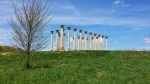
Phin and I found two more peaceful and beautiful sanctuaries within D.C.’s borders. Yesterday, we visited Kenilworth Park & Aquatic Gardens and the National Arboretum. Plenty of wildlife sightings (including adorable otters!), soft winds, and spring vegetation to enjoy. Best of all, they’re only a 20-minute drive from our apartment. Phin did a bit of padding around (and rolling around) in the soft grass and we both soaked up the sun on this very summer-like day. Looking forward to spending a lot more time in these two places as the seasons change. Both are free, easy to get to, offer plenty of parking, and are part of the National Park Service. Picnics welcomed!

animals, celebration, dogs

This just in: A Toddler’s 6th Word is Phineas

Hip hip hooray! Go Phineas!

Yesterday I was scolding Phin on the sidewalk because he got ahold of a chicken bone and wouldn’t let go. A mom walked by us with her two toddlers, and one of the two toddlers raised her arms up to the sky and said, “Phineas! Phineas! Phineas!” Her mom started laughing out loud and said, “That’s amazing! Phineas is my daughter’s sixth word.”

By then Phin had noshed on the chicken bone and swallowed it. He sat there like a little prince, quite proud of himself as the little girl cheered him on. As angry as I wanted to be, I just couldn’t find it in me. If someone was on the street chanting my name, I’d continue doing exactly what I was doing, too.

animals, dogs, dreams, writing

This just in: If you want something, write it down

Phineas after his very long day

I’m a big believer in writing down my wildest dreams and hopes in my own handwriting. It worked for finding my dream job. And now it’s worked for Phin. Yesterday, I had to take Phin for an MRI. He was having intense pain, but I wasn’t sure where it was coming from. While I waited for him, I wrote him a letter about how I wanted this situation to unfold. It was a hopeful wish against all odds. 15 minutes later the neurologist called me and delivered exactly the news I had written down moments before. She even used some of the exact same words I had written down. It was wild! It is a minor issue that we can fix with medication and rest for two weeks. Call it karma, the power of prayer, or magic. Whatever it is, I know it works. If you’ve got wishes, write them down.

Here’s the letter I wrote to Phin:

“Dear Phineas,
I really need you to be okay, buddy. You’ve been through so much in the last set of months, too much for a dog so sweet and loving. I know you are strong and brave, and that we have many more adventures ahead of us. We still have quite a way to travel together so I know you are going to pull through this latest blip like the champ that you are.

We’re going to look back and shake our heads at this. Once on the other side, we’re going to be very grateful that this wasn’t serious at all, only something minor and easily fixed in no time. You’re going to be happy, healthy, and whole. I just know it. You already are. These tests are just to be 100% certain of it, without a trace of doubt left.

From now, we’re going to take it easy. Just snuggles and walks and laughs together. Many more years of them. This reality already exists for us. I’m just pulling it out of the ether now. We have a house to buy (eventually), a beau for me (and a dad for you!) to find, and a city to explore. Hikes in Shenandoah. Roosevelt Island, the monuments around the Tidal Basin, Rock Creek Park, the C&O Canal.

You have so much life and love and adventure still in you. So have faith and courage. We’ll face this together head on, as we always have, as we always will.

Summer is almost here. The warm air and the long, happy days filled with sunshine are just around the bend and I can’t wait to share them with you on our long walks together. All is well. All good things.

Love,
Your mom”

animals, dogs, health

This just in: Healing is a work in progress

Phin taking a long nap after our hike in Rock Creek Park

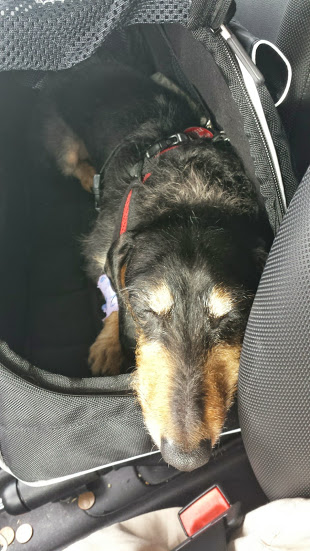
Phineas crossed a new threshold this weekend and taught me another big lesson in the healing process. It’s now been 2 months since his surgery. It was beautiful outside yesterday afternoon so we suited up and headed for Rock Creek Park. I wasn’t sure if or how Phin would navigate it. It’s been almost 6 months since we’ve been out on any trails and Rock Creek has some steep hills. I figured I would let him try it and if it was too much for him, then I could carry him.

I was skittish about approaching the hills, but Phin wasn’t phased by them one bit. He went after them with his usual gusto, bounding straight up without giving it a second thought. He’s not quite as agile as he used to be and he’s a little slower, but he did damn good. We arrived back home 2 and a half hours later. Phin was tired, though so was I.

I’ll be the first to admit that I still monitor Phin’s gait on a daily basis. There isn’t a moment that goes by when I’m not abundantly grateful that he’s with me. I remember all too well how close I came to losing him, and how close he came to losing his ability to walk.

The thing is that Phin doesn’t worry the way I do. He doesn’t get caught up in the psychology of injury, nor in the hard work of healing. To him, this is just life now and he’s happy. He knows he gets tired more easily and that he’s lost some flexibility in his spine. He knows he teeters over from time to time and that he can’t run quite as fast as he used to run. He loves and knows he is loved, and that’s his focus. To him, every walk, wonky or not, is a good walk. Every day is a good day. I’m not as zen as he is about all of it, but I’m trying and Phin is a patient and enthusiastic teacher.

animals, dogs, love

This just in: What it means to love an animal

Phin and his pal, Otis

“Until one has loved an animal a part of one’s soul remains unawakened.” ~Anatole France

There is something so easy and natural about loving an animal. The first time I met Phin, I knew in an instant that he was the dog for me. People told me this would happen, but I didn’t believe them. I thought my ever-questioning mind would fully get in the way. It didn’t. I saw Phineas wiggle his little self into the waiting room and with that he wiggled his way right into my heart. I scooped him up without hesitation, and the rest is history. Loving an animal so much has been one of the greatest gift in my life, and I imagine it will be a gift that never ends.

animals, dogs, friendship

This just in: What we all need is a friend in the world – dogs included

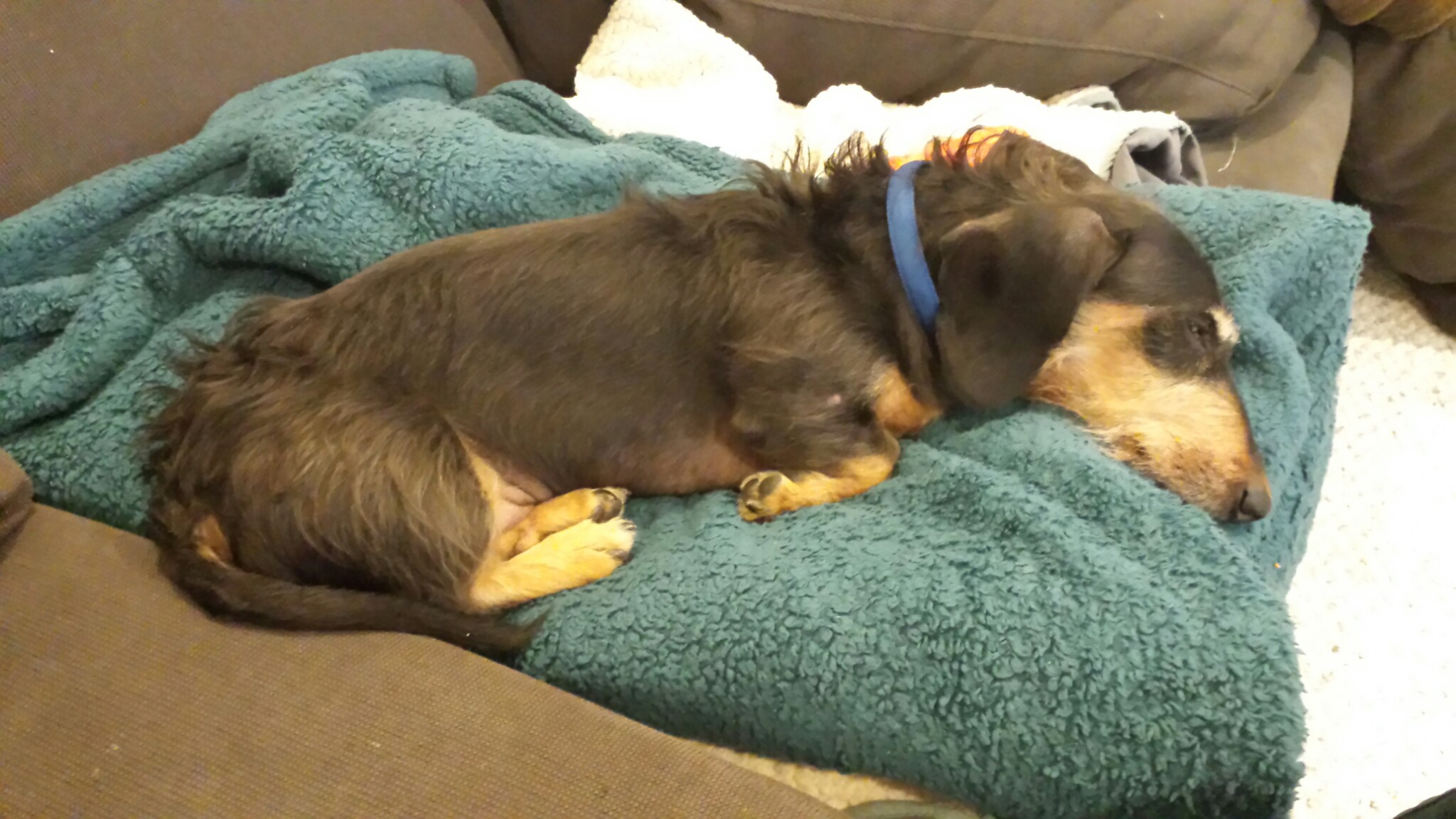
Otis and Phin taking an afternoon nap together

Over the years, Phin and I have worked nearly every angle to help manage his separation anxiety—several trainers, numerous practice exercises, a serious amount of walking, toys to keep him occupied and busy, medications, aromatherapy, and even a few months with my mom in Florida. The one thing we never tried was a second dog. I was worried about taking on the expense and work of a second pup, and many people convinced me that a second dog wouldn’t help. “He’s just not a city dog,” they’d say. Or worse, “He was meant to be with a family that’s home all the time, not a single person who works.” I’ve shed a lot of tears and experienced a huge amount of anxiety because I was worried I just couldn’t help him.

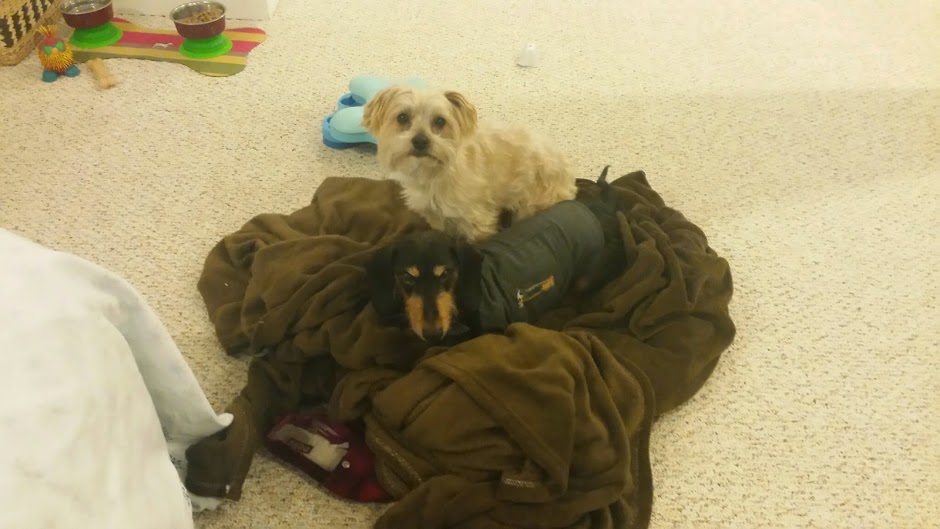
It’s been two weeks since we moved to D.C., and my friends Matt and Alex whom we rent from have a sweet pup, Otis. Otis and Phin get along very well and they were immediate friends. We just open up the door between my apartment and their house, and Otis and Phin pal around together all day. It’s an incredible situation, and I’m so grateful for it. And Phin’s anxiety when I leave the house? Gone. Turns out what he needed all this time was a pal to be in the world with. And isn’t that what we all need? No matter how heavy life gets, as long as we’ve got a friend we’re okay. Another beautiful lesson from the world of canines.

animals, creativity, dogs, story

This just in: Anne Lamott and Brandon McMillan taught me another lesson about the power of stories

Stories save us
Stories save us

“After nourishment, shelter, and companionship, stories are the thing we need most in the world.” ~Philip Pullman

My dog, Phin, is adjusting to our new apartment. Sometimes he gets some anxiety that manifests in barking as he’s adjusting to new circumstances so we have a whole routine we’ve used many times to help him adjusted as quickly as possible. (Luckily that’s the only way it manifests!) Brandon McMillan, the host of the show Lucky Dog, recently did an episode about a dog who had severe separation anxiety and he suggested a layering technique that included recording his voice and playing it back in a loop when he left the dog home alone. I decided to give it a try.

I recorded some stories to play for Phin as I left him in our new place for the first time yesterday. I recorded Anne Lamott essays, J.K. Rowling’s speech when she was the graduation speaker at Harvard a few years ago, and a few of my own pieces. When I turned on the loop, Phin curled up in a blanket in front of my laptop, put his head down, and went to sleep. Amazing!

Stories are always a comfort to me. To read them, to write them, to revisit them when I need their encouragement and inspiration the most is a privilege I never take for granted. I never realized that reading them out loud could be so comforting for Phin, too. Philip Pullman was absolutely right—we all need a good story. Dogs included.

animals, dogs, health, pets

This just in: Take your time to heal

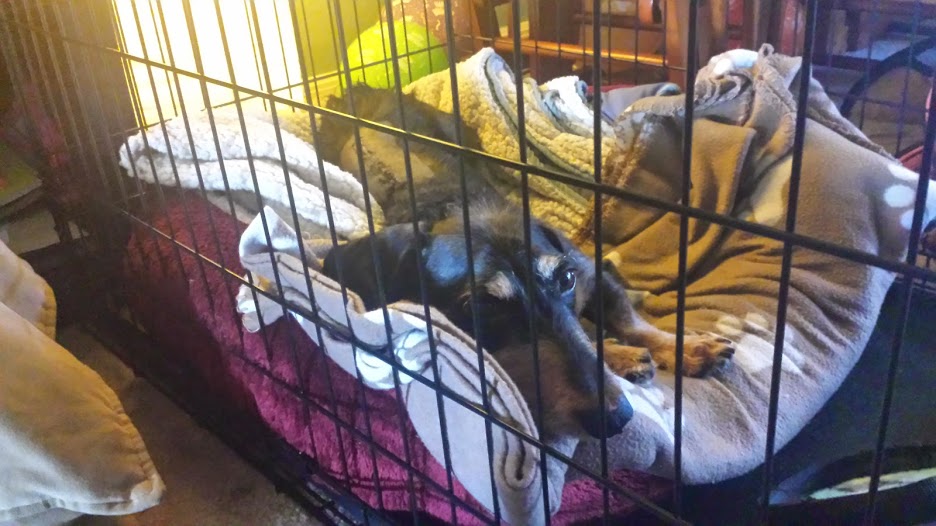
Phin on crate rest
Phin on crate rest

As Phin became stronger this past week, I exercised the right (with his doctor’s permission) to put him on a blanket on the floor next to me to let him stretch out a bit more. The trouble is that now he’s getting so much better (though not totally back to normal) that he wants to take a stroll around the living room. He’s even slyly snuck away a few times to venture (slowly and wobbly) into the kitchen.

I understand his impatience—like mother, like dog. So now we’re back to strict crate rest despite his energy rebound. He’s not happy about this. He gives me his best Bette Davis eyes. One time, I think he actually winked at me. I can’t blame him the little guy for trying to turn on the charm in an attempt to secure a get-out-of-jail-free card. I’m not happy about it either and I’m not even the one stuck in the crate.

Healing, any kind of healing for anyone, takes time and rest and dedication. Healing is a lot of work. Let’s face it – the whole process of healing is a pain in the rear. And if we rush it, if we do too much too soon because we want so much to just get back to normal, then we risk robbing ourselves of all the potential that waits for us on the other side of healing.

I want Phin to make a full and complete recovery. I’m looking forward to the days when he and I can take our walks together again in the sunshine and fresh air. And they’ll happen; I know that. Come spring, we’ll take our spin around the Tidal Basin and he’ll roll around on that precious little healed back in the cherry blossoms. It’s just going to take some time and patience on both our parts – him in a crate and me sitting next to his crate as I write – marching toward our common goal to be well and whole.