Writers spend a lot of time writing, and they also need to *really* live to infuse life and authenticity into their writing. Writing is theater; it’s a one person show and the writer plays all the parts. To help me get into character, I practice method writing. Like method acting, I imagine how the characters in my writing would act when they experience events in my every day life. I read the news with their eyes. I consider how they’d make the decisions that I face. As an author, I live life many times over; it’s like skipping ahead in a choose your own adventure story to see which ending I like best. Despite deadlines, all writers need a life. Your characters will thank you for it, and so will your readers.
Toni Morrison taught me two priceless lessons: I can always make time to write and never give up. As a single mom with 2 kids, Morrison wrote her first novel, The Bluest Eye, in 15-minute increments each day. That’s all the free time she had. It took her 5 years to write it. She kept writing despite her novel’s low sales. 3 years later, her next novel was nominated for the American Book Award. Her following novels received mixed reviews, but she remained determined. In 1987, 17 years after publishing her first novel, she won the Pulitzer. If you have a dream project, work on it bit by bit. Don’t let critics sap the joy you get from your work. Morrison followed her passion. You can, too.
The original U.S. Constitution is filled with flaws: typos, changed words, carets with additions, notes in the margins. It’s all there for us to see, encased in thick glass in D.C.’s National Archives. It has an underground where it will retreat should the nation come under attack. The Founding Fathers had no idea how to create a democracy. They wrote a draft document, and a rough one at that, but they went for it full throttle. They didn’t get it perfect, but they got it right enough to keep going. We revere a draft.
If the Founding Fathers can let go of perfectionism, then so can you and I. With National Novel Writing Month, I’m doing just that. I’m cooking up some plans to give everyone everywhere access to my first draft in a variety of formats in real-time. I want feedback to bring Emerson Page to life and make her story an inspiring beacon to encourage all people to courageously and compassionately create. I’m working on the details of my sharing plans and will have them solidified next week. Let’s do this together!
Writers know where their characters will be on the last page of the book. That focus creates the flow of our characters’ actions and ups the ante when the many necessary conflicts and complications arise. Here’s the game of writing fiction: my character is on this side of the field and what she wants is on the other side. A million proverbial land mines lie in wait for her missteps. (And misstep she will!) She must learn to deftly navigate her way across the field to claim her prize. She needs to get help from others, build skills, and ditch her fears to fulfill her potential. By the time I type those two sweet words “The End”, she has to transform into the person who can traverse the risky landscape that stretches as far as her eyes can see in every direction. Writing fiction is an adventure.
Ever feel like this? Don’t. Own who you are and who you aspire to be!
I spoke to two friends this week who just started their own companies. We chatted about how difficult it can be to feel authentic about new roles, especially if we create them ourselves. When I first started telling people I was a writer I felt like a goldfish with a shark fin strapped to my back.
As Yoda would say, “Own we must.” Know who you are, what you do, and why. Don’t flinch. You did a lot of work and put in a lot of time to make your own opportunities. Stand proud and say it loud: “I’m a (fill in the blank)”, and smile.
When J.K. Rowling and Steve Jobs began, they had an insatiable desire to create with the few resources they had. Rowling wrote Harry Potter on an old typewriter as a single mother while receiving public assistance. Jobs grew up in a lower-middle-class family and spent his early adult years living in an apple-growing commune in Oregon. Then he returned to his parents’ home to tinker in their garage.
We have many more resources than they did. First, we have their example of what the human imagination can build. Second, we have more sophisticated technology and markets, at far lower costs of entry. Third, we have social networks that help us connect to one another and share our creations with the world.
Rowling and Jobs didn’t have any of those resources, but you can bet that if they did, they would have used them to the hilt. That’s exactly what we should do. Right now there’s someone who needs what you want to invent as much as we needed the inspirational creations of Rowling and Jobs. You have the resources to build it. Go!
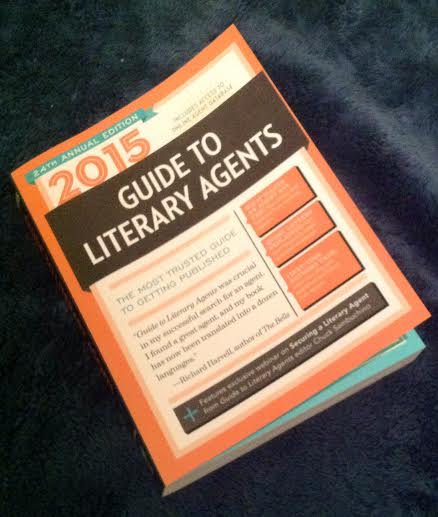
Yesterday my hot-off-the-presses copy of Chuck Sambuchino’s 2015 Guide to Literary Agents arrived on my doorstep. I quickly sliced open the box and cracked it open. As I prepare to write Where the Light Enters for National Novel Writing Month, a portion of that planning involves marketing the book and learning as much as I can about the agent and book publishing world. This is completely new territory for me, and this book is one of my main sources of research, advice, and guidance. If you’re taking a serious step into the writing world, I highly recommend the book. In an hour, I learned more information from it than I’ve learned in months of doing my own piecemeal research. It’s that good. Let’s do this!
National Novel Writing Month (NaNoWriMo) starts November 1st and I can’t wait to bring the story of Emerson Page to life in Where the Light Enters. In 30 days, tens of thousands of writers will band together and make a pledge to each write 50,ooo words in 30 days. I’ve wanted to participate for years, and now that I’ve made the leap to write full-time, I can do this. Here’s how I’m preparing to make the most of those 30 days:
Story Outline Though I’m a big fan of free writing, when I have a specific goal and deadline, I always use an outline. It helps me to see how the pieces I have hang together and identify the gaps I need to fill. I build a flexible structure with plot points, story arcs, and scene sketches. Though I’m an auditory learner, I’m a sensory writer. I see a picture, hear a line of dialogue, pay attention, and try to get it all down with as much authenticity as possible. My notes are fairly free form, and then I go back and pull from them to build the outline brick by brick. It’s like doing a pencil outline of a painting and then layering the color onto the canvas one stroke at a time.
Research
I love research. It’s one of my favorite parts of writing, and the research often leads me to new options and ideas for the story. Because of research, my final story often changes significantly from the idea seed that I originally planted and that’s as it should be. We make the best decisions we can with the information we have. As we get more information, we naturally adjust to make more informed choices.
Character and relationship development
My stories always begin with an individual. This person has something to say, something to do, and somewhere to go. I just tag along and ask questions. I imagine myself interviewing them. I show them my outline of their story and take their input. I walk around trying to see the world with their eyes. I get to know them. They become family to me, and eventually I find that a part of me is embedded in each of them no matter how different we may seem. I’m also fascinated by the relationships between characters. I like to put them into uncomfortable situations together and let them run wild to see where they’ll take the story. I play the guide on the side and let them steer the ship. I grab a front row seat to record the action.
Editing, marketing, and publication plan
I’m very serious about taking this story through its paces. I’ve spoken to an editor I plan to hire once I have a solid draft. Emerson Page is on social media and engaging with her community, and I hope to have the book’s website up and running by November 1st. I’m doing research on book marketing as well as the agent and publishing company query processes. This is where my business experience comes in handy. This book is a product so I’m able to comfortably wear my product development hat with ease and excitement. This piece is as much fun for me as writing the book!
Are you participating in NaNoWriMo? I’d love to hear how you’re preparing for the challenge. Let’s connect!
While I was in business school at Darden, I had an interview with an executive who took one look at my resume and said, “You’re an explorer.” He didn’t mean this as a compliment, but looking back I certainly see it as one. An explorer, a modern female Indiana Jones, is all I ever really wanted to be and now as a writer, I certainly, unabashedly, am. My only job as a writer is to see and hear things as clearly as I can, to uncover what lies hidden, to ask the hard questions of myself and others, to try on different lives in an effort to understand someone else’s reality. The best way to live in the world is not to fight our nature, but to embrace it with both arms.
“To achieve great things, two things are needed: a plan and not quite enough time.” ~ Leonard Bernstein
This philosophy of time and planning really resonates with me. I’ve always found deadlines and outsized goals to be great motivators. They give me something to aspire to with just enough doubt to make me put my best foot forward. We don’t have forever to maximize and reach the potential within us. We have to act, sooner rather than later, with attention, determination, and energy, and that idea gets my blood pumping. Certainly, the process can feel daunting and scary, though when I look back on my life the things I treasure most are the things that required me to take big chances on big dreams that had an expiration date. That’s as true right now, as I transition to writing full-time, as it’s ever been. The time is now.





 Christa Avampato