
career, economy, job

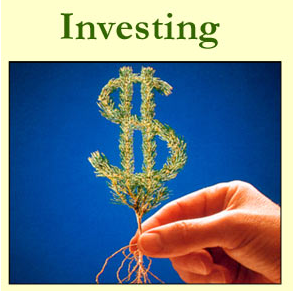
My Year of Hopefulness – My Best Investment

A lot of my friends and colleagues are talking about getting into the world of trading stocks for the first time in their lives. While they’ve invested in mutual funds, 401Ks, and IRAs, most of them have never actively traded stocks through a broker or services like e-trade or Sharebuilder. With the bargain basement prices on Wall Street, some of them are considering taking the plunge, at least in a small way. Heck, as of Friday, you could buy a share of GE for $7. That’s less than the cost of a pizza! Why not give it a shot and see how it goes?

I completely understand where they’re coming from. And their enthusiasm for this idea has had me thinking about doing the same thing over the last few days. I am in an extremely fortunate position during this recession, and I am grateful for it every day. So why not dip one toe in the turbulent waters of the stock market?

As I was cleaning my apartment this afternoon, I was having a monetary conversation with myself – this is what happens when you are the only source of both the income and expense in a household of 1. Should I pay off my student loans? (Much to my dismay I could not deduct a single penny of the interest I paid on them in 2008 from my taxes.) Should I save for a down payment on an apartment? (NYC real estate is going for historically low prices at the moment and unlikely to recover any time in the near-future thanks to the exodus of bankers and their salaries.) Should I just sock it away in cash for a to-be-determined investment? Should I consider the stock market? Should I continue to invest in my 401k since I no longer have a match by my employer? After a while I talk myself in circles during these conversations and I end up right back where I started, which is usually without an answer. And then, one bright, shining thought surfaced to the top so clearly that I surprised myself.

Yes, GE and other large blue chips are down to a point where I could actually afford to buy a block of shares. Real estate has always been at least a decent investment. However, the paradigm is shifting. While yes, we used to investment in big companies because of their stalwart nature, we are seeing them whither like never before. We are beginning to see the waste and excess that so many have taken as a given for decades. It is possible that there is a small business out there, a start-up, that would be a much better long-term bet in the new economy, and maybe that start-up is me. Let’s face it – that age-old assumption of compounding interest rates at 8% to 10% may no longer be valid and these stocks that are so far down may actually be not only down, but out.

What is critical is my freedom, and my freedom will always be my greatest asset. This means that my best investment is me, and that means reducing anything that reduces my ability to be flexible at every turn. End of monetary discussion with myself, once and for all.

The image above can be found at: http://farm1.static.flickr.com/101/314770566_1b1cb0f796_o.png

career, job, Marcus Buckingham, Oprah

My Year of Hopefulness – Marcus Buckingham Workshop Session 3: What is Strengths Training?

Most companies have just completed their annual employee reviews. There are few other times of the year that cause more anxiety and induce more fear at work. Does my boss really like me? What have I screwed up? And what is going, in black and white, into my file, never to be undone?


It’s with good reason that many people feel this way. Historically, performance reviews focus on areas of improvement (aka – stuff we’re not good at) rather than areas of strength (aka – our greatest assets.) Very slowly, that’s beginning to change thanks to people like Marcus Buckingham who advocate for a focus on strengths. 

In session 3 of his on-line workshop, Marcus talks about his belief that focusing on strengths yields a far better outcome than focusing on areas of improvement. 72% of people feel an emotional high from their jobs once a month. Marcus pushes all of us to consider how we can go from once a month to all of the time. In order to get us there, he asks us to follow this plan:

1.) Bust the myths

2.) Get clear on what strengthens and weakens you, not on your strengths and weaknesses (though it’s possible that those things could overlap). Most people think that someone else is a better judge of their own strengths and weaknesses than they are. This conclusion is logical because of the current structure of performance reviews at most large companies. Because we report to a boss in a hierarchy, that boss is traditionally given the authority to tell us what we’re good at and what we’re bad at, and judge us based on that. (This is taken as gospel regardless of the fact that our boss may be less educated, less experiences, and not as talented.) Marcus thinks this is crazy – people with at least an average level of self-awareness (which is nearly everyone) is very conscious of what their strengths and weaknesses are and is the best judge of them. That’s why it’s often an interview question! In performance reviews, we too often hand over the power to define us to someone else. 

3.) Plan your strong week. Do things that invigorate you, not drain you, as often as you can. Almost every job has elements that we don’t like but are necessary. Tilt the floor to fill up as much of our time as possible with the activities that invigorate us. This is called strength training.    
career, economy, finance, hope, job

My Year of Hopefulness – What to do with that $18 billion bonus

There’s a lot of buzz about the $18 billion that financial firms paid out after requesting and receiving TARP funding. Both President Obama and Vice President Joe Biden were outraged and very vocal about their opinions on these bonuses – they don’t like them. My friend, Jon, has a close friend at one of these financial firms. She just received her bonus in her paycheck this week and has been grappling with a lot of guilt for having it. 


After months of watching her friends be escorted out of the building following round after round of layoffs, she’s not sure what to do with this money. She spoke to her boss about the ethical dilemma she’s having with this money and the conversation was met with confusion, anger, and frustration. She tried to ask some co-workers about it, and she found little support for her beliefs. At a recent company meeting, she raised her hand and asked about the justification of the bonuses when the company had asked for and taken so much taxpayer money in the past few months. Again, no fruitful conversation. No one had an answer to her question, and no one had any interest in even listening to her concerns. 

As always, Jon listened patiently to his friend and considered her options of what she might do with this bonus money:
a.) she could give it back, though given the lousy track record of the bank’s management in recent months that doesn’t sound like a good idea
b.) she could donate the money to a nonprofit
c.) she could just keep it and get over her guilt. This is unlikely – not her style
d.) she could invest it in her own future in a way that would help others 

D. – invest it in her own future was the choice that intrigued her the most. For quite some time, she has wanted to start her own company in the social entrepreneurship space. Her bonus check is large enough to be the seed money for this new venture. Of all the ways to use this money, she felt that one would have the greatest return for the largest number of people. 

This story was a great lesson for me. Jon’s friend was beating herself up over this money when a better use of her energy was right in front of her. She just needed Jon, with his outsider perspective, to point her in the right direction. There is always a way to do good.

career, hope, job, Marcus Buckingham, Oprah, work

My Year of Hopefulness – Marcus Buckingham Workshop Session 2: Where Are You Now?

A few weeks after we went through the introductory session of Marcus Buckingham’s on-line workshop, I finally sat down to go through session 2. Why such a gap right? Schedules, yes, but there was a larger reason to. Fear – fear of finding and discovering something new and different. Fear of change. 


Sometimes it’s easier, at least in the near-term, to bury our heads in the sand and pretend everything’s fine. That no improvements can or should be made. Change is painful, though it’s so necessary in the long-run. Progress requires giving up the familiar and that brings with it a certain amount of anxiety. No time for dallying now – we had to jump in and get on with it. Change is coming so we might as well greet it politely at the front door rather than waiting for it to huff and puff and blow our house down. 

Session 2: Most people believe that when we consider our performance in life that we will become better people if we focus on improving our weaknesses. Marcus has a fundamentally different view. His advice is to build on our strengths and manage around our weaknesses. A meager 12% of people spend the majority of their day playing to their strengths. He’s willing to give you from 8am – 11am, 25% of your day to play to things we aren’t good at. And then the rest of the day must be spent on strengths.

In our society, we believe that if we study and learn about negatives, we will glean some miraculous insight into the positives. We study disease to learn about health, depression to learn about happiness and joy. There have 40,000 studies done on the topic of depression and only 400 on joy. The equation and our focus on weakness and negativity is sadly and badly tipped in the wrong direction. “You study “bad” and invert it, you don’t get “good”. You get “not bad.” And “not bad” is not good enough. It won’t give us energy. It won’t make all our hard work worthwhile. And it certainly won’t make us happy. 

There are a lot of people out there right now who hate their jobs. Even though they’re grateful for the income with all the layoffs going on, they hate what they do. And that’s the key. The three questions to ask ourselves when examining our jobs are:

1.) Why is this job important to me?
2.) Who am I going to be working with?
3.) What am I actually going to be doing?

When the “what” goes wrong, it effects the “who” and the “why”. So in these times when we may be looking for a new job, the question to ask is the “what” question.  To help answer that, it’s best to take a look at what invigorates us and what drains us, and then go for what invigorates us.
career, corporation, hope, integrity, job, work

My Year of Hopefulness – Don’t Be Less

Just when I thought life at work couldn’t get much worse for my friend, John. Goodness….I couldn’t make this up. I don’t think the best fiction writer on the planet could make up the following story. My thanks to John for allowing me to share his experience with this blog’s readers:


On Thursday morning, John woke up at an ungodly hour to catch a flight for an all-day business meeting. He arrived back to the airport later that evening with his boss and found that their flight was delayed 3 hours. His boss thought she’d take the time to provide him with some feedback on his performance. Here’s the abbreviated laundry list that she expounded upon for 1.5 hours:

Too motivated
Communicates too well too often (Her quote to him, “Jesus, I’m not your texting buddy.” My advice to her – then stop replying for one thing, and don’t complain when you’re in the dark on details, which is true just about every day.)
Has too good a relationship with senior management (a.k.a., “I feel threatened that people like you so be less likable)
Too ambitious
Takes too much responsibility and ownership for work
Too collaborative with people outside of department

Ouch – I don’t even know where to begin on how pathetic and foolish this feedback is. Essentially John is supposed to be less of a person than he is because it makes others uncomfortable to be in the presence of someone who is talented and hardworking. This is gross – I’m so furious by these comments that I can barely speak. 

Being a pro, or numb from exhaustion, John took the entire conversation in stride and stood his ground, politely. His only response: “This is so odd. No other company that I have ever worked for, or even heard of,  tells its people to be less collaborative and less motivated.” And that’s it. He let it lie. Didn’t agree, didn’t really say much of anything. He was too shocked and confused. 

Here is my advice to John and anyone else in this situation: you are NOT to compromise your integrity. Ever. For any reason. You are not to be less of a person to make others feel better about themselves. Their laziness and lack of motivation is their problem, not yours, so don’t take it on, politics and “business as usual” be damned. Your job is to shine as brightly as you can and add value to the people and the environment around you. That is your only obligation, ever. Smile, hold your head up and be proud of yourself. And write down all the things you are and are not. Keep the list handy and refer to it often. 

If President Obama has taught us anything it is that the time for change has come. Throw off the yolk of being what to do when by people who want you feel less empowered so they can feel more powerful. The feudal system died out centuries ago and there is no chance of resurrection. This is the time of the individual, and don’t let anyone tell you differently. 
career, hope, job, personality, work

My Year of Hopefulness – Change of Behavior

In my quest to cultivate more hope for myself and for others, I have recognized that there will be set-backs and that those set-backs will create opportunities for learning and reflecting. I had one of those moments today. Or rather, a friend of mine relayed a story to me that set my hope back a bit. 


John, my graphic design friend, deals with a tough work situation. Right before Christmas, he was really in dire straights. He was very discouraged by an abusive and unappreciative boss, and given the economy his prospects for leaving are bleak. To his surprise when he returned after the holiday break, his boss was different. Kinder, more appreciative, more team-oriented. For a week and a half. And today his boss flipped the switch. 

For a week and half, John was more hopeful about his job. Maybe things would be looking up for him and his team. And then it all unraveled and John felt like it was December 18, 2008 all over again. 

The lesson here is that no behavior change, positive, negative, or indifferent, is immediate. No one comes back to any situation with a completely new attitude. Behavioral changes take time and patience and practice. In all likelihood, John’s boss’s behavior is not going to change overnight, or over Christmas for that matter. I only had one piece of advice for him: take the long view. 

For him, this is a stable job in a tough economy and it’s a good resume and portfolio-builder. This tough time will pass and we will be better people for persevering. At least that’s what I tell myself – it’s what I have to tell myself. Sometimes hope, unbridled, unreasonable, unreliable hope, can be the only thing we have. And sometimes, that’s enough. It has to be enough because it’s all we’ve got.  
care, career, holiday, hope, job, New Years Eve

My Year of Hopefulness – Day 1

On December 23, 2008, I began a daily log of acts of kindness after writing a blog post about small moments that made my day. I realized in the 15 minutes that it took me to write that post that I had a very simple New Year’s Resolution: I wanted to feel more hopeful in 2009 and I wanted to do my part to generate more hope for others. From that blog post and simple wish, I am starting an extraordinary year of giving and receiving.


I don’t typically write series of articles on this blog. To help me keep my New Year’s Resolution, I will be writing a daily blog post, in addition to my other regular posts, about what I am doing to be more hopeful and generate more help for others. It will be a good reminder to me, and I hope that it may do readers some good as well. 


The economy is weighing heavily on people’s minds at the start of this year. People are facing layoffs and possibly the bankruptcy of the companies they work for, particularly in certain industries such as retail. As a result, it can be pretty tough to get up for work in the morning. Even if you are lucky enough to keep your job in this downturn, and you are indeed lucky if you’re in that boat, there will be added stress as you may be doing the work of two or three people, and being asked to do that work with no additional compensation or resources. 

So what can we do to make that trip out the front door a bit better? This evening I made up a small sign that I taped to the inside of my front door, right by the door knob, that details what I am achieving and working toward at this current job and the good things about my position that I should be grateful for. It will be a good reminder every morning before I head out for work. If you are facing some discomfort in your current job, maybe this tactic will help you as well. 

Happy New Year!
career, curiosity, education, job, learning

Attaining breadth and depth

The conversation of breadth versus depth has always confused me. I have a hard time understanding why the two seem to be mutually exclusive of one another. Is it not possible to know a lot about a lot of things? A similar debate rages on about being a generalist versus a specialist. Again, why can’t we be both? 


There is a widely-held, and incorrect, assumption that we as people do not have the time nor the capacity to be very good at many things. I constantly hear statements like “if you want to hone your craft, you really need to make that your singular focus.” Nonsense. If we are curious and passionate learners, open to new experiences, and diligent in our studies (even long after our formal education is over), then it is entirely possible to be very good in many different areas. 

The paradigm is shifting. In the work world we are being asked to do more with less. And if that is to be expected and accepted, then we must also give up these debates of generalist versus specialist, breadth versus depth. We will have to develop high level skills in a number of areas in order to perform well in the new economy that will emerge after this current downturn. The idea of the “T” is no longer valid (knowing a little about a lot, and a lot about a little.) We will have to get to work on building a rectangle (knowing a lot about a lot, period.) 

Look at historical figures like Benjamin Franklin and Thomas Jefferson and Albert Einstein. They were considered “Renaissance characters” of their times. They had a variety of interests and far-ranging expertise. Really, they were just life-long students who didn’t accept the adage that they could only excel in a single field. They had the drive to let their curiosity be their guide, and we would do well to follow their lead – now more than ever. 
career, friendship, future, job

Getting What You Can From What You’ve Got

My friend, Lon, sent me an article from the Financial Times last week regarding employee satisfaction. For most of us, we can forget it for the near-term. Either we’re being let go or our friends are. Either we’re dumping all of our work on the people left standing at our companies or we’re the ones left standing doing the work of three other people. It doesn’t feel good to be on either end of this stick. There aren’t any winners in the job satisfaction game these days. 


So what are we to do? Hide under our desks or under our beds and wait for sunnier skies? It’s tempting but I wouldn’t recommend that. If you have your job, and even if you hate, there’s a way to make the best of what you’ve got. My friend, Kelly, came in to town recently and I was talking to her about this subject. No matter how nutsy her job gets, she always has a positive perspective. It’s a little sickening actually. She was my friend in graduate school who could listen to the most obnoxious student go on and on about nothing and be searching for what she could learn while the rest of us were banging our heads against the wall out of frustration. 

How does she do that?? How does she always see the best in her job situation, even though her company, and every company for that matter, is going through tough times? This isn’t the end game for her and she knows that. Her real passion is education, but she wanted big company experience first so she could bring something to the education party that would be beneficial. Consequently, she takes in all of this good learning she has all around her, the good, the bad, and the ugly, and is able to distance herself emotionally because she knows these crazy times will inform her education career when she’s ready to make that change. Brilliant, huh?

So while having a drink last night with my friend, Linda, I was talking over this POV. I’m 32 now. Where do I want to be when I’m 35 and how about when I’m 40? And if what I’m doing right now isn’t what I want to be doing then, how can I utilize the experience I’m getting now to inform my future? And what other skills can I pick up from where I am right now to help me on my journey? Lord knows there is plenty to do these days at work, not enough people to do it, and plenty of room to take on more if we so desire. Perspective, and the wise advice of good friends, is worth its weight in gold. 
      
books, career, economy, job, management, work

Trust and learning in a time of change

“But never forget … our mission is to recognize contraries for what they are: first of all as contraries, but then as opposite poles of a unity.” ~ Herman Hesse


There’s a lot of tension flying around companies at the moment. This holiday shopping season, and the financial results it generates for companies, will lead to some potentially scary decisions in January. If you feel everyone holding their breathe until the new year, you’re not alone. The pressure and fear is immense and wide-spread.


This morning, I read my Daily Good email that highlight a Harvard Business Review article about trust in a time of extreme mistrust, and leading change in a time of change – both incredibly difficult things to do and quite frankly two things that many managers are not good (although they don’t always know that but their team does.) For example, some managers think they’re change agents simply because they question everything. The fine line that separates change agents from managers who only ear what they want to hear is how they ask the question and what their end-goal is. A change agent wants to examine possibilities, dig in to the issue, and examine detail in an effort to fully understand the issue at hand so a collaborative solution can be found. They take a balanced approach. 

Managers who hear only what they want to hear, also ask a lot of questions but ignore any of the details of what they’re asking for. These are the “I don’t care what it takes, just make it happen” managers. They will steamroll over their people, squeeze change out them, and then sit back quite proud of themselves of how they’ve transformed the group. Unfortunately that transformation came at the group’s expense, not to their benefit. And if you have one of these managers, I am very sorry. Truly. I know where you’re coming from and so do most of my friends. You are in a no-win situation because there is no reasoning with that kind of manager. Your leader doesn’t have balance, and without balance that person cannot lead effectively, much less mentor you.  

So what can you do? Reach out, way out, in your organization. Extend the olive branch at every turn, whether the person is in your group or not. Take this time to expand your network – you’ll feel better meeting new people in your organization that may have nothing to do with your job now, but could in the future. You can find solace in partnership, strength in unity. And that solace and unity is what’s going to get you through this economic bust. 

The other thing you can do is focus on the learning, not the bad behavior your fearful manager is exhibiting. Bob, one of my former bosses, gave me this counsel and I think of it all the time. He would say that no matter what happened to him in his career, good or bad, he knew it was all good learning and it made him a better person and a better manager in the end. Take this time to think about how important it is to build trust with the people you work with and for, and go out and exhibit that trust while also relying on your skills and ingenuity that will help you persevere. It’s a tough road, I know, but at this point it may be the only way forward.